Penguin Body Size and Heat Retention
Penguins live in some of the coldest regions on Earth, but not all penguins are the same size. Even within a single species, individuals can vary in body size and fat thickness - traits that affect how well they retain heat.
Biologists from the Antarctic Marine Ecology Program studied a population of Adélie penguins in Antarctica. They measured how body mass and surface area affected heat loss rate and survival during cold conditions.
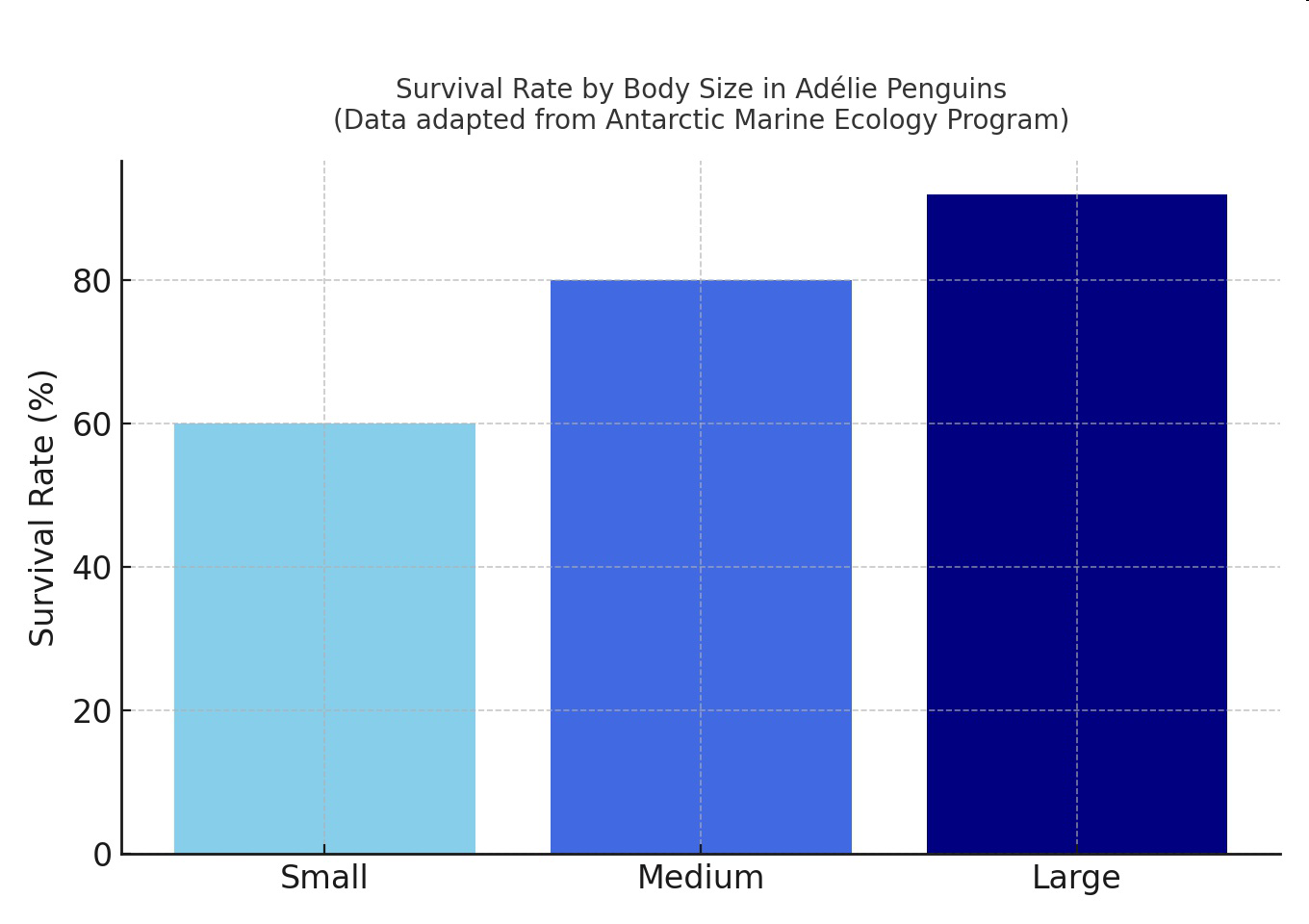
They found that larger penguins lose heat more slowly because they have a smaller surface-area-to-volume ratio, which helps them stay warm longer and survive better during storms and fasting periods.
Penguin Category | Average Body Mass (kg) | Heat Loss Rate (°C/hour) | Survival Rate (%) |
|---|
Small | 3.2 | 1.5 | 60 |
Medium | 4.0 | 1.1 | 80 |
Large | 4.8 | 0.8 | 92 |
Even though all penguins share similar adaptations for cold (feathers, blubber), individual variation in size influences survival. Larger penguins retain heat longer, giving them an advantage in severe cold - they spend less energy maintaining body temperature and are more likely to survive to reproduce.
This example demonstrates how variation in characteristics (body size) can lead to differences in survival and reproduction. In cold environments, larger body size is a beneficial variation that increases the chances of survival - an example of natural selection in action.
Graph of Information - Figure 1.
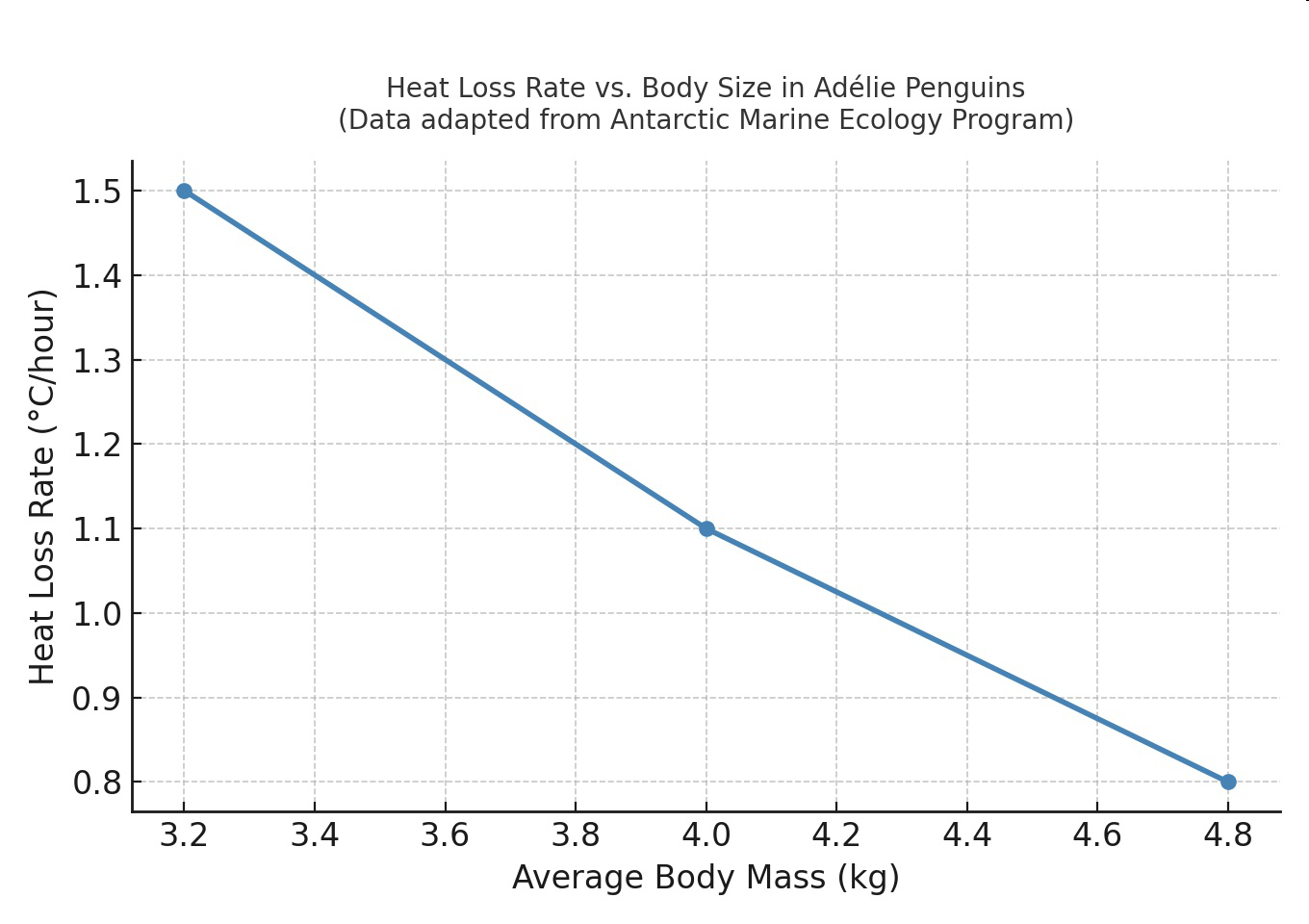
Graph of Information - Figure 2.