Plant Life Cycles
All plants share the same fundamental life cycle: they germinate (birth), grow, reproduce through flowers and seeds, and eventually die. However, the timing and strategy of these stages can vary dramatically across species, depending on environmental conditions.
Annual plants - such as desert wildflowers, lettuce, or corn - complete their entire life cycle in one growing season. They germinate, grow quickly, flower, produce seeds, and die, often within just 6 - 12 weeks. Their seeds survive drought or cold, allowing the next generation to grow when conditions improve. This is a strategy for surviving unpredictable or harsh environments.
Perennial plants - such as oak trees, roses, or prairie grasses - live for many years. They spend their first few years growing larger and storing energy before reproducing repeatedly over their lifespan. Perennials invest more in long-term survival, with some trees living over 100 years and producing seeds dozens of times.
Field data from the USDA Plant Ecology
Program and Desert Ecology Institute show clear differences:
In a desert habitat, annuals complete their cycle in 10 weeks, while perennials take 3 - 5 years to reach maturity.
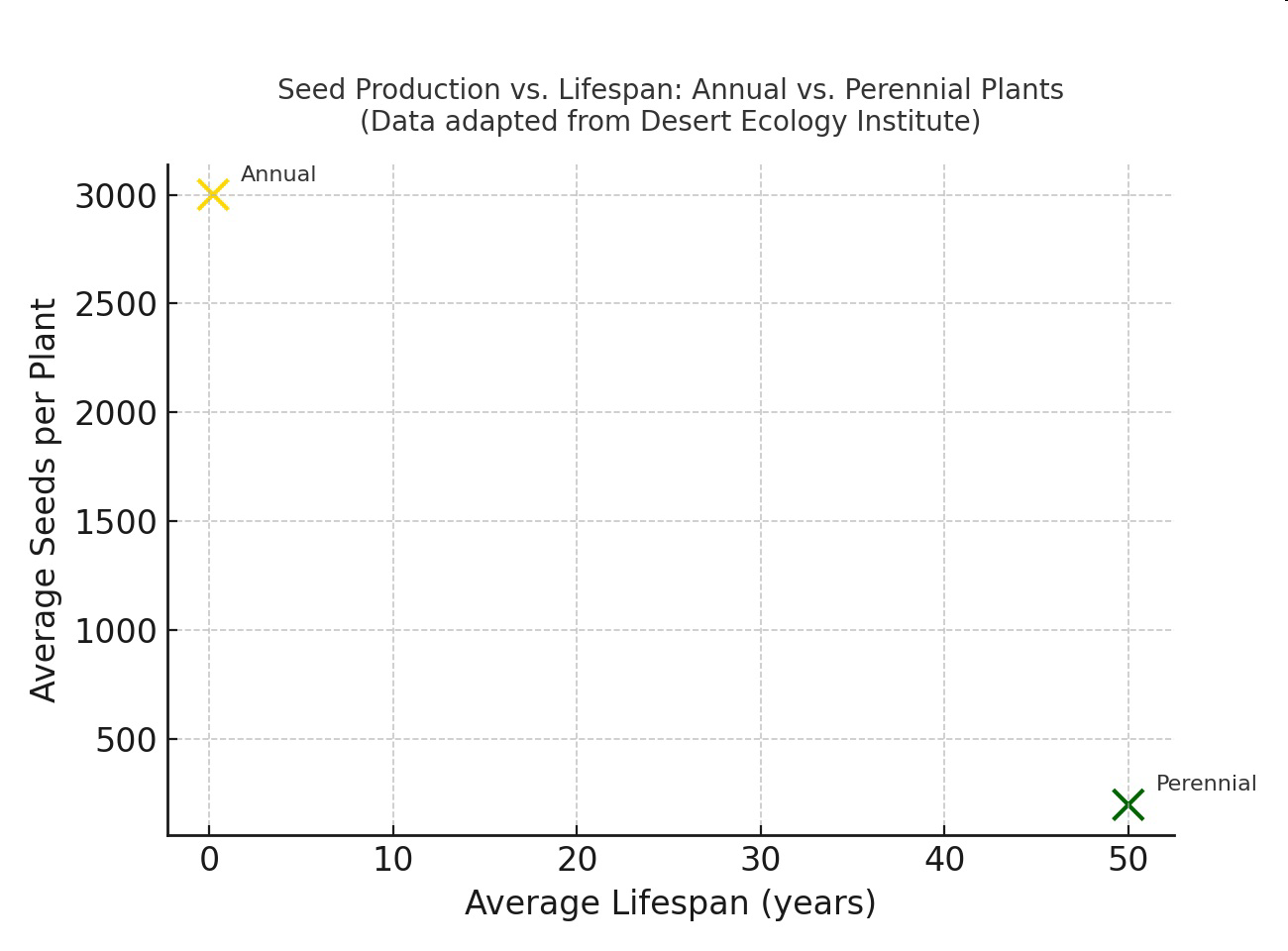
Annuals produce thousands of small seeds per plant, while perennials produce fewer, larger seeds with higher survival rates.
Both groups follow the same basic pattern - birth, growth, reproduction, death - but their timing reflects different strategies for survival.
This diversity in plant life cycles demonstrates how organisms adapt their timing to their environment while still following the universal pattern shared by all life forms.
Table 1.
Plant Type | Time to Maturity (weeks or years) | Average Lifespan (years) | Average Seeds per Plant |
|---|
Annual | 10 | 0.2 | 3000 |
Perennial | 208 | 50 | 200 |
Graph of Information - Figure 1.
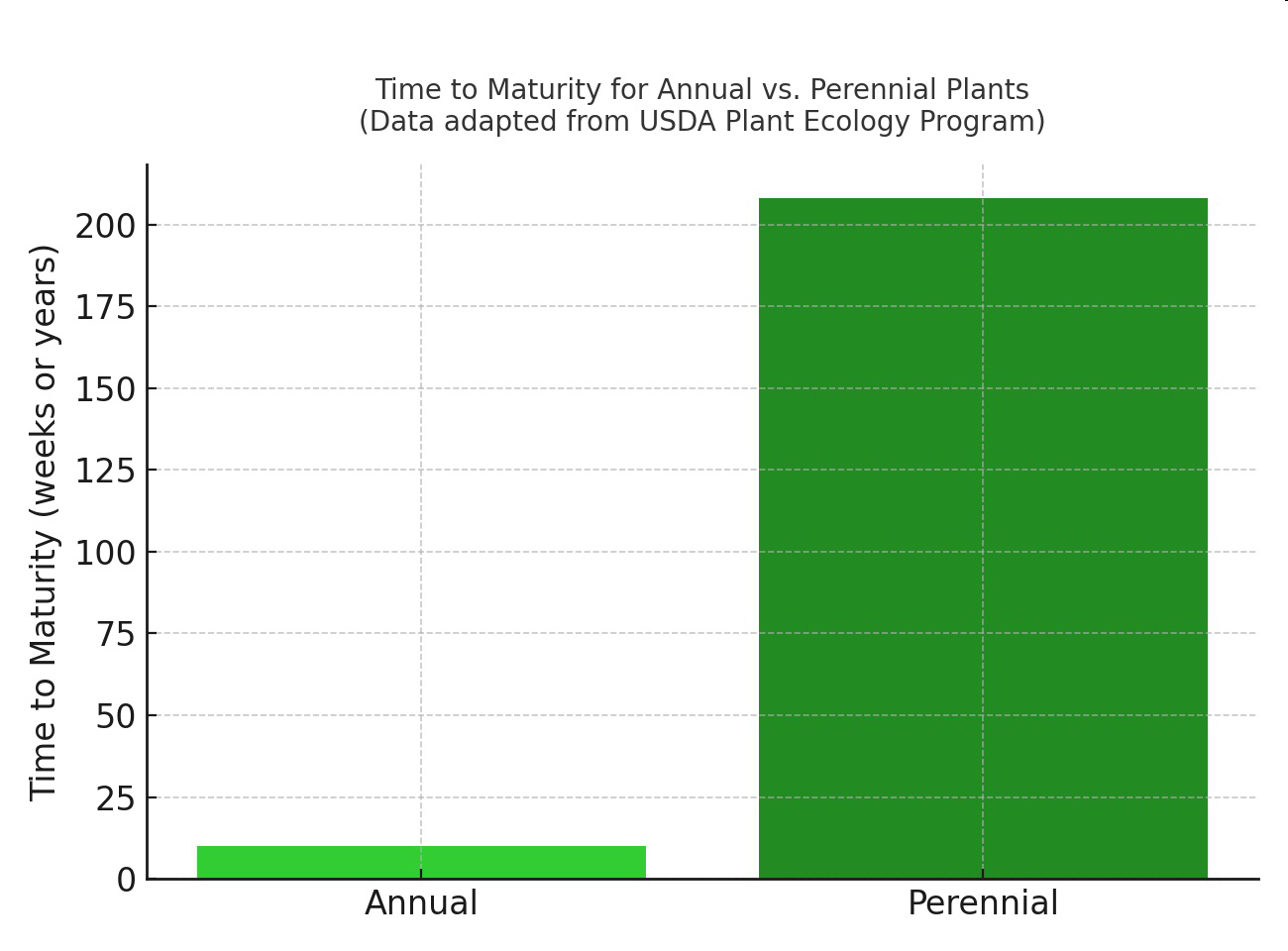
Graph of Information - Figure 2.