Rabbit Coat Color and Seasonal Camouflage
Some rabbit species, such as the snowshoe hare, show variation in how their fur color changes with the seasons. In snowy areas, hares with white winter coats blend in with snow and avoid predators. However, as climate change alters snow cover patterns, the timing and completeness of these color changes vary - and that variation affects survival.
Researchers from the University of Montana Wildlife Adaptation Lab studied a population of snowshoe hares during winters with patchy snow cover. They recorded how coat color matched the background and how predation risk changed with color mismatch.
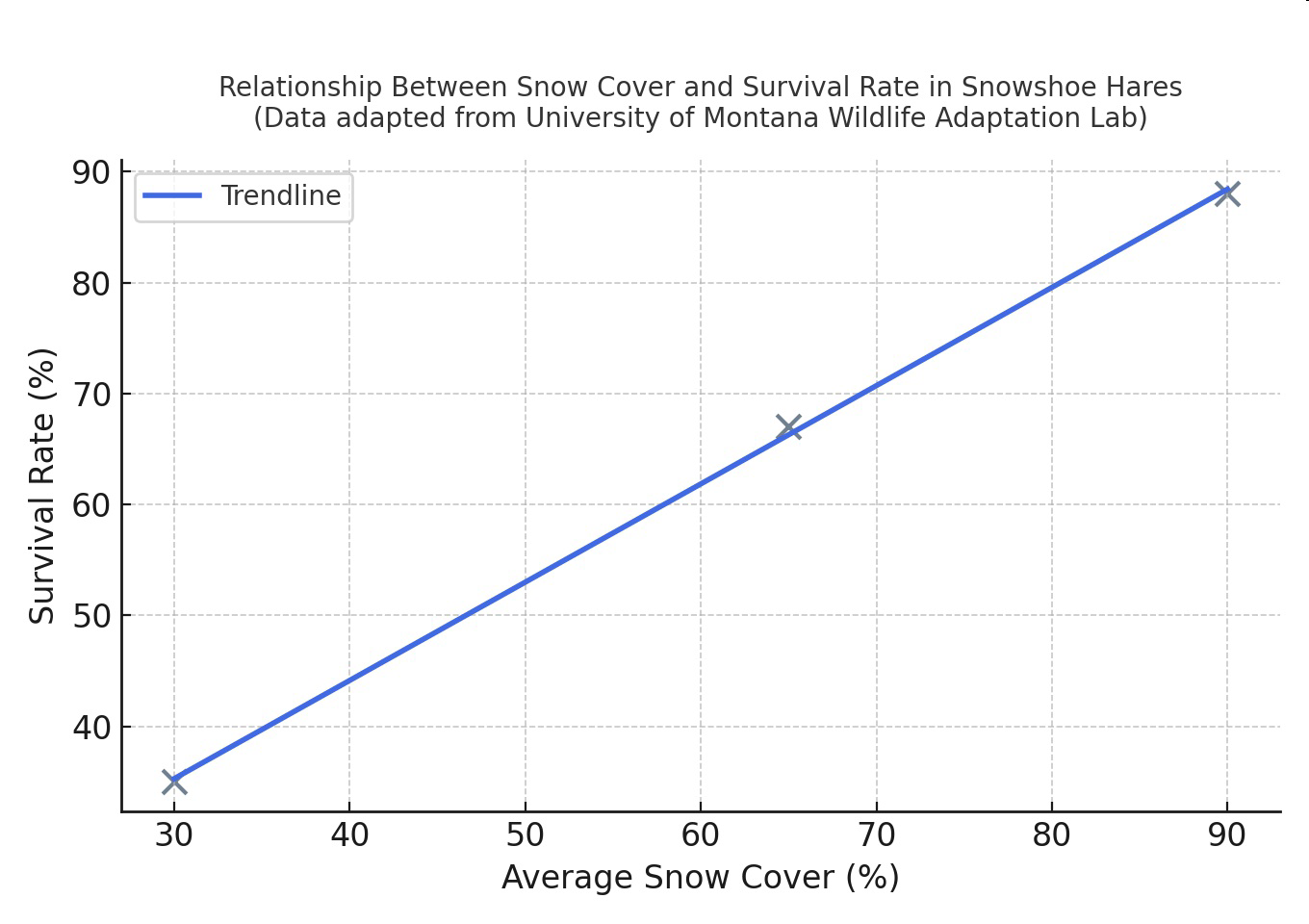
Coat Color Match (%) | Average Snow Cover (%) | Survival Rate (%) |
90–100 (Good Match) | 80–100 | 88 |
50–89 (Partial Match) | 50–79 | 67 |
0–49 (Poor Match) | 0–49 | 35 |
Hares that better match their environment are less likely to be seen by predators, improving their survival chances. Even though all hares inherit genes for seasonal color change, variation in timing and completeness of the molt gives some individuals an advantage, especially when snow conditions vary year to year.
This example shows how trait variation within a species - in this case, the ability to change coat color - affects survival in changing environments. Rabbits that maintain better camouflage survive longer and are more likely to reproduce, passing on those traits.
Graph of Information - Figure 1.
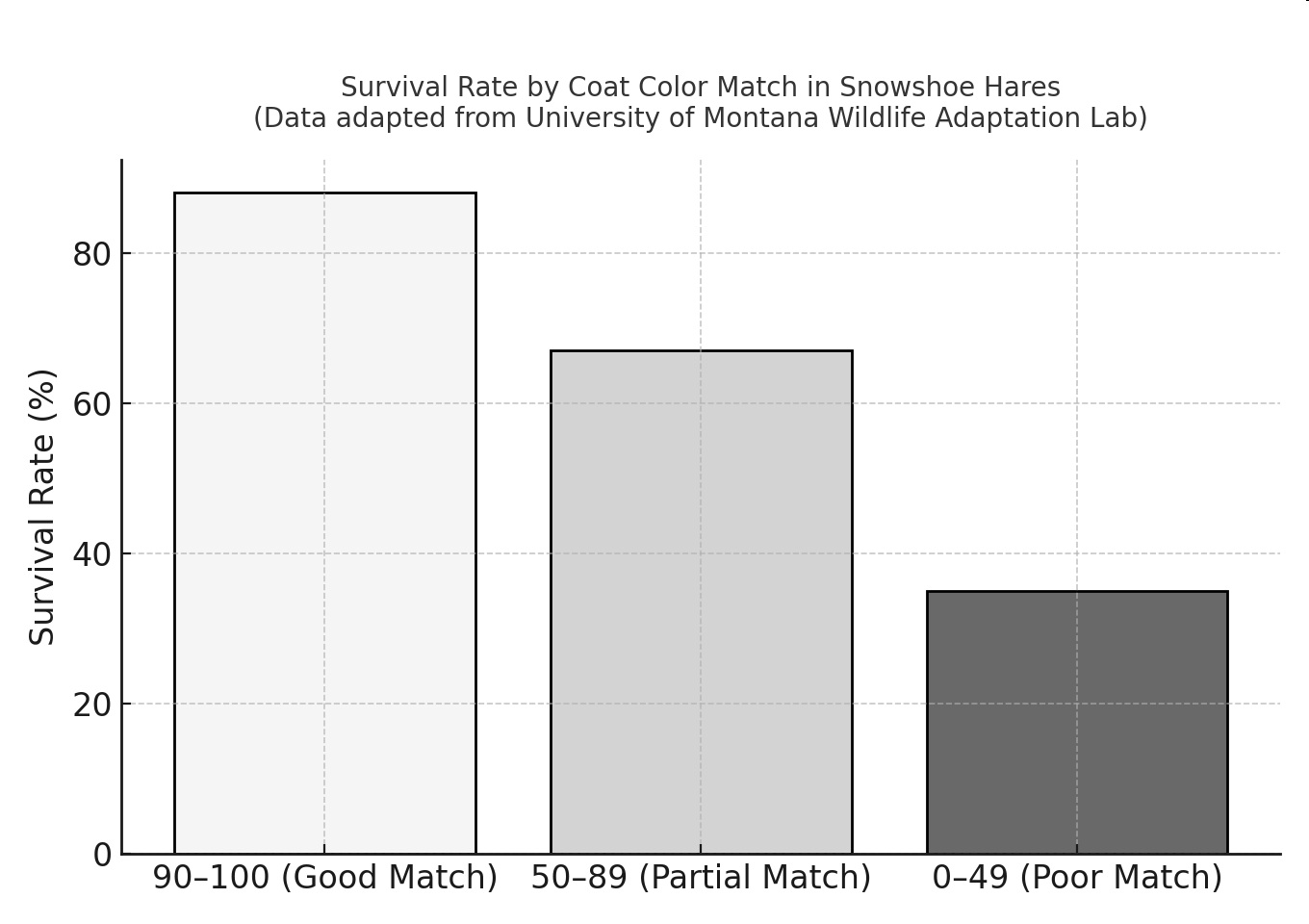
Graph of Information - Figure 2.