Turtle Hatchling Sex and Nest Temperature
Many reptiles, including sea turtles, do not have their sex determined by genes at fertilization. Instead, their sex is influenced by the temperature at which their eggs develop in the nest.
This phenomenon is known as temperature-dependent sex determination (TSD). Biologists have studied this pattern extensively in green sea turtles (Chelonia mydas). The findings show a clear environmental effect on the trait of hatchling sex.
Nest Temperature (°C) | % Female Hatchlings | % Male Hatchlings |
|---|
26 | 10 | 90 |
28 | 30 | 70 |
30 | 70 | 30 |
32 | 95 | 5 |
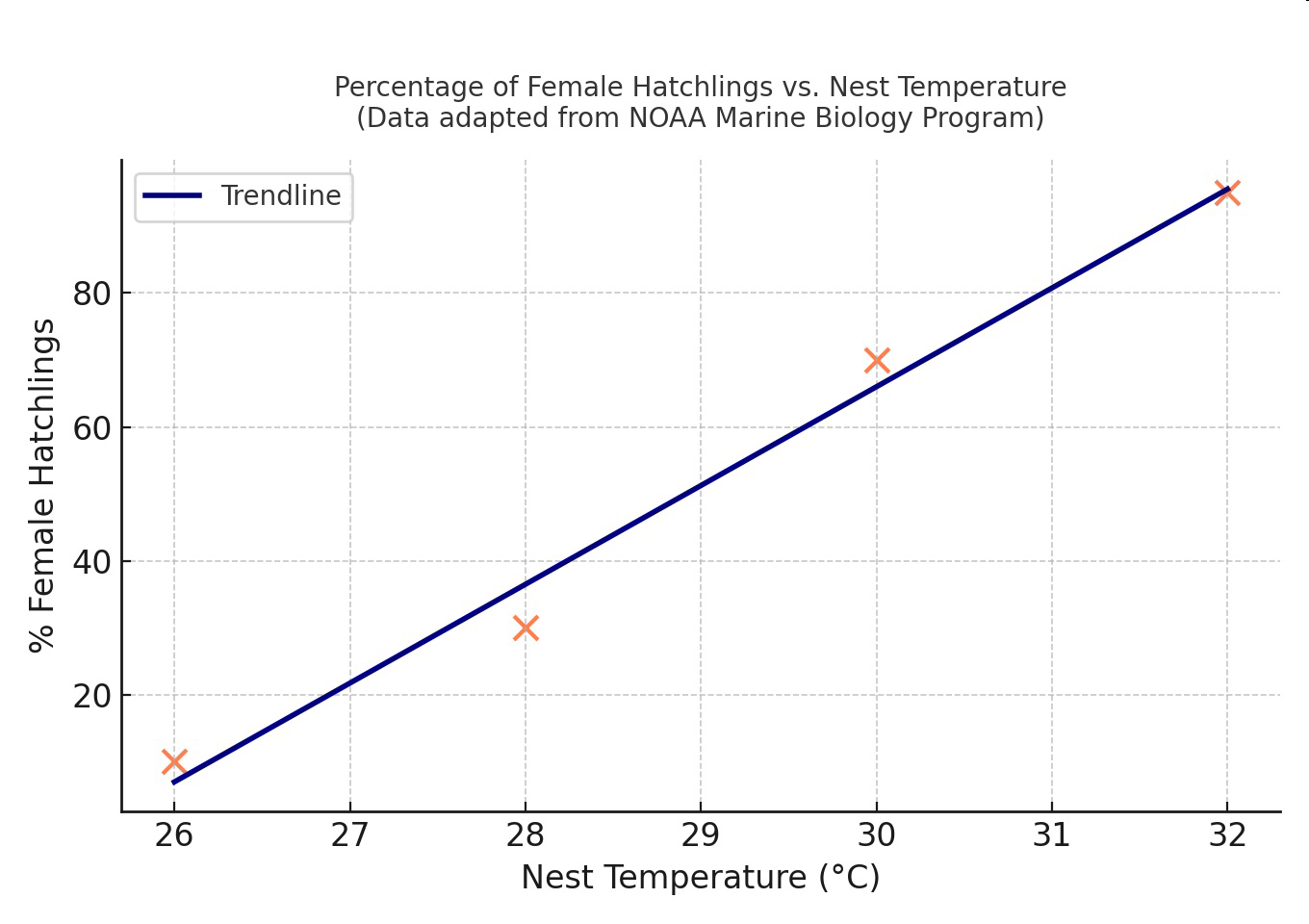
Eggs incubated in cooler nests (around $26\degree C$) mostly produced males, while warmer nests (around $32\degree C$) produced mostly females. All eggs came from the same nesting population, meaning the difference in sex ratio was caused by temperature, not genetics.
This study provides strong evidence that traits can be influenced by the environment. The turtles inherit genes for both male and female potential, but environmental temperature determines which trait is expressed. This phenomenon has become especially important in conservation biology because rising global temperatures may cause imbalanced sex ratios in some sea turtle populations.
Graph of Information - Figure 1.
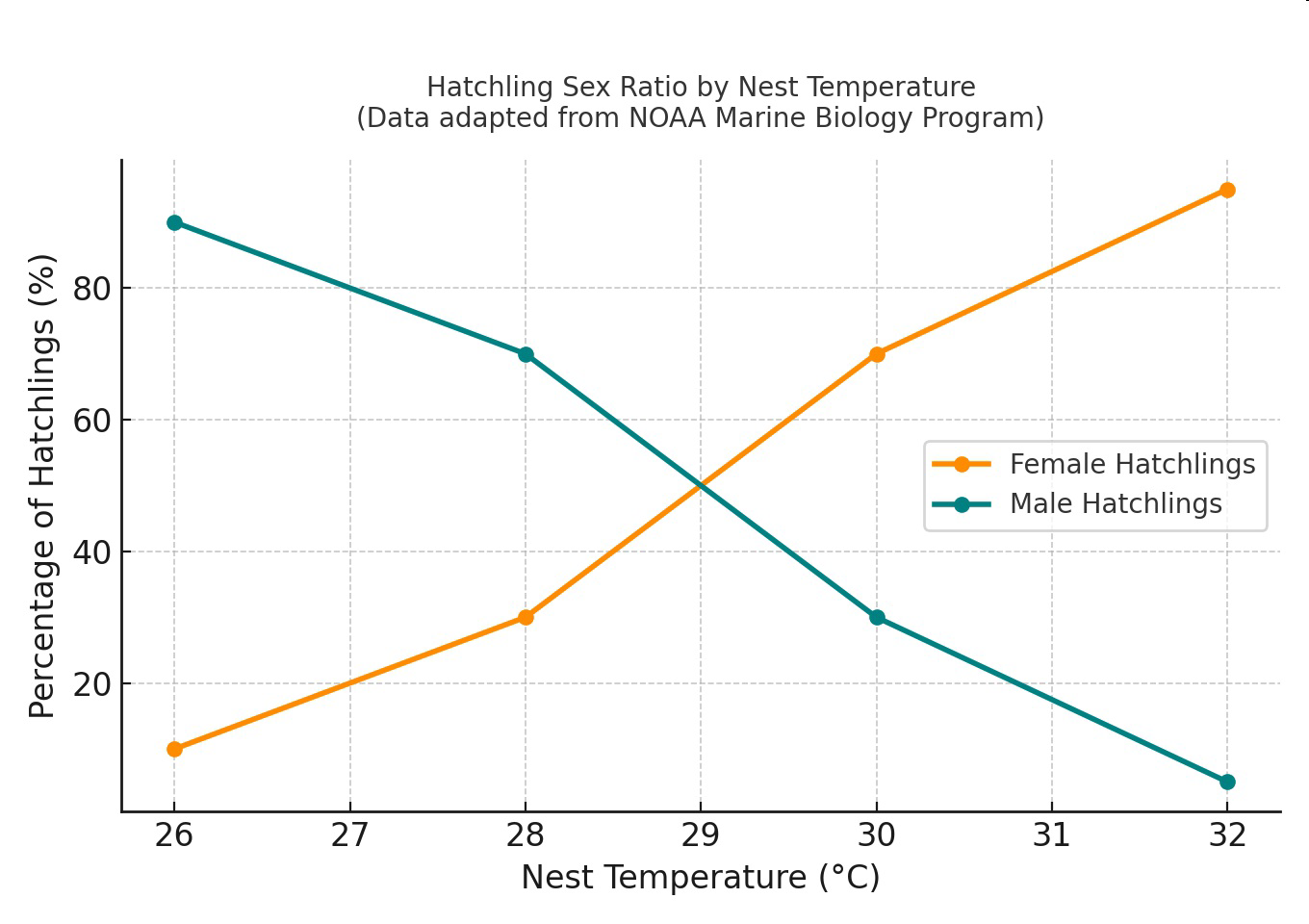
Graph of Information - Figure 2.