Wolf Survival
Wolves are apex predators that rely heavily on cooperative hunting to capture large prey, such as elk, moose, or bison. A lone wolf can survive on small animals like hares, but large prey provide far more calories. Hunting such animals is dangerous and energy-intensive, so cooperation directly increases both food success and individual survival.
Long-term studies in Yellowstone National Park (U.S.) and Denali National Park (Alaska) have produced detailed data on hunting success rates and group sizes. Observations show that a single wolf or pair attempting to hunt adult elk succeeds only about 15 - 20% of the time. In contrast, packs of six or more wolves can achieve success rates over 60%, depending on terrain and prey species. (Source: Smith et al., 2000; MacNulty et al., 2012)
The cooperative behavior is not just about numbers - wolves divide roles. Some chase, others circle or ambush, and larger adults or experienced hunters make key decisions about when to attack or disengage. This division of labor lowers risk for individuals and raises the chance that the entire pack gets food.
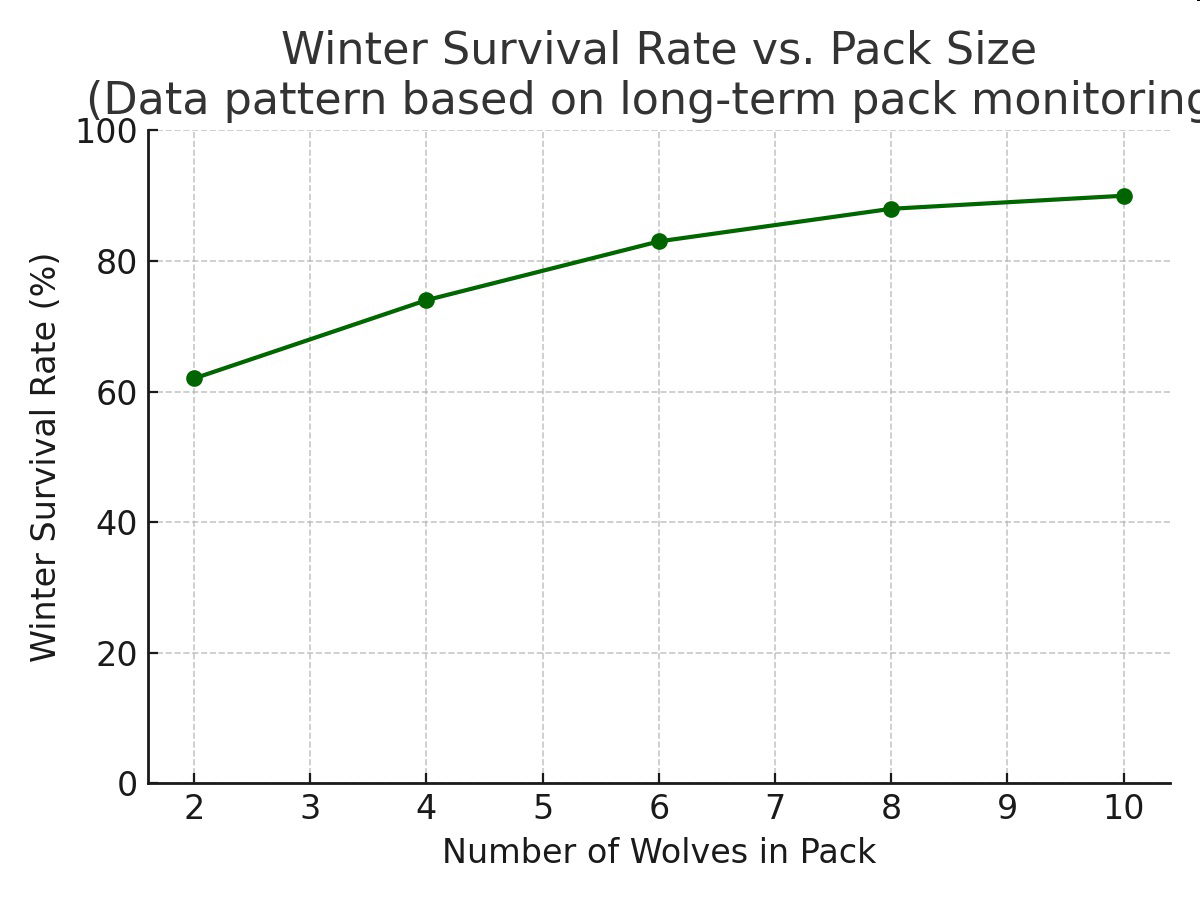
Research has also shown that larger packs lose fewer members to starvation during winter, as food is acquired and shared more reliably. A single elk can feed an entire pack for several days. Group hunting therefore improves the survival of individuals within the pack and increases the survival of pups that depend on adults bringing food back to the den.
Together, these data show that wolves form social groups that provide a measurable survival advantage: more food, fewer risks, and higher pup survival. Their cooperative strategy illustrates how group living can evolve through shared benefit.
Graph of Information - Figure 1.
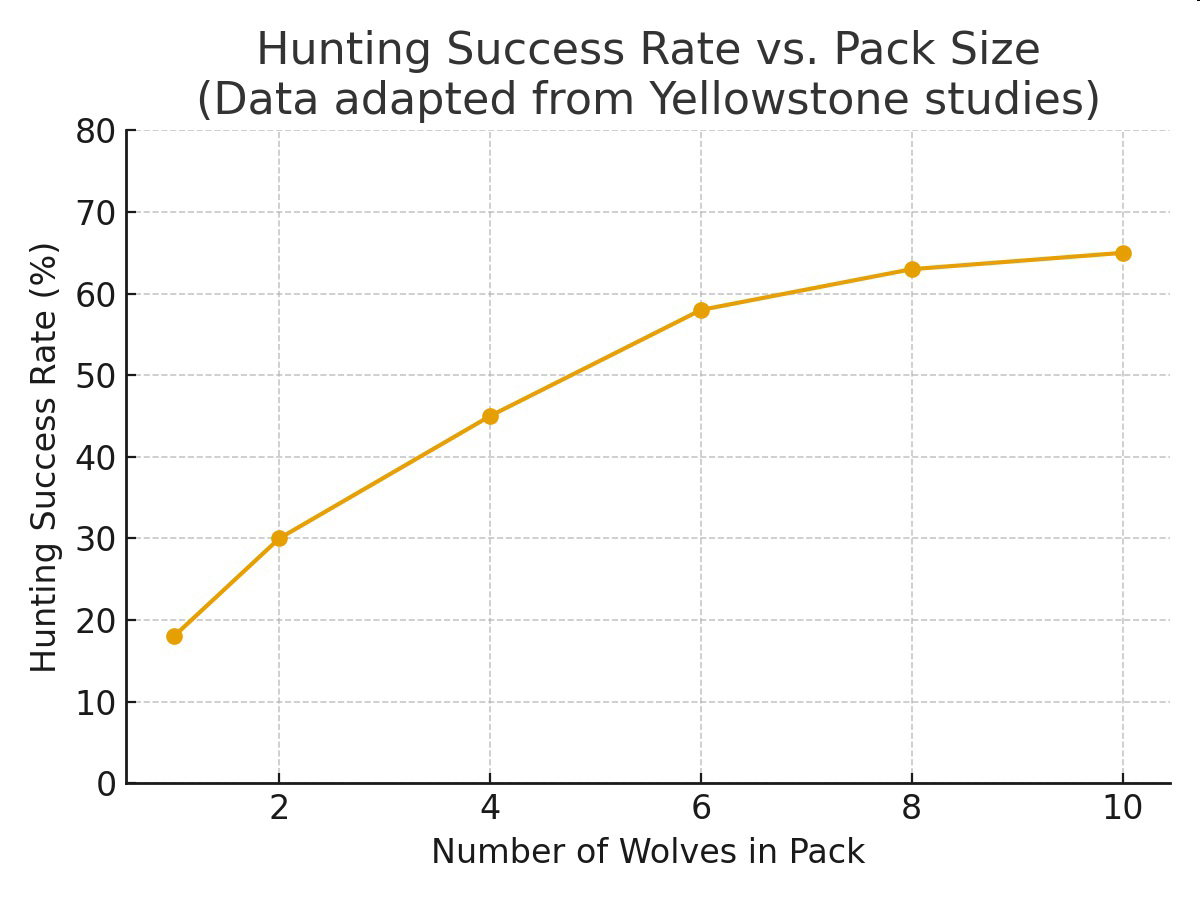
Graph of Information - Figure 2.