Coral Reef Restoration After Bleaching
Rising ocean temperatures and marine heat waves have caused massive coral bleaching events, killing large areas of coral reef around the world. These changes not only reduce coral cover but also affect fish and invertebrates that depend on reefs for food and shelter.
To help reefs recover, scientists and conservationists have developed coral restoration programs that include two main approaches:
Coral nurseries and transplantation - where small fragments of coral are grown in underwater nurseries and then attached to damaged reefs;
Selective propagation - breeding and planting heat-tolerant coral species that are more resistant to bleaching.
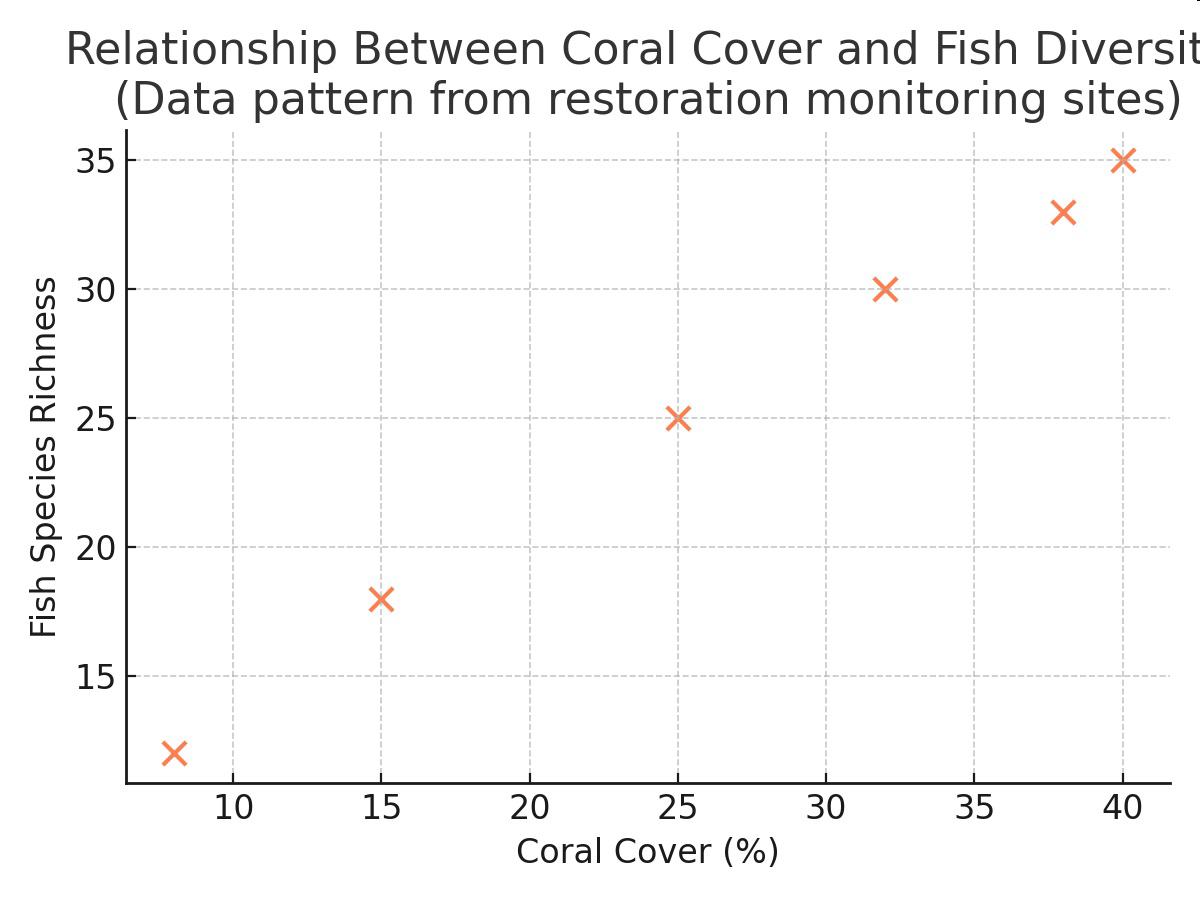
On reefs in Florida, Hawaii, and the Great Barrier Reef, researchers monitor coral cover and fish biodiversity before and after restoration. Data show that within 3-5 years, coral cover in restored areas increases from less than 10% to 35-40%, and fish diversity often doubles. However, if another severe heat wave occurs, much of the transplanted coral can bleach again unless water temperatures stabilize.
While coral restoration improves local ecosystem recovery, it does not address the larger driver - global ocean warming. Scientists argue that reef restoration is a valuable short-term solution that supports biodiversity and buys time, but it must be paired with climate action to have lasting impact.
Table 1.
Year Since Restoration | Coral Cover Before Restoration (%) | Coral Cover After Restoration (%) | Fish Species Richness (number of species) |
|---|
0 | 8 | 8 | 12 |
1 | 8 | 15 | 18 |
2 | 8 | 25 | 25 |
3 | 8 | 32 | 30 |
4 | 8 | 38 | 33 |
5 | 8 | 40 | 35 |
Graph of Information - Figure 1.
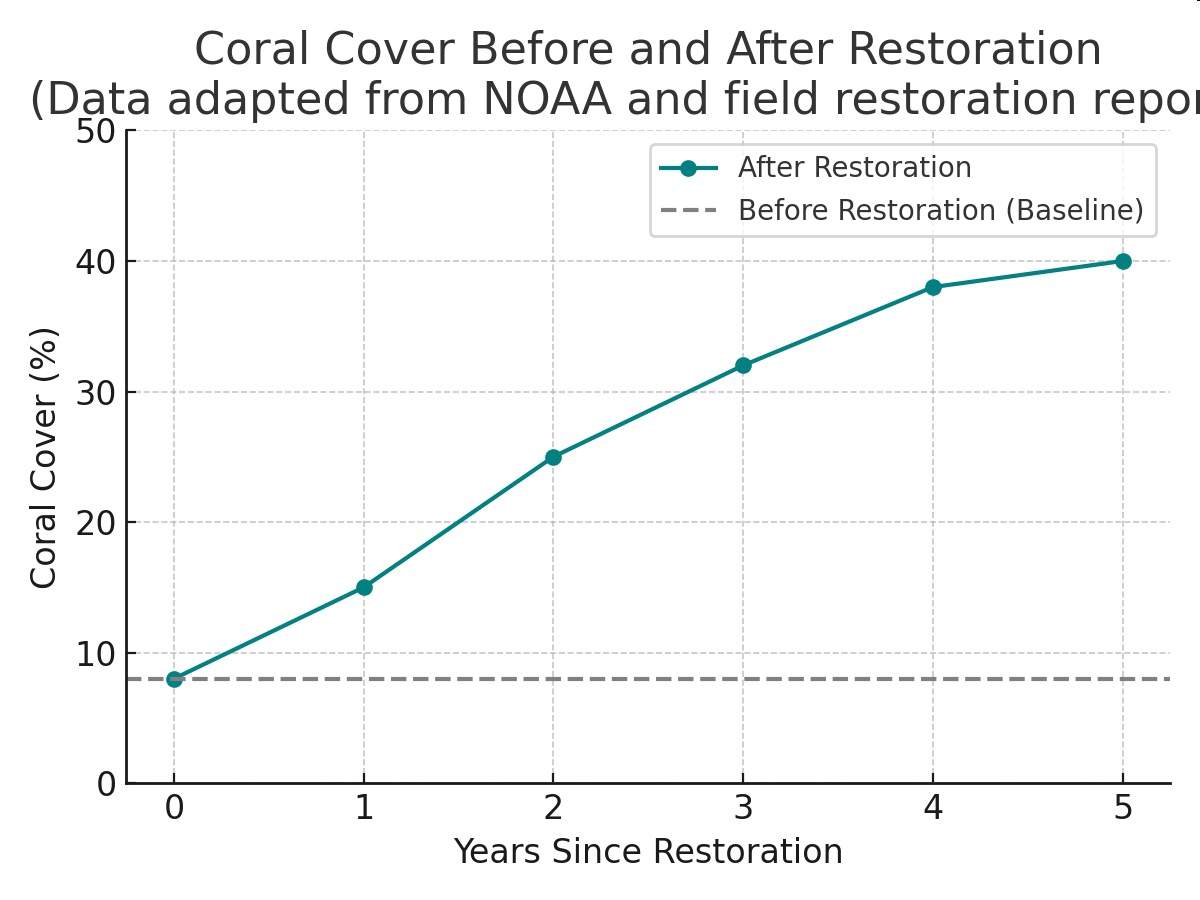
Graph of Information - Figure 2.