Dam Removal and River Ecosystem Recovery
For more than a century, dams have been built on rivers to provide electricity, irrigation, and flood control. However, these structures also block the migration routes of fish such as salmon and steelhead, disrupt sediment flow, and change water temperature and oxygen levels. Over time, dammed rivers often lose biodiversity and develop poor water quality.
In the past two decades, scientists and conservation agencies have begun removing outdated or unsafe dams to restore natural river flow and improve habitat. One of the largest examples is the Elwha River Restoration Project in Washington State, where two dams were removed between 2011 and 2014.
Monitoring data collected by the U.S. Geological Survey (USGS) and NOAA Fisheries show dramatic improvements:
Salmon spawning grounds increased by more than 100 kilometers within five years.
Salmon population counts rose from about 2,000 to over 7,000 individuals.
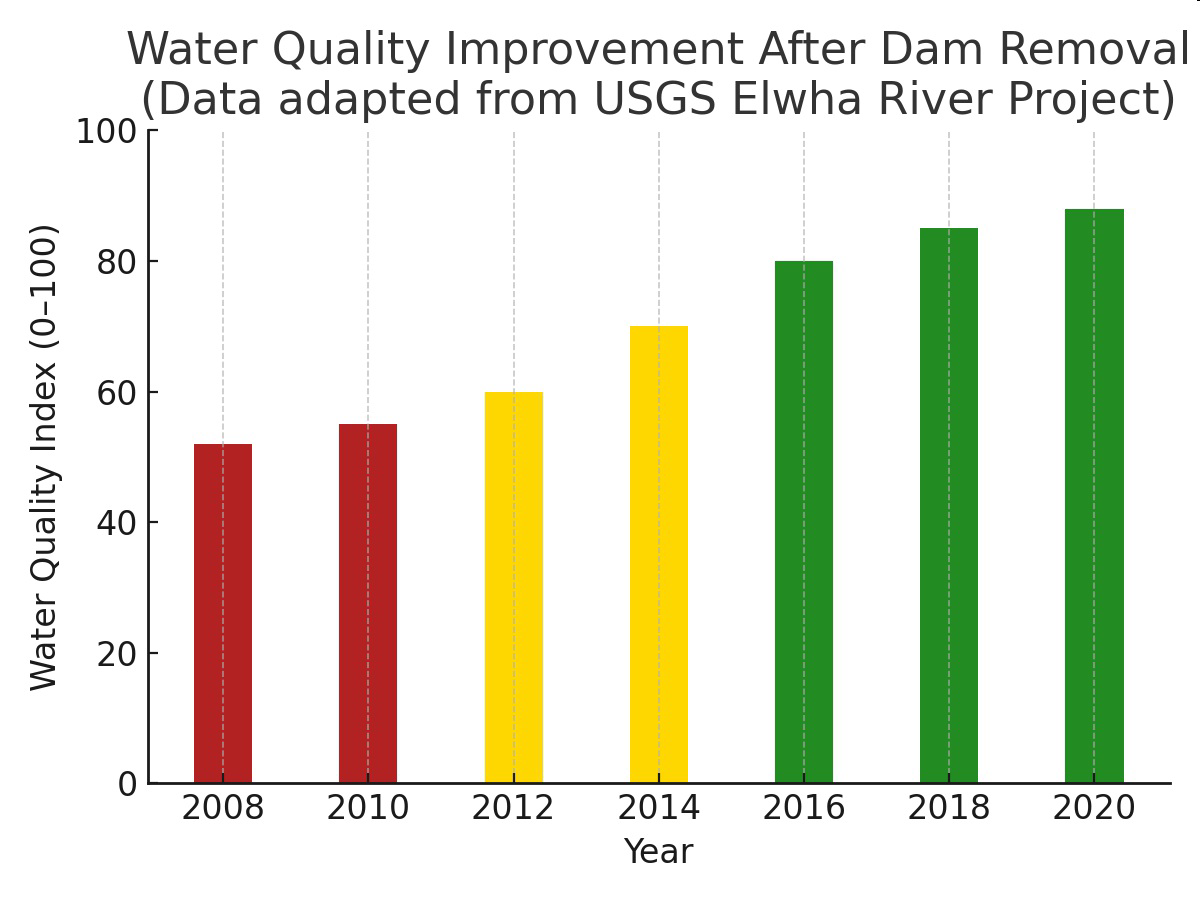
Water quality (measured by oxygen levels and sediment balance) improved steadily each year after dam removal.
Initially, the release of trapped sediment caused short-term turbidity and stress for aquatic life, but within three years, the river stabilized and native species recolonized.
The data suggest that while dam removal can cause short-term disruption, it’s a highly effective long-term solution for restoring river ecosystems and reestablishing migratory fish populations.
Table 1.
Year | Salmon Population (individuals) | Water Quality Index (0–100) | Dam Status |
|---|
2008 | 2000 | 52 | Before |
2010 | 2200 | 55 | Before |
2012 | 2500 | 60 | During |
2014 | 4000 | 70 | During |
2016 | 5500 | 80 | After |
2018 | 6500 | 85 | After |
2020 | 7200 | 88 | After |
Graph of Information - Figure 1.
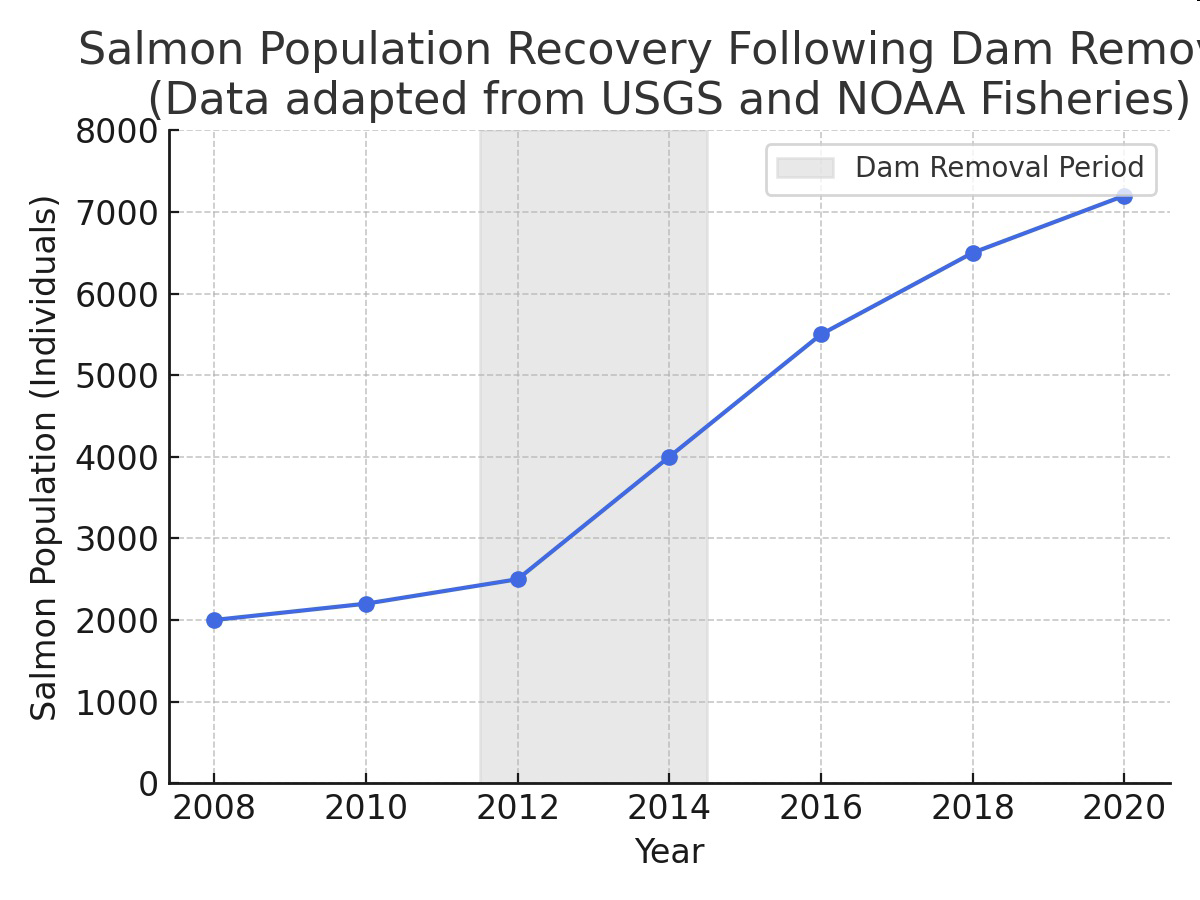
Graph of Information - Figure 2.