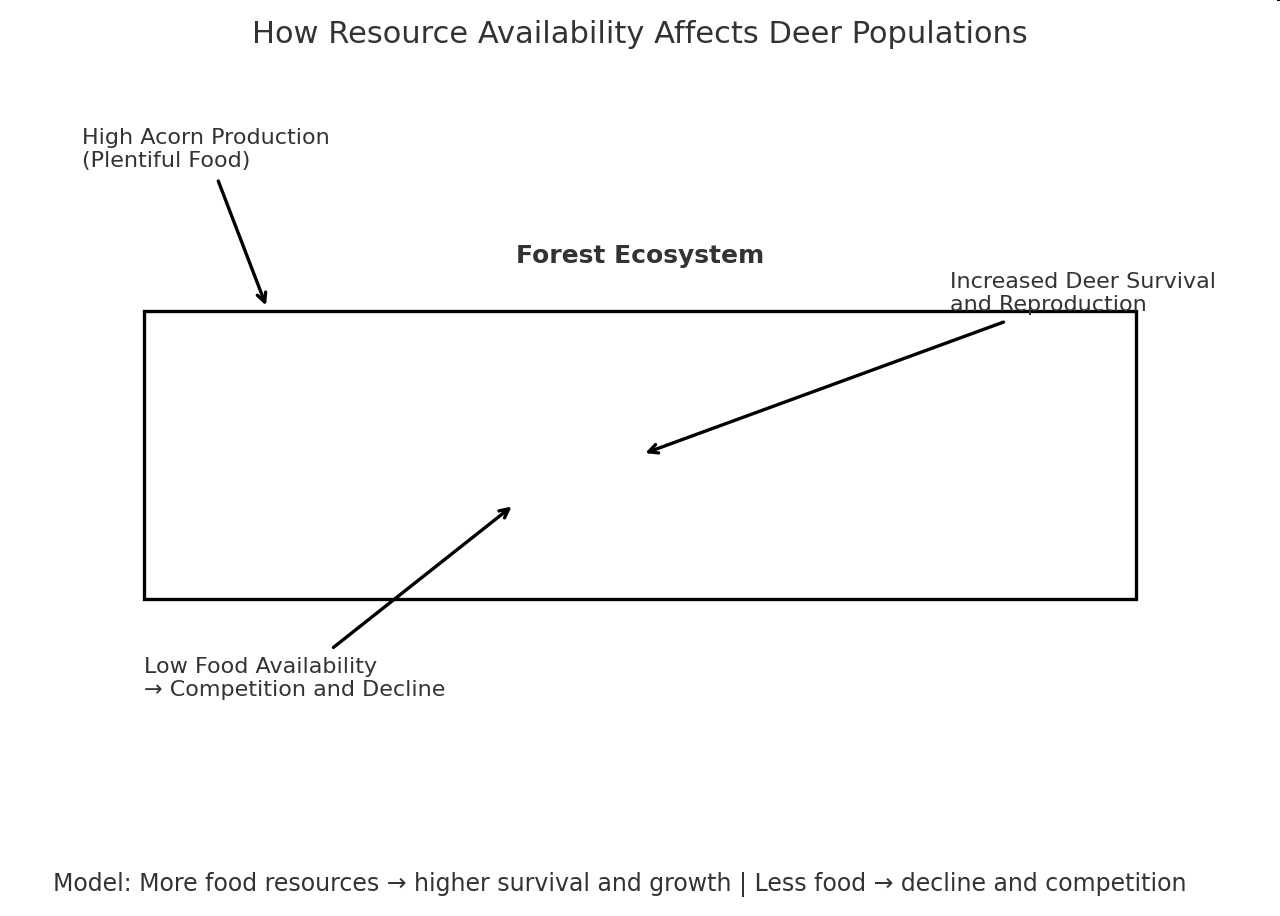
Deer Population and Food Availability
All living things depend on resources - such as food, water, and shelter - to survive and reproduce. When these resources are plentiful, populations can grow. When they are limited, populations shrink.
In forest ecosystems, deer primarily feed on plants, leaves, and acorns. In years when oak trees produce many acorns (called mast years), deer thrive. The abundance of high-energy food allows more fawns to survive, and the overall population increases. However, oak trees do not produce heavy acorn crops every year. In low-acorn years, food becomes scarce. As deer compete for fewer resources, survival rates drop, and fewer offspring are born the following season.
This relationship illustrates a key ecological principle: resource availability controls population size. If food, water, or shelter becomes too limited, populations cannot continue to grow. Over time, populations fluctuate around the carrying capacity - the maximum number of individuals that the environment can support based on available resources and reproduction.
Table 1.
Year | Acorn Production (kg/ha) | Deer Population (per 1000 acres) | Fawn Survival (%) |
|---|
2016 | 150 | 45 | 62 |
2017 | 400 | 72 | 78 |
2018 | 350 | 70 | 76 |
2019 | 100 | 40 | 55 |
2020 | 220 | 52 | 60 |
2021 | 500 | 80 | 83 |
Graph of Information - Figure 1.
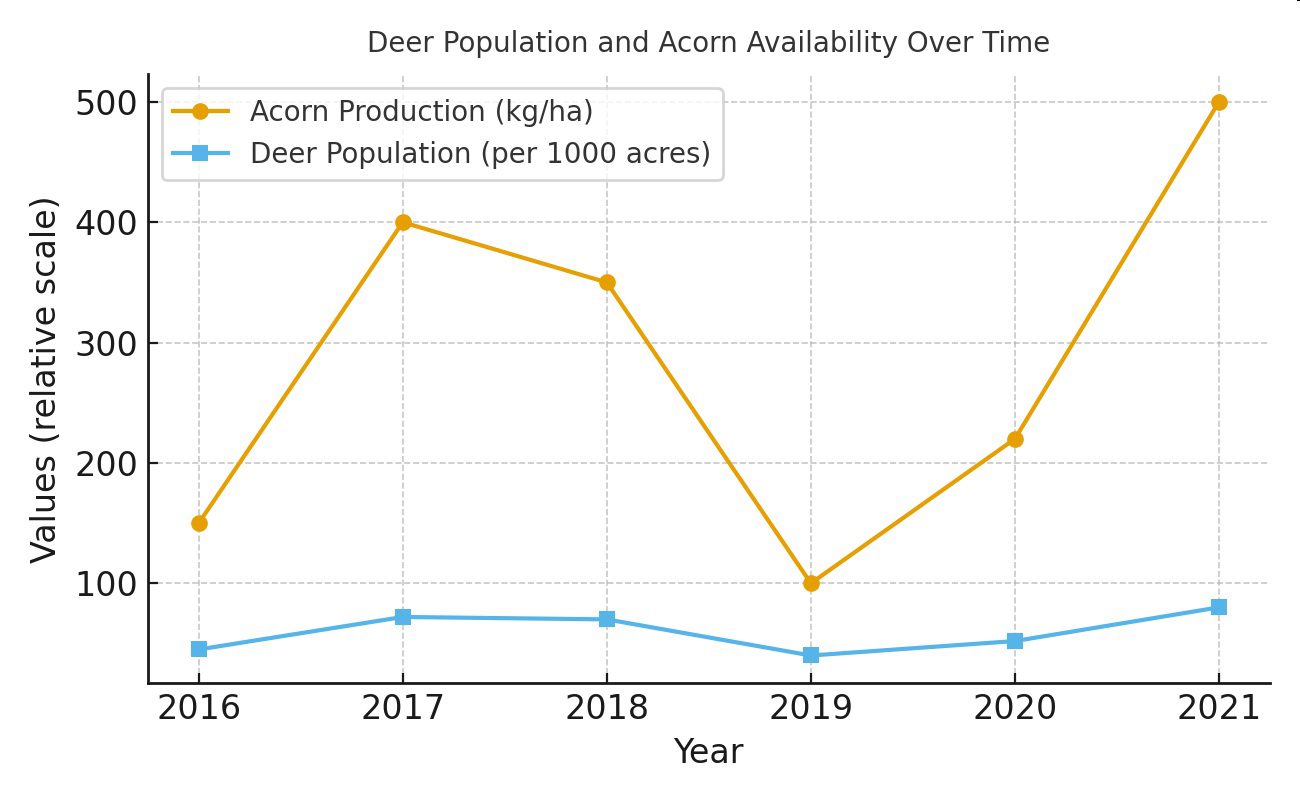
Figure 2.