Elephant Group Defense
African savannah elephants live in family units led by the oldest female, the matriarch. In predator encounters -especially with lions - families bunch together, placing the young calves in the center while adults face outward. Lions are the main natural predators of elephants and typically target calves under ~ 4 years old, so an effective, coordinated group defense directly affects calf survival.
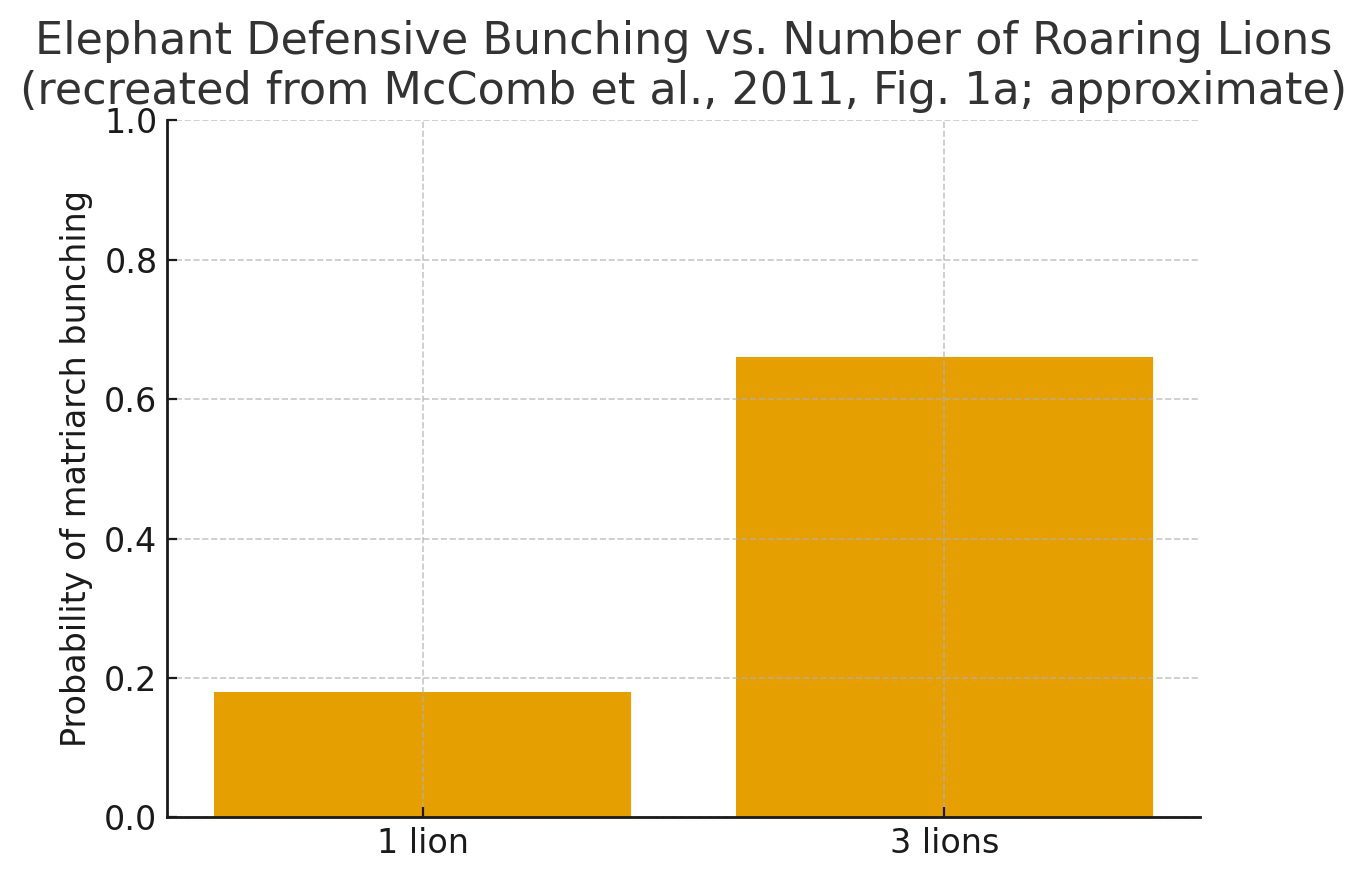
To test how group leadership affects anti-predator defense, researchers ran playback experiments in Amboseli National Park, Kenya. They broadcast recordings of one vs. three lions, and of male vs. female lions, to 39 elephant family groups (72 total trials) and measured group responses (for example, “defensive bunching,” where adults compress around the young). Families bunched more strongly to three lions than one, showing they can scale their defense to the level of threat.
Crucially, the age of the matriarch mattered. Groups led by older matriarchs showed greater sensitivity to high-risk threats (e.g., male lions) and stronger defensive responses (higher bunching intensity, more prolonged listening, and a higher probability of approaching to harass) - evidence that social knowledge in the group leader improves collective decision-making in ways that protect vulnerable calves.
Taken together, these data show that elephants use coordinated group defense and leadership by experienced individuals to reduce predation risk for their young—clear evidence that forming groups helps members survive.
Graph of Information - Figure 1.
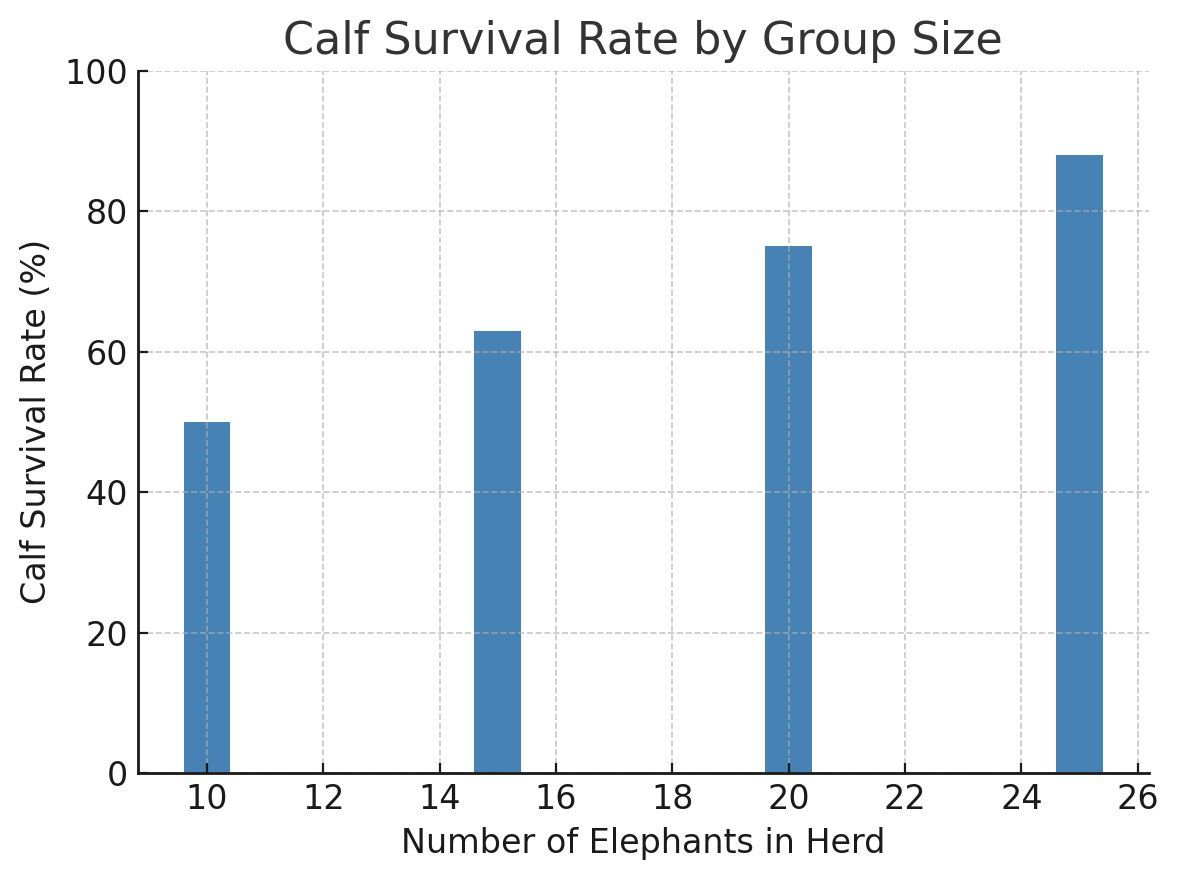
Graph of Information - Figure 2.