Fern and Leaf Fossils
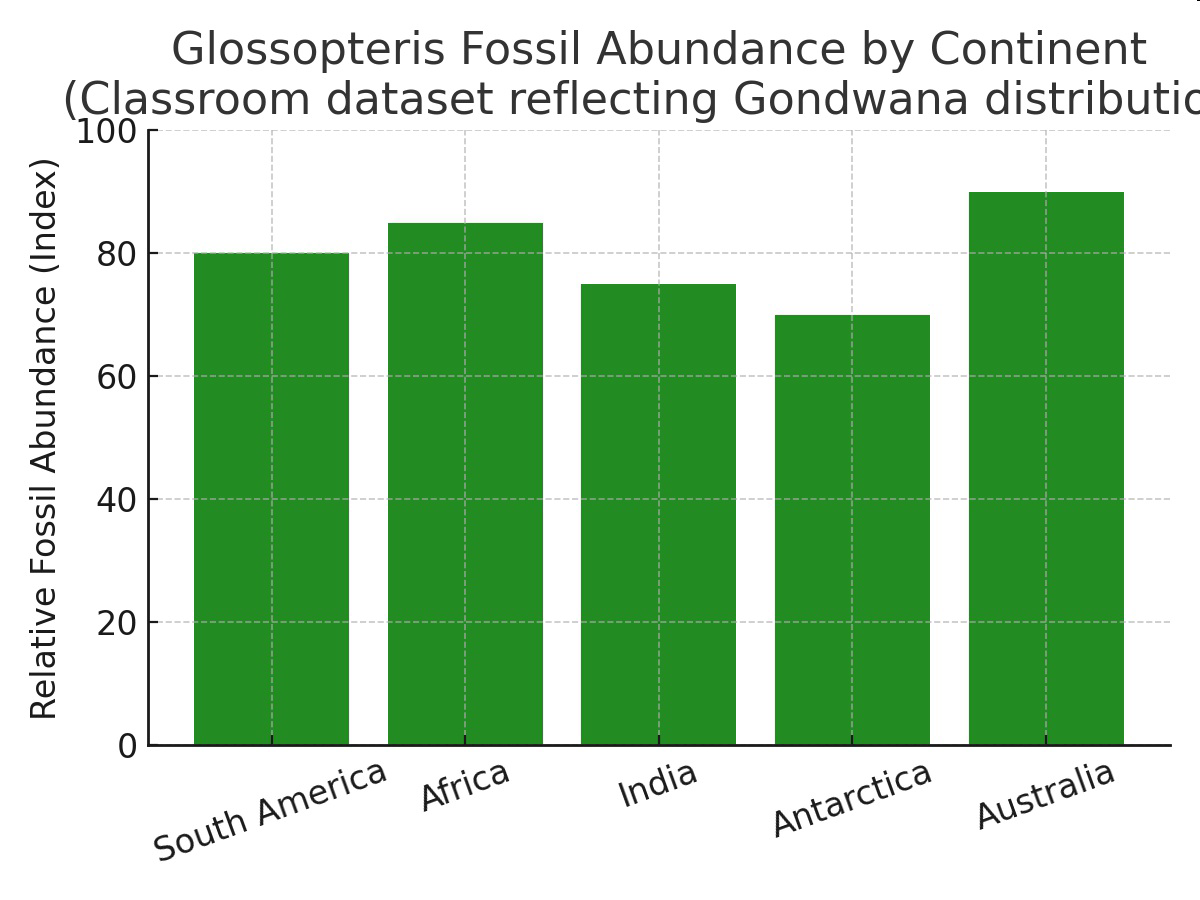
During the late Paleozoic Era (about 260 million years ago), a fern-like plant called Glossopteris grew across what are now South America, Africa, India, Antarctica, and Australia. These continents are now separated by vast oceans, but identical Glossopteris fossils - with the same leaf shapes and vein patterns - have been found on all of them.
Glossopteris leaves were broad and flat, suggesting the plants grew in temperate, humid environments, likely in large swampy forests similar to modern-day ferns and cycads. The discovery of these identical fossils on multiple continents was one of the earliest and strongest pieces of evidence supporting the theory of continental drift, first proposed by Alfred Wegener in 1912.
Sediment data add more detail: Glossopteris fossils are often found in coal-bearing shales, which form when thick layers of plant material accumulate in wet, low-oxygen environments such as flooded forests. This tells scientists that regions like Antarctica, which is now icy and barren, once had a warmer, wetter climate capable of supporting dense vegetation.
By comparing the rock types, fossilized pollen, and leaf morphology from these sites, scientists infer that all these continents were once part of a supercontinent called Gondwana, located closer to the South Pole but still mild enough to sustain plant life. The widespread presence of Glossopteris fossils thus provides two types of evidence:
Biological: The same plant lived across widely separated regions.
Environmental: The climate and landscape were very different in the past - warmer and wetter than today.
Table 1.
Continent | Rock Type | Dominant Fossil Type | Inferred Paleoclimate |
|---|---|---|---|
South America | Coal-bearing shale | Glossopteris leaves | Warm, humid |
Africa | Shale with plant impressions | Glossopteris leaves | Warm, humid |
India | Mudstone with coal seams | Glossopteris and Gangamopteris | Mild, seasonal |
Antarctica | Glacial tillite with leaf fossils | Glossopteris leaves | Cool, moist |
Australia | Shale and siltstone | Glossopteris and pollen | Warm, humid |
Graph of Information - Figure 1.
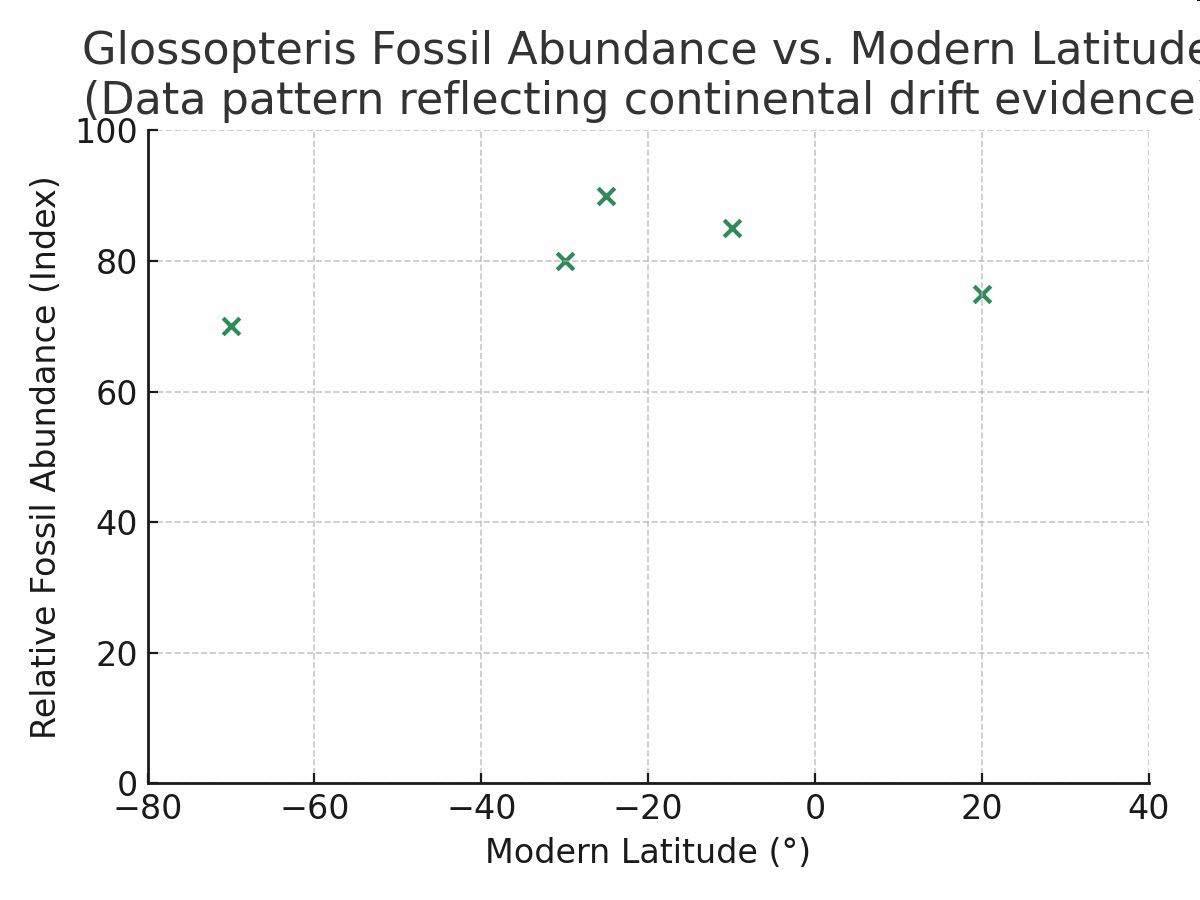
Graph of Information - Figure 2.