Fish Fossils in Desert Rock Layers
Today, many deserts are among the driest places on Earth, yet in several of these regions, scientists have discovered fish fossils and aquatic sediments preserved in ancient rock layers. These fossils provide powerful evidence that areas now covered by sand and scrub were once underwater or part of large lake and river systems.
In North America’s Green River Formation (Wyoming, Utah, and Colorado), perfectly preserved fish fossils - some with visible scales and fins - are found in fine-grained limestone and shale. These rocks formed from lake sediments that accumulated about 50 million years ago, when the region was covered by a vast subtropical freshwater system. Nearby, fossilized plants such as palms and cypress leaves indicate a warm, wet climate, very different from the arid landscape that exists today.
Similar evidence occurs in the Sahara Desert, where fossilized fish bones and crocodile teeth are found in sandstone layers deposited by ancient rivers during the Cretaceous Period (about 100 million years ago). These fossils, along with ripple marks and mud cracks in the rock, show that what is now dry desert was once a lush environment with flowing water.
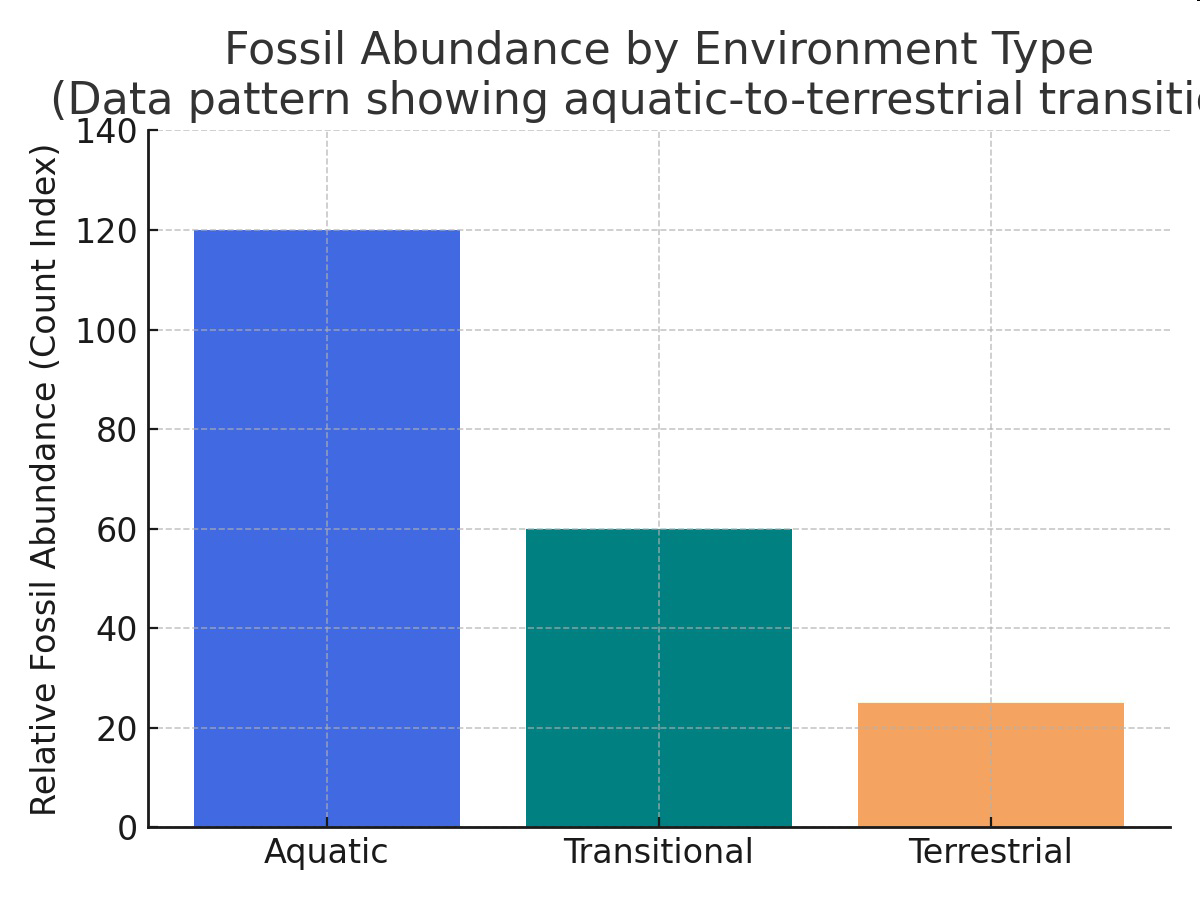
By examining which fossils occur in each rock layer, scientists can reconstruct the sequence of environmental change. Layers containing fish, amphibians, and aquatic plants indicate ancient lakes or rivers, while overlying layers with land reptiles and desert plants record a shift to drier conditions. This fossil succession is direct evidence that Earth’s environments change over geologic time.
Table 1.
Rock Layer (Oldest to Youngest) | Dominant Fossils | Inferred Environment |
|---|
Layer 1 - Fine Limestone | Fish, aquatic plants, mollusks | Deep lake or calm freshwater |
Layer 2 - Shale with Mud Cracks | Amphibians, freshwater snails | Shallow lake margin / drying pond |
Layer 3 - Sandstone | Reptiles, turtle shells | River floodplain |
Layer 4 - Cross-bedded Sandstone | Dinosaur bones, desert plants | Dry terrestrial desert dunes |
Graph of Information - Figure 1.