Reading: The Rhetoric of Advertising
star
star
star
star
star
Last updated 6 months ago
18 Nsɛmmisa
Answers relying on AI or the internet are not valid. They aren't processed for correction.
If you're using your phone, use desktop mode for better visibility.
Support your answers with evidence from the text when necessary.
For questions involving picture commentary, click on the "zoon" icon to enlarge.
For commentary & analysis questions, use your own words.
[1] Have you ever caught yourself drawn to a product on the shelf while walking through the supermarket or grocery store? That effect is not magic; it's the power of persuasion at work! Indeed, the countless ads we are exposed to daily whether on billboards, television, social media, or the internet are not innocent and simple commercials; they are meticulously coded messages, designed by teams of marketing specialists to trigger our desires and persuade us that we "need" whatever product is being advertised. As the American actor Will Roger said, "Advertising is the art of convincing people to spend money they don't have for something they don't need." However, advertising's powerful persuasion is not about coercion. Rather, it's about subtle techniques that tap into our subconscious and push us towards that "buy" button.

[2] The advertising industry uses images, along with other rhetorical and persuasive techniques, to tell us that to be happy, we need this or that product in our lives. This technique is known as association. Essentially, the advertising industry uses emotions, like happiness and success, to link their products to a desirable lifestyle. Eventually, we assume that to be successful or happy, we must buy the product or brand or we must wear the same designer label as the beautiful, successful people in the advertisement. For example, Coca-Cola ads often portray the drink as central to fun and social gatherings. This conditioning creates a strong association – when we feel festive, we crave Coca-Cola. Another technique used in ads is known as the Bandwagon Effect. This often involves using images of large crowds or individuals enjoying the product to create a sense of social pressure, leaving you feeling excluded and left out.
[3] Advertising companies also often use a technique known as celebrity endorsement to promote a certain product. For example, Christiano Ronaldo is associated with products like Clear, Timothee Chalamet with Channel fragrance Blue, Robert Pattinson with Dior, and Lionel Messi with products like Adidas, Bitget, and Budweiser. This makes consumers transfer admiration and respect for the celebrity to the product itself. A technique that is similar to celebrity endorsement is the use of what is termed social proof or testimonials. Commercials of cleaning products usually bring on a woman, whom the viewer can relate to, to tell you that she uses the product and that she likes it, leading you to trust her testimony and; therefore, trust the product. This technique is heavily used because advertisers know we love stories and that our behaviours can be greatly shaped by listening to other people’s experiences. Both techniques belong to a larger persuasive method known as appeal to emotion, as they manipulate the viewers’ emotions and prevent them from making informed decisions, which is the very definition of advertising.

[4] Another technique used to produce a sense of credibility is known as appeal to authority. This one can be quite convincing even if it is based on false information. Often, ads show you a doctor in a lab coat or an expert with hands-on knowledge endorsing the product, usually referring to science and research. This is meant to create a sense of trust and confidence in the viewer. This technique is often used to promote weight loss supplements, toothpaste, or fitness programs.

[5] Appeal to nature is another powerful persuasion technique used in advertising. Ads often tell you that a certain product is good for you because it is natural and organic. This is not only done through short and catchy phrases like 100% natural, plant-based, or pastor-raised; images involving nature, green colours, or fresh fruits are often used for greater influence. For example, an ad for a juice product often shows you images of fresh fruits overflowing on a rustic wooden table with sunlight streaming through the background. These elements of nature give you the feeling that the product is healthy and nutritious, which is not always true, as most of these products may often contain harmful food additives and copious amounts of sugar.

[6] In conclusion, the persuasive tactics used by advertising companies are not designed to simply grab our attention, research shows that they can cloud our judgment, undermine our capacity for critical thinking, and eventually, lead us to make impulsive decisions rather than well-informed purchases and shopping habits. Not only that, these ads damage people’s self-esteem and body image as they typically portray luxurious lifestyles and idealistic beauty ideals. The damage of ads becomes greater once you consider their environmental implications. As our shopping craze spikes, we are likely to produce more waste, and develop unhealthy and unsustainable lifestyles.
GLOSSARY:
Persuasion: act of convincing someone to do something
Coercion: compulsion; use of force
Brand: a particular name of a product of a famous company
Festive: celebratory
Testimonial: formal evidence given by someone
Credibility: can be believed in and trusted
Pastor-raised: raised on a farm
Self-esteem: self-confidence
download a copy of the text here.
Tick the best 2 titles for the article.
What is the author’s main purpose in writing this article?
Which statement best expresses the central idea of the article?
How would you describe the tone of the text? (Satirical, emotional, persuasive, informative).
Why do you think so?
In paragraph [2], what does the author mean by “association” in advertising?
Which of the following persuasion techniques are not mentioned or suggested in the article?
1. Math each persuasion technique with its definition.
| Draggable item | arrow_right_alt | Corresponding Item |
|---|---|---|
Celebrity endorsement | arrow_right_alt | Promoting a product as healthy or good for you because it's "natural" or uses natural imagery |
association | arrow_right_alt | Featuring someone like a doctor in a lab coat to endorse a product, creating trust in the viewer |
Appeal to nature | arrow_right_alt | Using images of happy users to create pressure to buy something because everyone else seems to have it. |
Appeal to authority | arrow_right_alt | Transferring your admiration for a celebrity to the product they promote, making you want it too. |
The Bandwagon effect | arrow_right_alt | Linking a product with positive emotions or desirable lifestyles |
Which example from the article best illustrates the "Bandwagon Effect"?
Which 2 techniques does the author describe as examples of appeal to emotion?
According to paragraph [4], why can appeal to authority be effective even when the information is false?
The author lists several negative effects of advertising in paragraph [6]. Explain 2 effects and support each one with a specific detail from the article.
In paragraph [5], which detail signals that an ad is using appeal to nature?
How do advertisements typically affect consumers' decision-making?
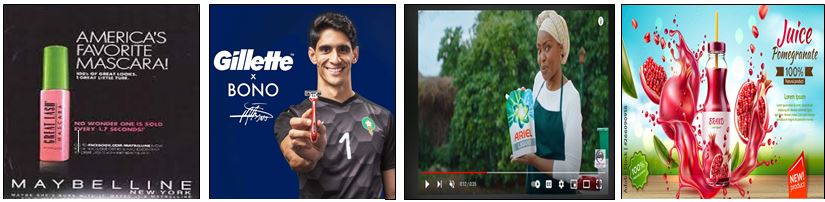
Look at the ads and identify the persuasion technique from the ones discussed in the text?
Find in the article synonyms for the following words.
Infinite [1]
Carefully [1]
Connect [2]
Represent [2]
Advertise [3]
Control [3]
Reliability [4]
Specialist [4]
Memorable [5]
Dangerous [5]
Strategies [6]
Rich [6]
unrealistic [6]
Choose 1 ad from the ones attached. Write a short paragraph analysing it. Use these questions & prompts to help you.

Describe what you see in each ad, and name the product being advertised.
Identify the persuasion technique(s) used.
Comment on visual elements (colour, clothes, text etc)
Identify the target audience and age group.
Explain the intended effect of the add/ message.
How does look at the ad make you (or the average person) feel?
Does the ad have any ethical or logical problems? What are they?