Log in
Sign up for FREE
arrow_back
Library

9.1 - 9.2 Intro to Evolution [Practice]

star
star
star
star
star
Last updated about 4 hours ago
16 questions
This is part 1 (of 2) for the Intro to Evolution assignment.

This is the "Practice" versions, which will allow you to check your answers and change them, as many times as you need to, before you submit the assignment. This is intended to give you a chance to learn new information and practice it, before you move on to the short Mastery Check formative assignment that will be graded for accuracy. Make sure you complete BOTH this Practice assignment and the other Mastery Check assignment, by the deadline!

This Practice assignment includes:
  • short readings to introduce the content
  • practice questions afterward that will require you to apply your knowledge from the reading(s)
  • short videos to introduce content
  • practice questions afterward that will require you to apply your knowledge from the videos


Make sure to take notes as you go through the assignment! You are responsible for all information within it. And, you will need this information for the activity in class on Thur/Fri (2/26 - 2/27).

Charles Darwin
Required
0.2
Required
0.1
Required
0.2
Evolution & Natural Selection
Required
0.2
Required
0.2
Required
0.2
Other Types of Selection
Required
0.2
Required
0.4
Required
0.2
Speciation
Required
1
Required
1
Required
0.5
Required
1
Required
0.1

Prior to Darwin

Prior to Darwin’s theory of evolution, there were many varied ideas about how life as we know it came to be. Visionaries in Ancient Greece some 2600 years ago had already reasoned that humans could not have appeared on Earth in their current form, and must have originated from some previous ancestor. Some proposed that humans were born from other creatures entirely, while others suggested that various combinations of species (for example, cattle with human heads) originally existed on Earth and competed with one another until only some species remained.

Jumping ahead to 1830, a famous debate took place in Paris, where two famous scientists argued about whether or not organisms could change over time, to explain the oddly coincidental similarities between some species. Many other discussions and proposed ideas existed, and as you can see, some of these ideas began to touch on something similar to what we now understand as “evolution”, although they were not totally correct and/or failed to explain how evolution could have occurred.

In the next short reading, you'll read more about the observations and conclusions Darwin made in his work. As with all scientists, though, his work did not exist in a vacuum. Darwin was influenced by a variety of different ideas and people, including the following:

James Hutton

A geologist who proposed the concept of "deep time", which proposed that Earth was shaped by geological forces over extremely long periods of time (suggesting that Earth was millions of years old!)

Charles Lyell

Another geologist who popularized "uniformitarianism", the idea that geological processes that we see shaping Earth today also likely existed throughout Earth's ancient history (and shaped it back then, too!)

Jean-Baptiste Lamarck

A naturalist (like Darwin!) who proposed the Inheritance of Acquired Characteristics. This states that an existing organism undergoes change during its lifetime based on use or disuse of a trait/body part. Those traits could then be passed down to their offspring.

Thomas Malthus

An economist who argued that there was a "struggle for existence", because human population growth eventually outpaces the available food and other resources. Eventually, population growth would lead to food scarcity and overcrowding.

Alfred Russel Wallace

Another naturalist who also sailed around the world to study nature like Darwin, at roughly the same time as him. He actually came up with the same general ideas (evolution by natural selection) as Darwin, completely independently, based on his own observations and conclusions. We'll talk more about him together in class! :)

Darwin's Journey


This brings us to Darwin’s journey in 1831 on the Beagle. He was a naturalist, and sailed across the world on a long 5-year journey. He stopped at many locations in South America and the Galapagos Islands, observing and recording what he saw. He started to note some very interesting patterns.

In his travels, he noticed three distinct patterns:
  • species vary globally
  • species vary locally
  • species vary over time
As he observed these patterns, he considered what it might mean, taking into consideration some of the ideas that were previously mentioned (the concepts introduced by other people that influenced Darwin's conclusions.)


GLOBALLY

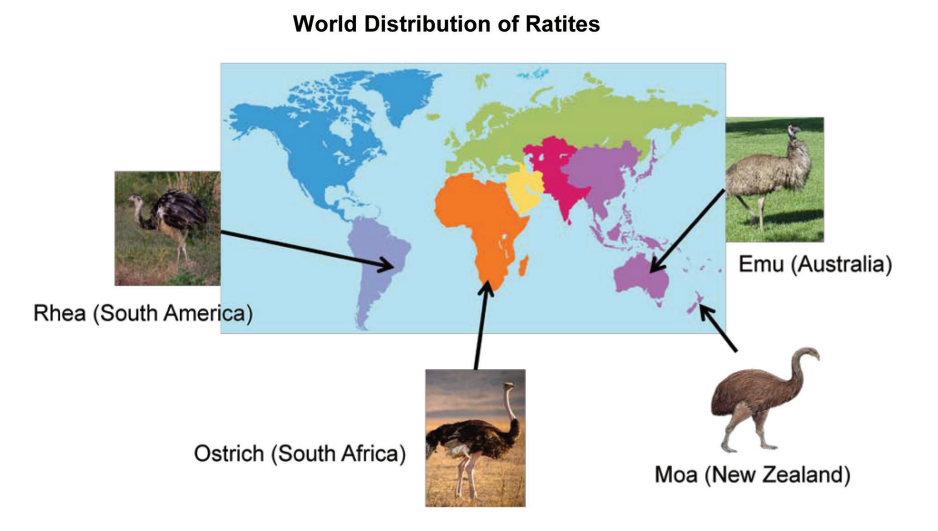
Darwin noticed that similar habitats across the world tend to have very similar (but different!) species to one another. For example, in Africa he saw a flightless bird, the ostrich, which is remarkably similar to the flightless birds found in Australia (emu) or in South America (rhea).

LOCALLY

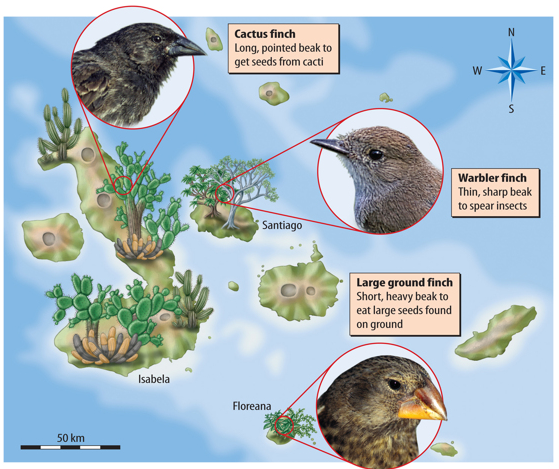
Darwin noticed that even in a particular location, like the Galapagos Islands, similar species would look a little different from one another and occupy different habitats. For example, he noticed that the finch birds on different islands were very similar to each other, except for their beaks, which often differed in size and shape. Eventually, Darwin theorized that one ancestral finch species had evolved over many years to have different beak shapes based on the food sources available on the different islands. For example, a large wide beak allows some finches to crush or break open hard-shelled seeds or nuts, while a long thin beak allows others to find and grab tiny insects in cracks within wood or rock. One of the species even used its beak to hold and use tools to dig out its food!

OVER TIME

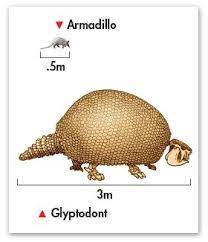
Darwin collected many specimens during his journey, including many fossils! He noticed that some of the extinct animal fossils he collected looked very similar to certain living species - almost as if they were related in some way! For example, one of the fossils he found was a long-extinct giant animal with "armor" around itself. He noticed that it looked an awful lot like the armadillos he had seen living in the same general location he found the large fossil at.


It took Darwin years after he returned from his journey to study his notes and specimens, eventually leading to his theory of evolution by natural selection.
Question 1
1.

Which statement below most accurately describes the history of evolutionary theory?

Question 2
2.
Charles Darwin officially proposed the theory of evolution by natural selection __________ his 5-year ship voyage.
Question 3
3.

[MARK ALL THAT APPLY!]

Darwin noticed that species vary....

Natural Selection

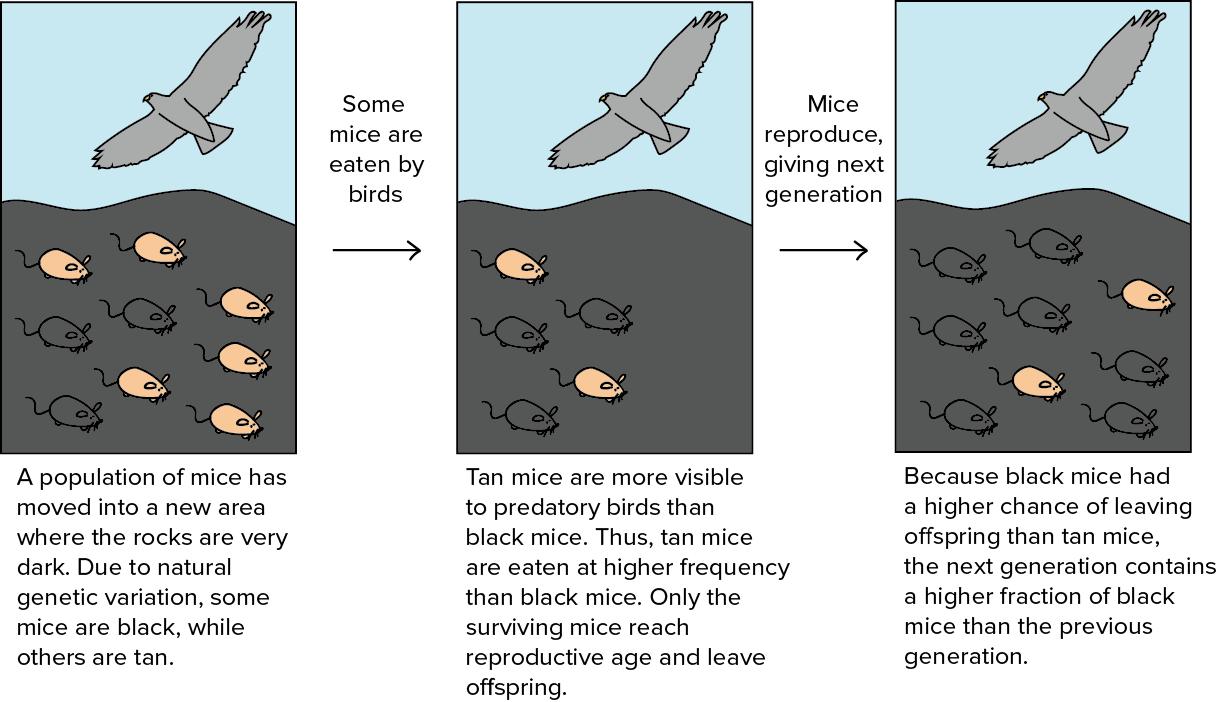
To explain how and why evolution occurred, Darwin described something called natural selection. Resources like food and shelter are limited in nature. Even if organisms in a certain population are all part of the same species, they are still going to have some differences between one another. Individuals that happen to have traits better suited for their particular environment will be more likely to survive and reproduce. Over time, they are “naturally selected” for, so you may expect to see that over time, that trait becomes more and more common in that population. An example scenario of natural selection occurring is shown on the right, using a population of mice as an example.

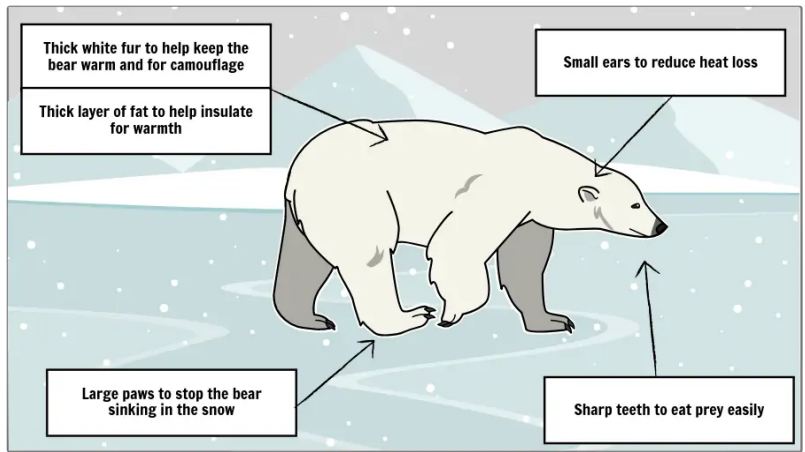
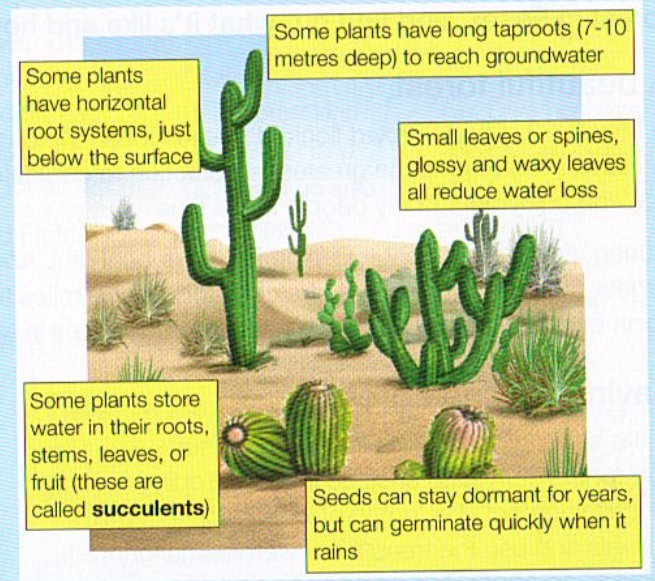
Overall, the definition of evolution is really just “change over time”. In biology more specifically, it is the change in characteristics of a given species over time. It’s important to note that it happens to populations, not individuals. In the mouse scenario, it wasn’t possible for a single mouse to somehow suddenly become black instead of tan. Instead, over many generations of mice, predators tended to eat more tan mice than black mice, so more black mice continued to survive and pass down the alleles for black fur to their offspring. Eventually the population changed such that most (or maybe all, in the future) of the species is now black. When a heritable trait increases an organism’s “fitness” (its ability to survive and reproduce in its environment), that trait is called an adaptation. A few more examples of adaptations are shown on the right, as well.
Question 4
4.

Which statement below best describes evolution?

Question 5
5.

Which statement below is FALSE regarding evolution and/or natural selection?

Question 6
6.

Why do some organisms within a certain species have a higher “fitness” than other organisms within that species?

Artificial & Sexual Selection

There are many different types of selective pressures that can exist and affect how a species evolves. It may be surviving against predators, finding or accessing food/water, surviving better in a certain temperature, and many other possibilities. There’s even a particular type of selection called sexual selection, in which individuals in a species with certain heritable characteristics are more likely than others to obtain mates.

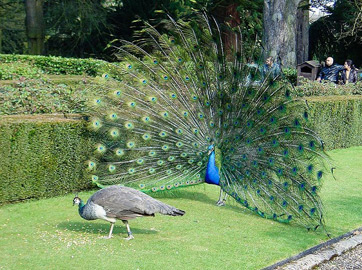
Sexual selection can be intersexual, or choosing of the opposite sex. An example of this is when female peacocks tend to choose to mate with male peacocks that have larger and brighter feather displays. Sexual selection can also be intrasexual, or between members of the same sex. For example, males in some species will fight one another for food, territory, or a mate. Thus, a male deer with larger antlers, for example, is more likely to survive and win this fight, and thus pass down the genes for larger antlers to its offspring.

Sexual selection can lead to sexual dimorphism. Sexual dimorphism is when the different sexes within a particular species look distinctly different from one another. An example of this is shown to the right. The top image shows two peacock birds - one male, and one female. You can see a clear physical difference between the two sexes, as a result of the intersexual selection that has taken place over many, many years in the species.

It’s important to note that natural selection is just that - natural. It occurs in nature, rather than in human-created situations, like dog breeding. When humans intentionally choose to breed certain organisms together in order to choose certain traits over time, we refer to that as artificial selection. Humans have historically used artificial selection in many different areas, to generate plants that grow larger and more nutritious fruits and vegetables, animals with better quality meat or wool, and species with certain physiques and temperaments.
Question 7
7.

In order to attract a female to mate with, a male koala will perform a mating call, which is a loud, low-pitch, repetitive vocalization. The larger the koala, the deeper and more resonant the call tends to be. Researchers found that female koalas tend to choose males that produce deeper and more resonant mating calls; they are more likely to reject a male if he has a less impressive call. As a result, over time the species has evolved such that male koalas tend to be much larger than female koalas. This evolution, resulting in the size of male koalas increasing over many generations, is best explained by….

Question 8
8.

Determine whether each listed example would be considered natural selection or artificial selection.

  • Long ago, farmers began to selectively breed together wild mustard plants, in order to generate plants with the characteristics they desired. This eventually led to the creation of cauliflower, broccoli, and cabbage.
  • Relatively "recent" ancestors of humans began to develop larger brains capable of more complex thought and problem solving, as a result of individuals with larger brains surviving better than those with smaller brains.
  • Darwin kept and bred pigeons, sometimes intentionally breeding certain pigeons together to attempt to produce offspring with certain characteristics.
  • Finches on the Galapagos developed adaptations to allow them to eat different food sources, eventually leading to slightly different, but related, finch species.
  • In the past, tree frogs that produced certain chemicals in their skin would cause predators to become sick or die if they were eaten. Over time, this caused some species of tree frogs to develop that consistently secrete toxins on their skin.
  • Natural Selection
  • Artificial Selection
Question 9
9.

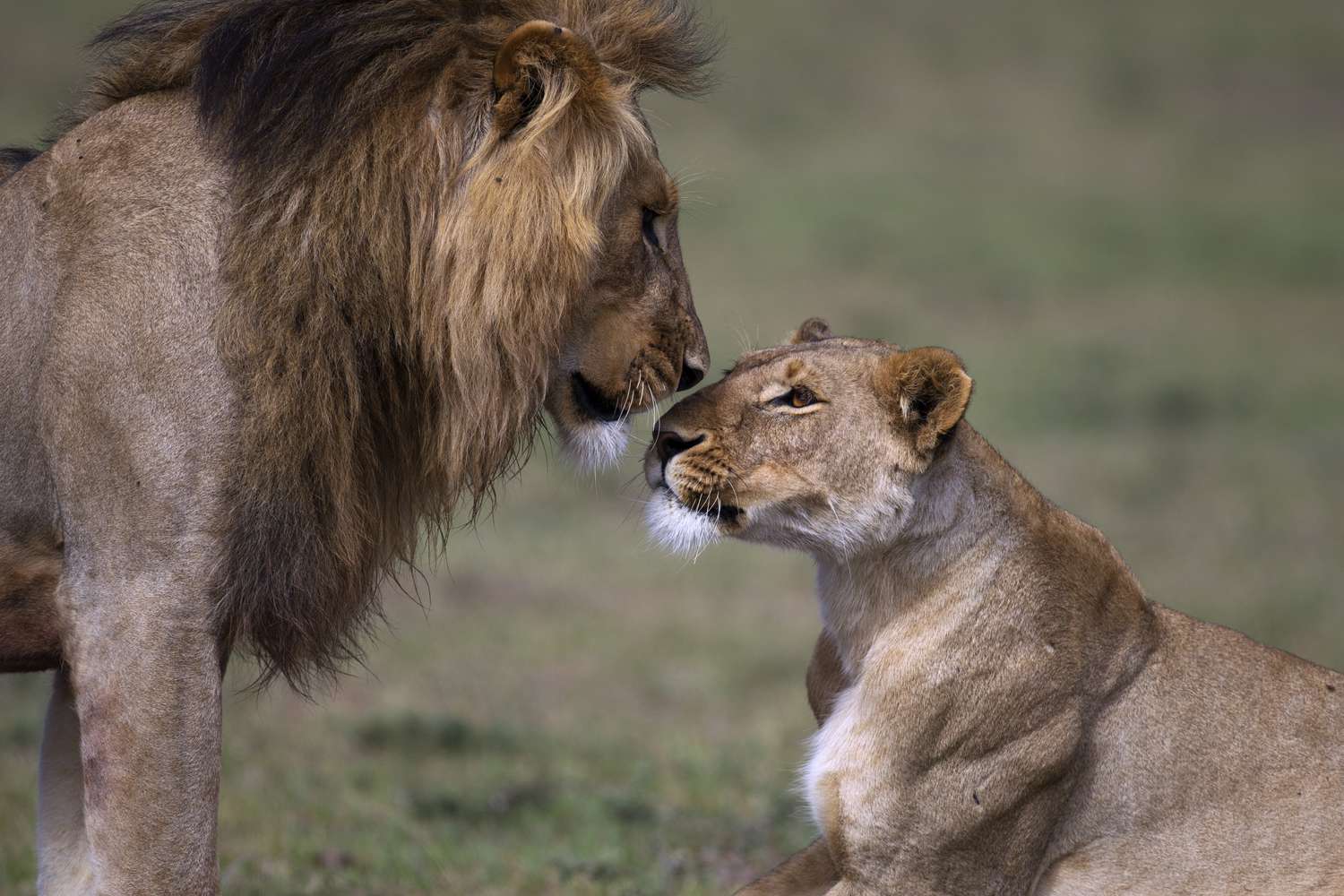
The two lions in the image below are from the same species. The lion on the left is a male, and the lion on the right is a female.
This is an example of....

Trim End | 06:53
Question 10 | 00:01
Text | 00:40
Question 11 | 02:16
00:00/00:00
Question 10
00:01
Text
00:40
Question 11
02:16

Selection

Macroevolution refers to larger-scale changes that affect multiple species, while microevolution refers to smaller-scale changes within a certain population.

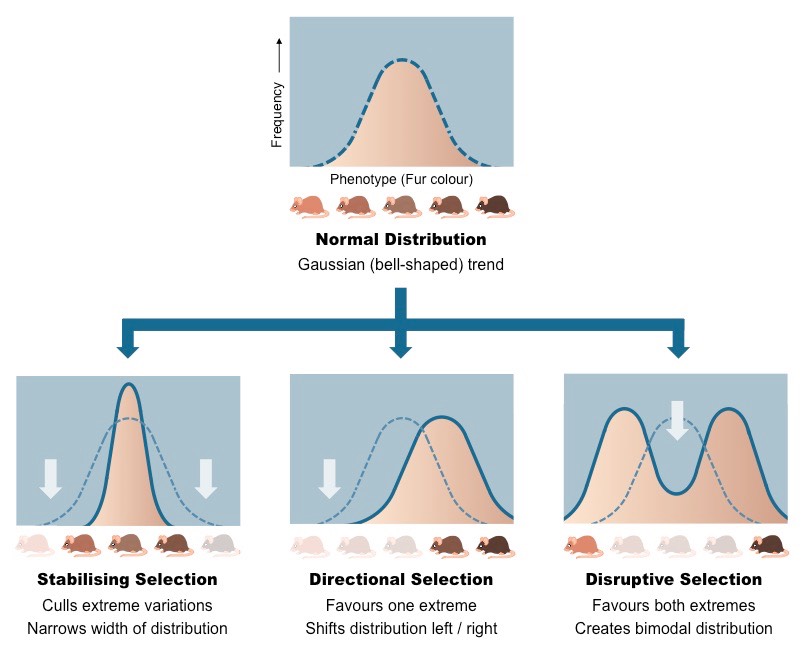
Microevolution can occur within a population if natural selection is occurring, resulting in traits that increase fitness becoming more and more common over generations. If a trait affected by natural selection is a polygenic trait (trait controlled by multiple genes, with a spectrum of possible phenotypes), we can observe the effect natural selection has on the distribution of possible phenotypes.

There are three main "types" of selection on polygenic traits. For this example, imagine there is a population of mice. In this mouse species, coat color is a polygenic trait that ranges from light brown to dark brown. The top graph in the image shows the starting population. Pay attention to the distribution of different coat colors in the starting population, to see how each type of selection affects that distribution.

Stabilizing Selection

The average phenotype survives better than either of the extremes. For example, maybe the mice live in an area where the ground is medium brown, making it easier for predators to see and catch light or dark brown mice, but medium brown mice are more likely to survive.

Directional Selection

One of the "extreme" phenotypes survives better than all other phenotypes. For example, maybe the mice live in an area where the ground is dark brown. Predators have an easier time seeing and catching light or medium brown mice, but dark brown mice survive better.

Disruptive Selection

Both of the "extreme" phenotypes survive better than the average phenotype. For example, maybe the mice live in an area that is rocky, and the rocks are all either light or dark brown, with little to no medium brown rocks. Predators will be able to see and catch medium brown mice the easiest, but light or dark brown mice can survive better.

Tempo of Evolution

"Tempo" refers to the rate, or speed, at which evolution takes place (in a macroevolution context). Throughout history, different scientists have proposed different models for the "correct" pace at which evolution takes place.

Gradualism

Gradualism refers to a slow, gradual, consistent series of changes over time.

Punctuated Equilibrium

This model refers to long periods of time when little to no changes occur, which are then interrupted by bursts of rapid change.


As we've gathered more evidence, modern scientists have typically agreed that both models are "correct", as evidence suggests that the rate of evolution changes, depending on the organism and specific conditions. For example, in situations where the environment is very stable over a long period of time, we may expect gradualism to be more accurate. In situations where the environment changes very rapidly, we may expect to see bursts of rapid change.

Mass Extinctions

Mass extinctions, events where a large number of species go extinct, are an example of an event that can dramatically affect the rate at which evolution occurs. Often times, after a mass extinction event, the species that have gone extinct have left open habitats and resources that are now made available to those species that survived. Those surviving species may evolve relatively quickly in order to fill those new available niches in the environment, resulting in adaptive radiation occurring. One example of this is the rapid diversification of mammals after the mass extinction event that killed the dinosaurs. They underwent adaptive radiation and ended up becoming the dominant life form!

Coevolution

This refers to cases where two or more species reciprocally affect each others' evolution. This can involve different relationships, including relationships that are mutually beneficial, predator-prey, host-disease, competitive, etc! For example, coevolution often occurs between flowering plants and pollinators. Flowers may evolve to become brighter and more attractive to pollinators, while pollinators (bees, hummingbirds, etc) may evolve in return to develop structures that are better are reaching and retrieving nectar from the flowers they pollinate.

The Fossil Record


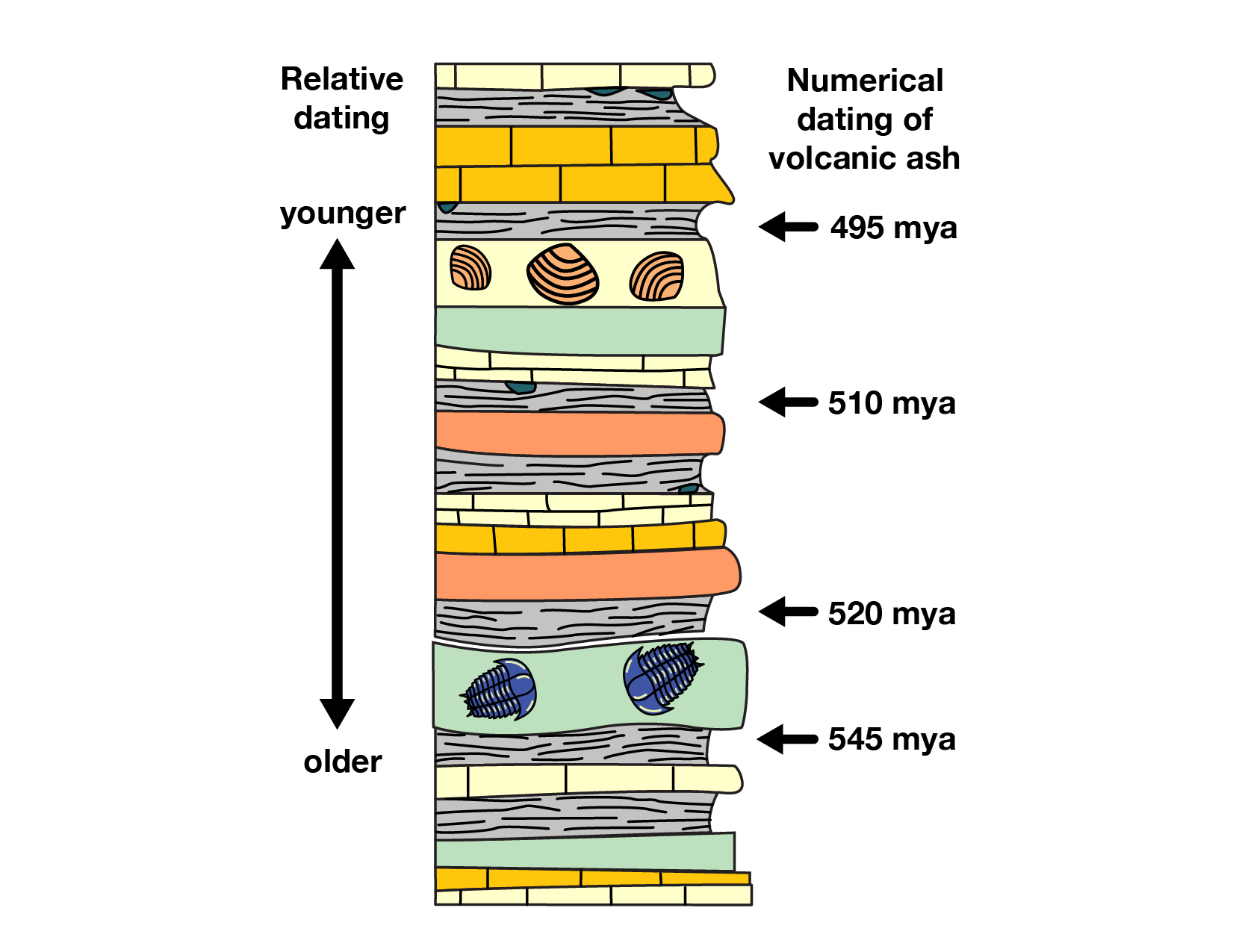
Fossils provide evidence of past life, helping scientists understand and piece together evolutionary processes. Fossils can include the preserved remains of living organisms, but can also include traces of them (ex. footprints, impressions). The fossil record refers to all fossils (discovered or not) and their location in strata (layers of rock).

There are two different types of fossil dating: relative & absolute.

Relative Dating

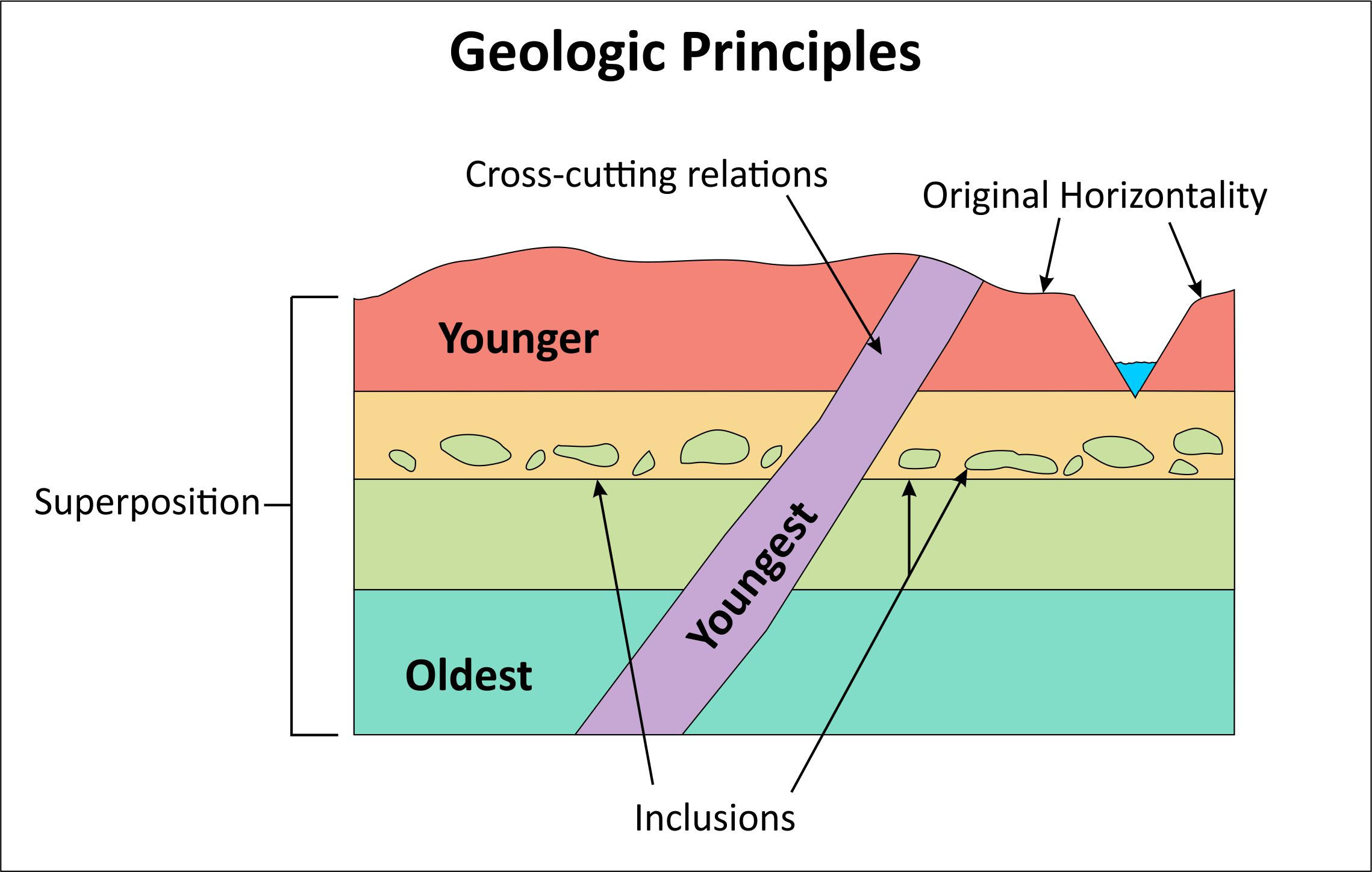
Relative fossil dating provides relative age of fossils. This means you can determine whether certain fossils are older or younger than other fossils or strata, but you can't actually determine their specific age. Stratigraphy is a method of relative dating that looks at the layers of rock, which fossils are present where, and what order these layers are found in, to determine relative age. In this method, layers that are above other layers or that "cross-cut" other layers are assumed to be younger, while layers that are below other layers or that are present as "inclusions" in other layers are assumed to be older. Picture examples of this are shown on the right. When examining strata, scientists try to identify index fossils, that are characteristic of a particular time span. These can help better identify the relative ages of other fossils. The best index fossils are widespread in area, only appear within a limited time period, and are very distinctive.

Absolute Dating

Absolute dating methods allow scientists to determine an (approximate) age of a fossil. While there are different absolute dating methods, one of the most well-known is radiocarbon dating. This method determines the age of a sample by testing the ratio of different carbon isotopes that are present. Over time, Carbon-14 decays at a specific, known rate. This allows scientists to look at the ratio of C-14 to other carbon isotopes (C-12, C-13) to estimate a sample's actual age!
Question 12
12.

Identify the isolating mechanism that is most clearly occurring within each scenario below. Categories can be used more than once, and some will not be used at all.

  • Although horses and donkeys are different species, they can mate and produce offspring. The offspring of a horse and donkey are called mules. Mules will grow and develop similarly to horses and donkeys, but due to a chromosome issue, they are not able to successfully make and sperm or eggs.
  • Although two beetle species may look very similar, they are unable to mate with one another due to their rigid carapaces (hard outer shell of the insect). The compatible structure of the male and female genital organs is so specific that the slightly different carapace shapes mean it is not possible for males and females of different species to mate.
  • While many species of frog may look similar to one another and can mate together, the offspring of those matings won’t be able to fully develop to adulthood. In some cases, development fails early, as an embryo, while in other cases development may fail later on, either later during embryo development or even during a tadpole’s development.
  • Male fruit flies in the Hawaiian islands display courtship rituals. One example is the use of particular movements to attract female mates. Two new species of fruit fly developed in this area, with the males in each one using different specific courtship ritual movements to attract mates.
  • Although previously part of the same species, two toad species commonly found in Canada and the eastern United States (Bufo americanus and Bufo fowleri) have evolved separately, due to the fact that fowleri mates during late summer, while americanus mates during early summer.
  • Mechanical Isolation
  • Behavioral Isolation
  • Temporal Isolation
  • Ecological Isolation
  • Hybrid Infertility
  • Hybrid Inviability
  • Hybrid Breakdown
Question 13
13.

Identify the type of selection occurring in each scenario below.

  • Larger squirrels are able to carry more and larger acorns to their burrows, and they are able to outcompete any smaller squirrels when acorn supplies are particularly limited.
  • A certain bird species’ diet consists of mainly one particular type of seed. Unfortunately, a disease spreads through the plants that produce those seeds, killing off all of that particular plant in this area. Luckily, the birds with smaller beaks are able to adjust and eat some smaller seeds that are produced by a similar plant species that wasn’t affected by the disease. However, the medium and large beaked birds aren’t able to pick up the small seeds, and slowly begin to die off from the lacking food supply.
  • In panthers, short teeth cause the panther to struggle to catch prey. Panthers with very long teeth, however, aren’t able to chew their food properly.
  • Starling birds typically produce around 5 eggs each time they mate. If fewer than 5 are produced, it’s more likely that any predator that attacks will manage to destroy the entire set of offspring. If more than 5 are produced, the parents will struggle to provide enough food for all the offspring.
  • A river bed is covered by a collection of rocks that are either all-black or all-white. A new snail species is introduced to the river, and these snails live on these particular rocks. The snail’s shell colors range from solid black, to gray, to solid white. The fish in this river eat the snails they can easily see on the rocks.
  • Disruptive Selection
  • Directional Selection
  • Stabilizing Selection
Question 14
14.
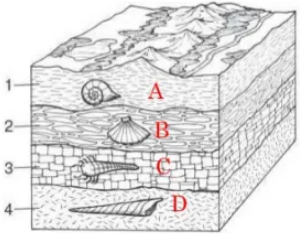
The image below shows layers of rock (1, 2, 3, 4) and some fossils (A, B, C, D) found within those layers.

Based on this image, fossil __________ is most likely the youngest out of these fossils, while fossil __________ is likely the oldest out of these fossils.
Question 15
15.

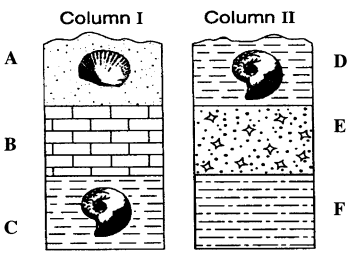
The image below shows two different samples taken from the same general area. Each sample shows certain layers of rock, and some index fossils are shown.
Based on the location(s) of the index fossils and rock layers, choose the statement(s) below that are TRUE. Mark all that apply.

Question 16
16.

Remember to now open and complete the "Mastery Check" formative assignment! BOTH this practice assignment and the mastery check assignment are due by the indicated due date/time. Click below to acknowledge that you know you need to complete the mastery check assignment next! :)