Insect Diversity
Insects make up more than half of all animal species on Earth and show remarkable diversity in their life cycles. Despite this variety, every insect experiences birth, growth, reproduction, and death - though the number and form of life stages differ.
Butterflies undergo complete metamorphosis, meaning they pass through four distinct stages:
Egg - laid on host plants.
Larva (Caterpillar) - eats and grows rapidly, molting several times.
Pupa (Chrysalis) - transformation stage, where larval tissues reorganize into adult structures.
Adult (Butterfly) - reproduces, laying eggs to begin the next generation.
The monarch butterfly completes this cycle in 25 - 45 days, depending on temperature.
Grasshoppers undergo incomplete metamorphosis, which includes only three stages:
Egg - laid in soil or vegetation.
Nymph - hatches looking like a small adult; grows by molting several times.
Adult - fully formed, capable of reproduction.
Grasshoppers grow continuously, without a pupal stage. Their life cycle takes 60–90 days, depending on temperature and food availability.
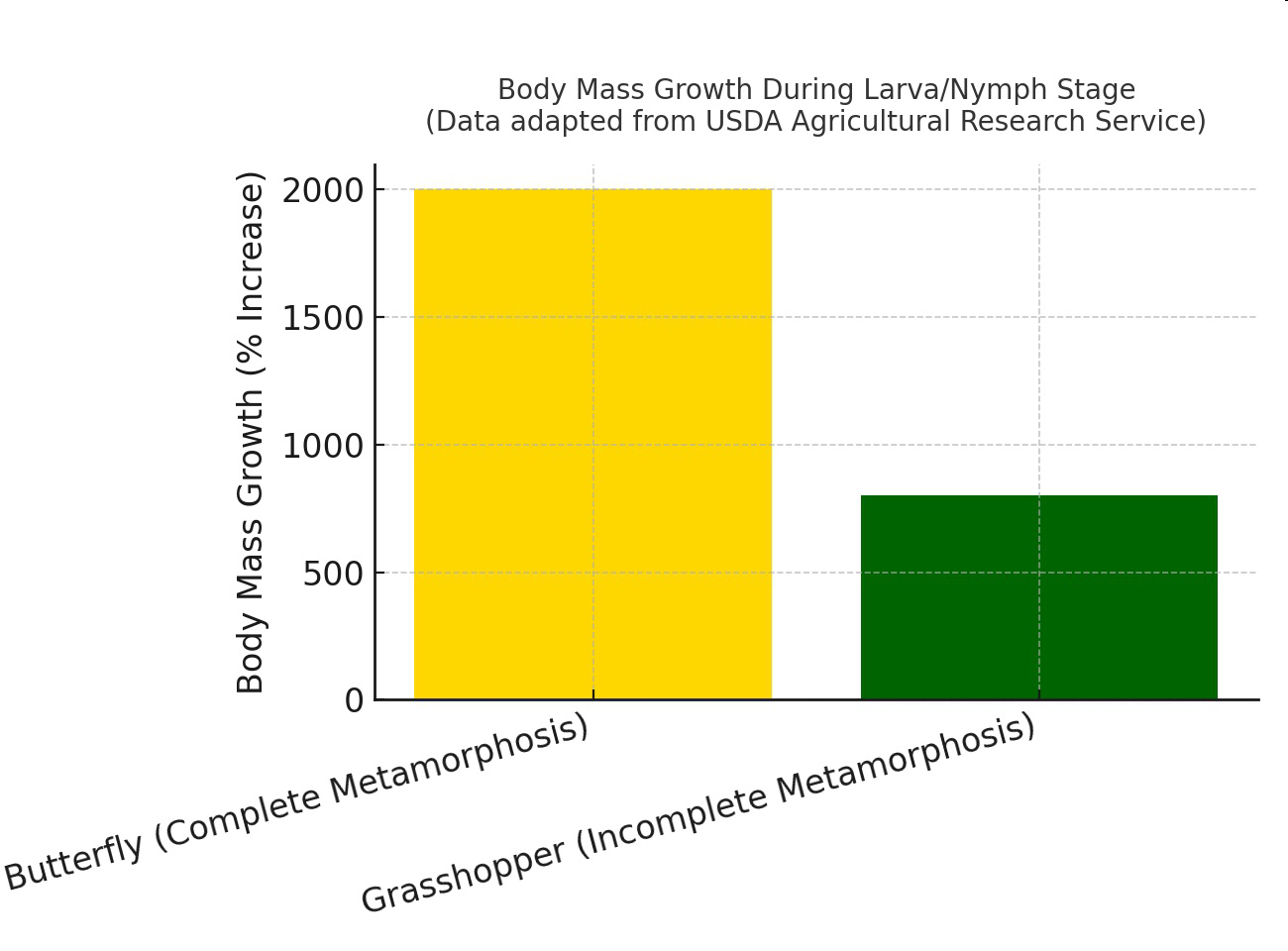
Field observations from the Smithsonian Insect Ecology Lab and USDA Agricultural Research Service show:
Butterfly larvae gain up to 2000% of their body mass before pupation.
Grasshopper nymphs increase mass by about 800% over multiple molts.
Butterflies have a shorter life cycle but more dramatic physical changes; grasshoppers have a longer cycle with more gradual growth.
Both life cycles demonstrate unique adaptations, but both follow the same biological sequence of birth, growth, reproduction, and death.
Table 1.
Insect Type | Life Cycle Duration (days) | Body Mass Growth (% Increase) |
|---|
Butterfly (Complete Metamorphosis) | 35 | 2000 |
Grasshopper (Incomplete Metamorphosis) | 75 | 800 |
Graph of Information - Figure 1.
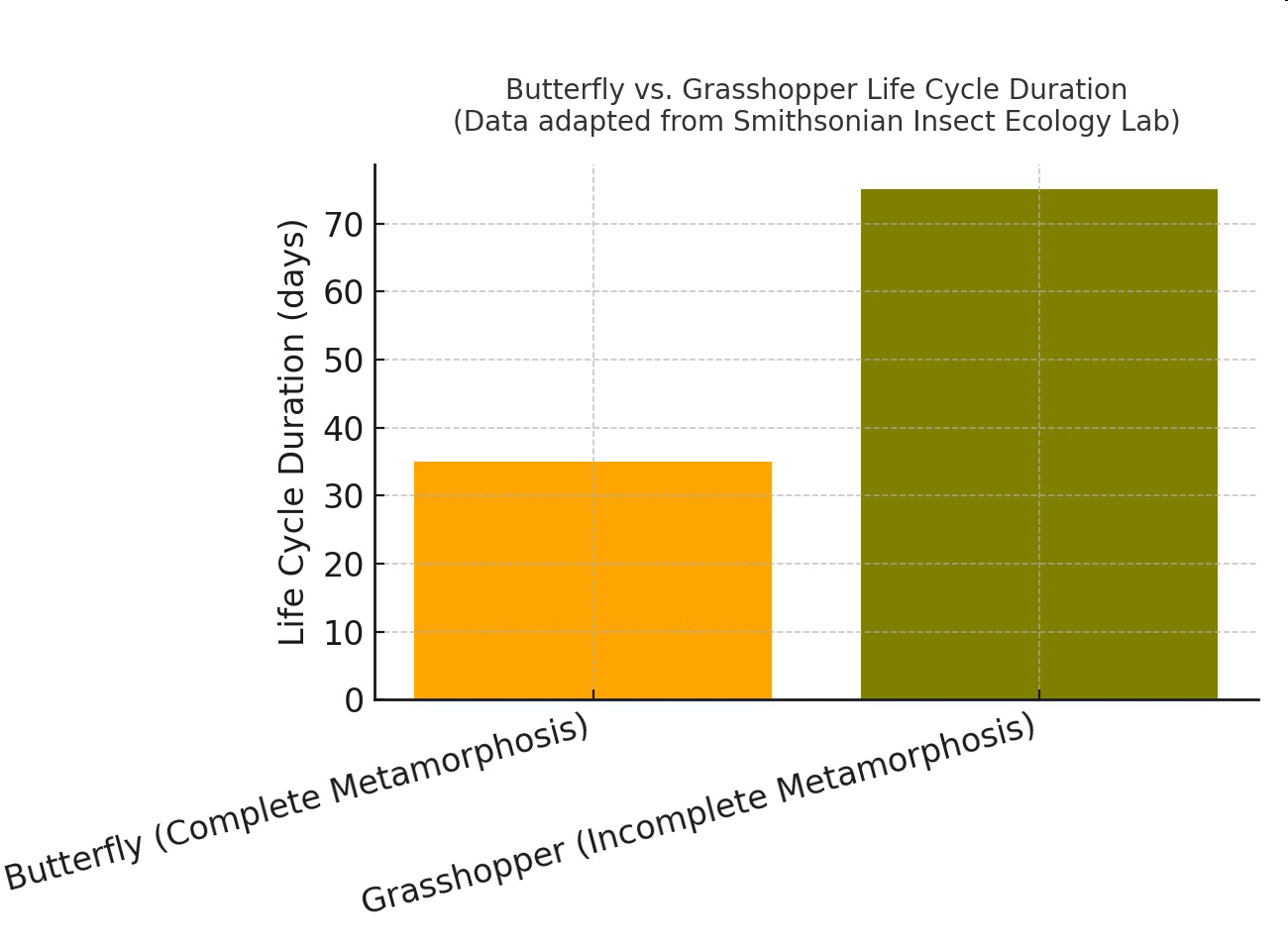
Graph of Information - Figure 2.