Meerkat Group Survival
Meerkats are small mongooses that live in cooperative groups called mobs or clans, usually made up of 10–30 individuals. They inhabit arid regions of southern Africa, where predators such as eagles, hawks, and jackals pose constant threats. To survive in these open habitats, meerkats rely on coordinated vigilance and alarm calling behaviors.
When a group is foraging, one individual often climbs a rock, bush, or termite mound and acts as a sentinel, or guard. The sentinel stands upright, scanning the sky and horizon for danger. If a predator is spotted, it gives a distinct alarm call, and the rest of the group dives into nearby burrows. After the call, another meerkat usually takes over the sentinel role.
Field researchers working at the Kalahari Meerkat Project have recorded over two decades of behavioral data, showing that groups with regular sentinel rotations experience significantly lower predation rates. In one study (Source: Clutton-Brock et al., 1999), groups with active sentinels experienced about 40% fewer predator-related deaths compared to times when no sentinel was present.
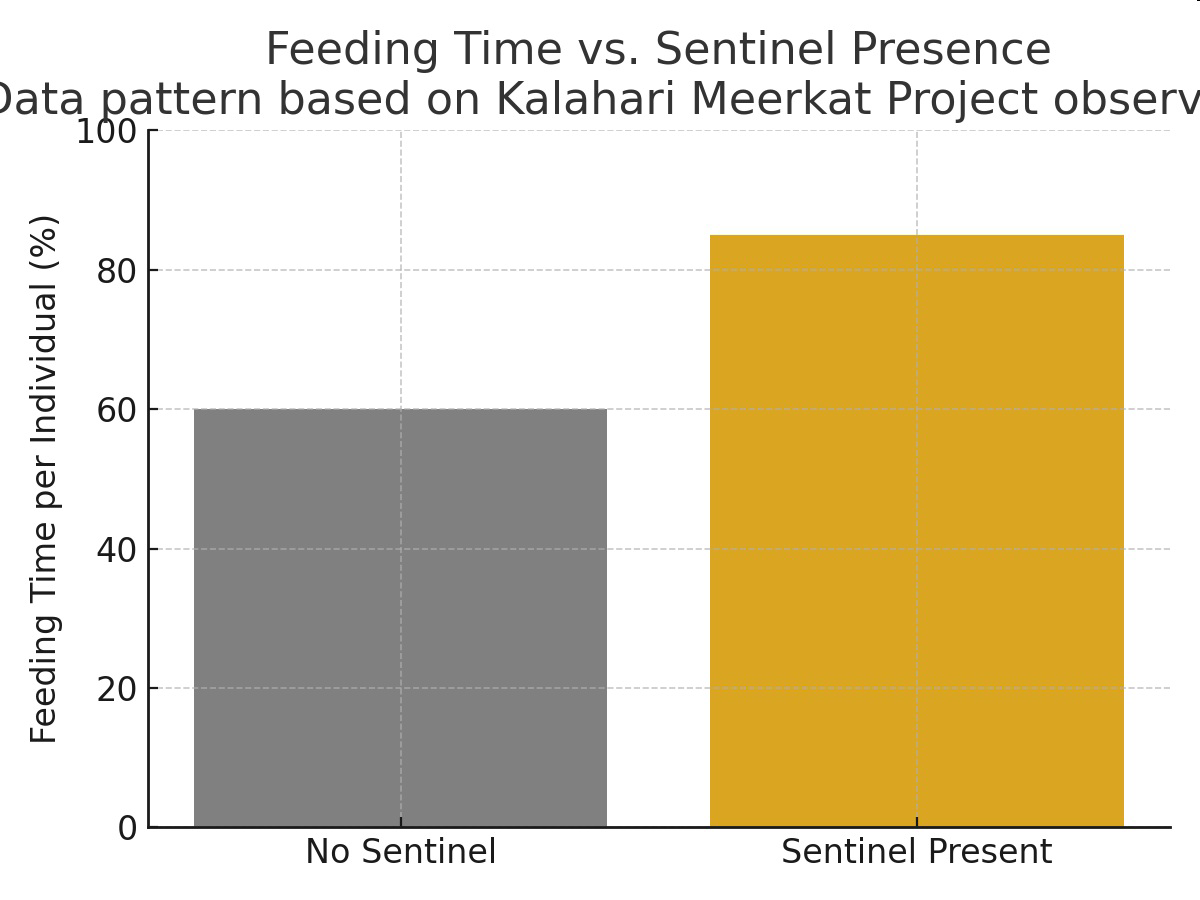
Sentinels also help the group feed more efficiently. When no sentinel is present, every meerkat must frequently stop digging to look up for danger, reducing feeding time. With a sentinel, the foragers can keep their heads down longer, increasing food intake. This cooperation improves the overall body condition and survival of group members.
Sentinel behavior is voluntary and reciprocal - individuals take turns performing the risky task. Even though the sentinel temporarily reduces its own foraging, the shared benefit of group safety outweighs the short-term cost. This is a strong example of how group behavior evolves because it helps individuals survive in the long run.
Sources:
Graph of Information - Figure 1.
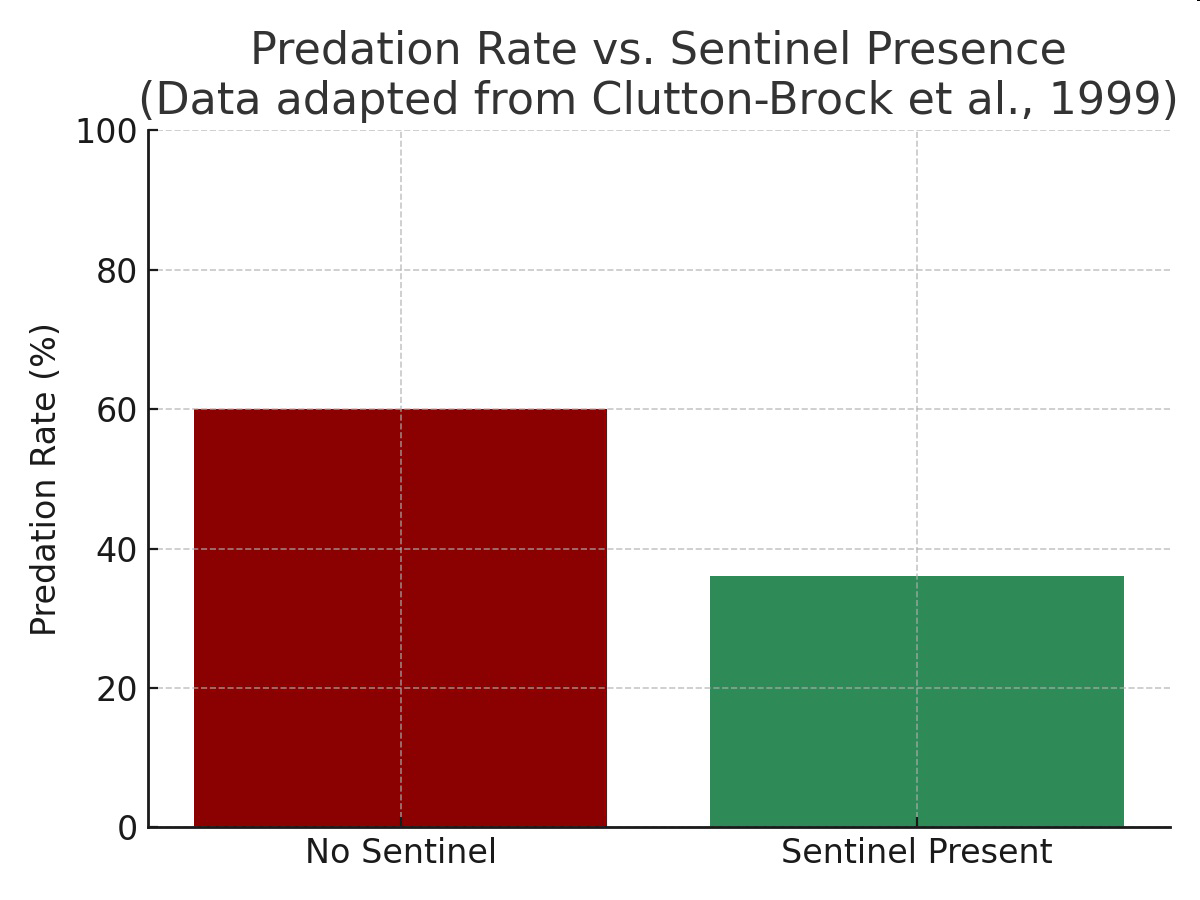
Graph of Information - Figure 2.