Monarch Butterfly Habitat Corridors
Monarch butterflies (Danaus plexippus) migrate thousands of kilometers each year between Canada, the United States, and central Mexico. Along their journey, they depend on milkweed plants for laying eggs and feeding caterpillars, and nectar plants for energy. Over the last several decades, monarch populations have declined by more than 80%, mainly due to loss of milkweed habitat from pesticide use and land development.
To help restore monarch populations, conservationists, farmers, and schools across North America have planted milkweed corridors - patches of native milkweed and nectar-rich flowers along migration routes. These corridors connect fragmented habitats, giving monarchs resting, feeding, and breeding sites on their journey.
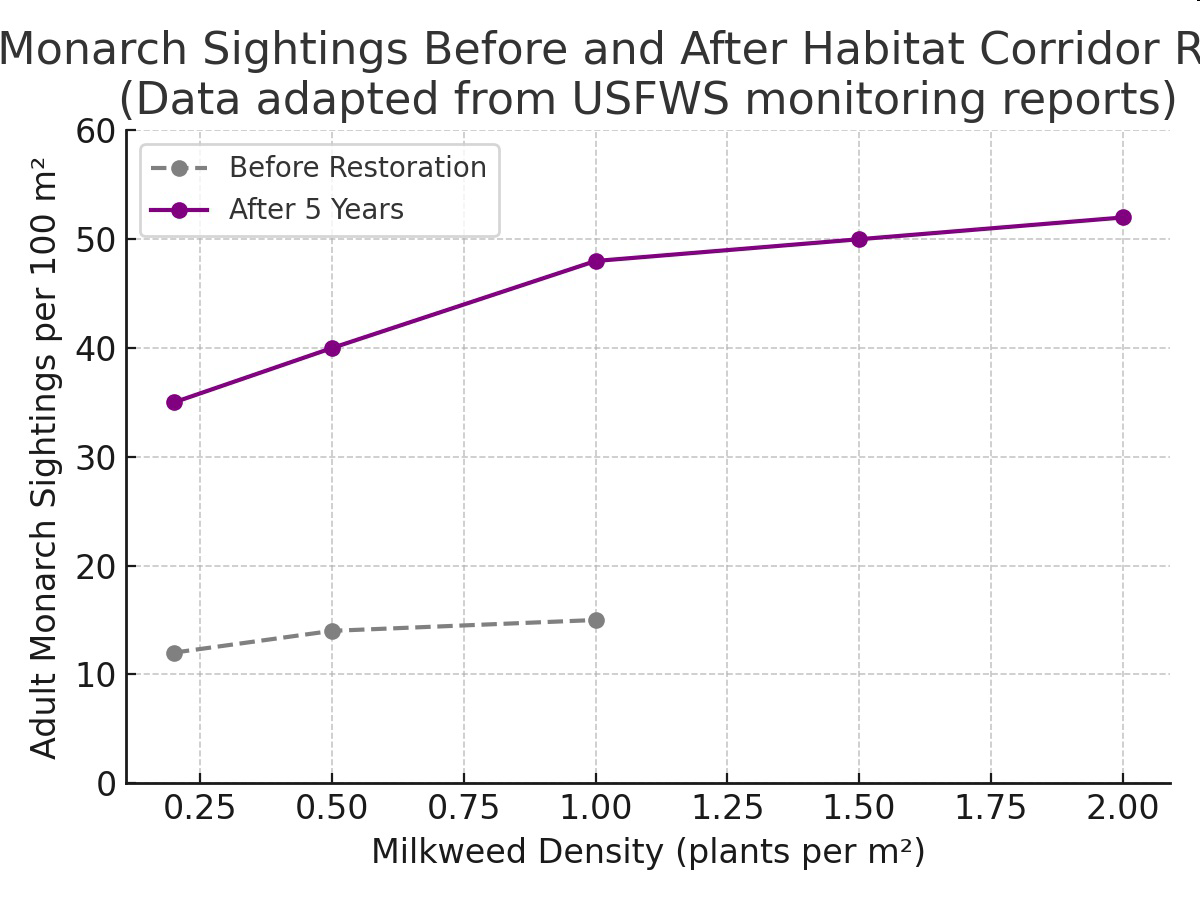
Data from the Monarch Joint Venture and U.S. Fish & Wildlife Service show that in regions where milkweed density increased by even one plant per square meter, local monarch egg and larva counts nearly doubled. In restored areas, adult monarch sightings rose from 10 - 15 individuals per 100 m2 to 35 - 50 within five years.
Although habitat corridors greatly improve survival and migration success, they cannot completely offset other threats, such as extreme weather and loss of overwintering forests in Mexico. The solution’s merit lies in improving local breeding success and maintaining population connectivity - a vital step toward stabilizing the species while larger-scale conservation continues.
Table 1.
Milkweed Density (plants/m ) | Monarch Eggs per 100 m | Adult Monarch Sightings Before Restoration | Adult Monarch Sightings After 5 Years |
|---|
0.2 | 8 | 12 | 35 |
0.5 | 15 | 14 | 40 |
1 | 30 | 15 | 48 |
1.5 | 45 | | 50 |
2 | 55 | | 52 |
Graph of Information - Figure 1.
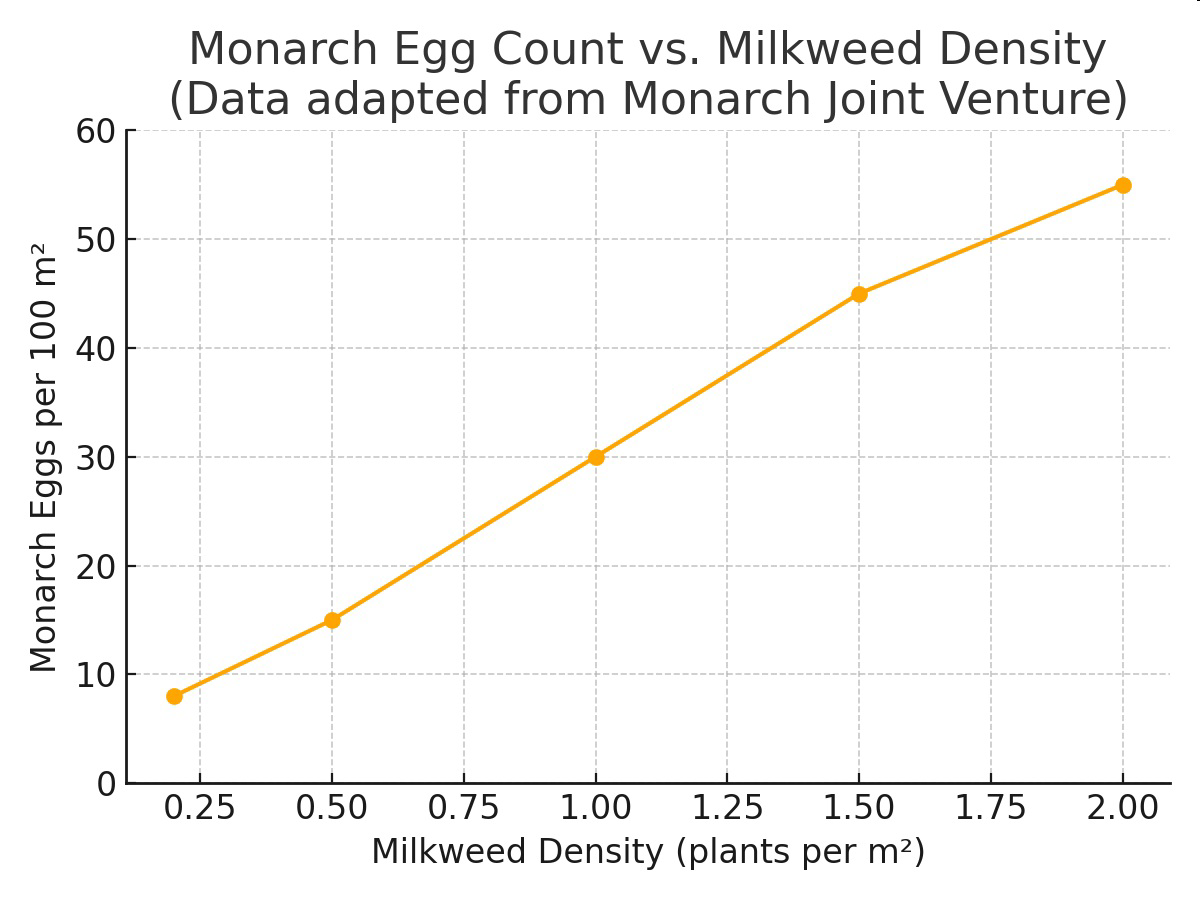
Graph of Information - Figure 2.