Polar Bears and Sea Ice Decline
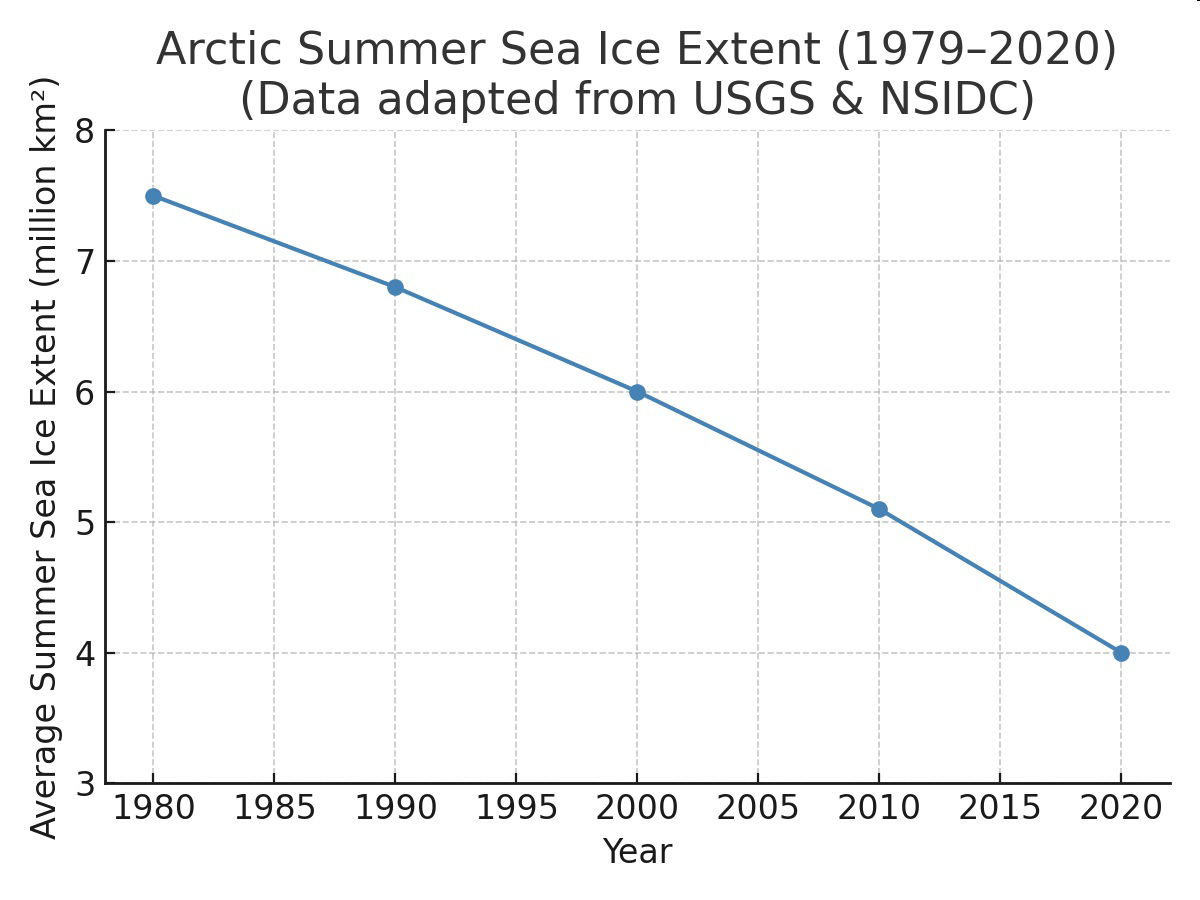
Polar bears (Ursus maritimus) depend on sea ice in the Arctic to hunt seals, rest, and raise their young. Sea ice is their platform for finding food: they wait by breathing holes in the ice to ambush seals when they surface. As the Arctic warms, however, sea ice forms later in the fall and melts earlier in the spring. Each decade since the late 1970s, the Arctic has lost about 13% of its summer sea ice extent.
With less ice, bears must swim longer distances or move onto land, where food is scarce. Studies from the U.S. Geological Survey show that in regions like Hudson Bay, Canada, the ice-free period has lengthened by about 3–4 weeks since 1980. As a result, bears spend more time fasting and their body condition has declined.
Data also show clear differences in survival and reproduction:
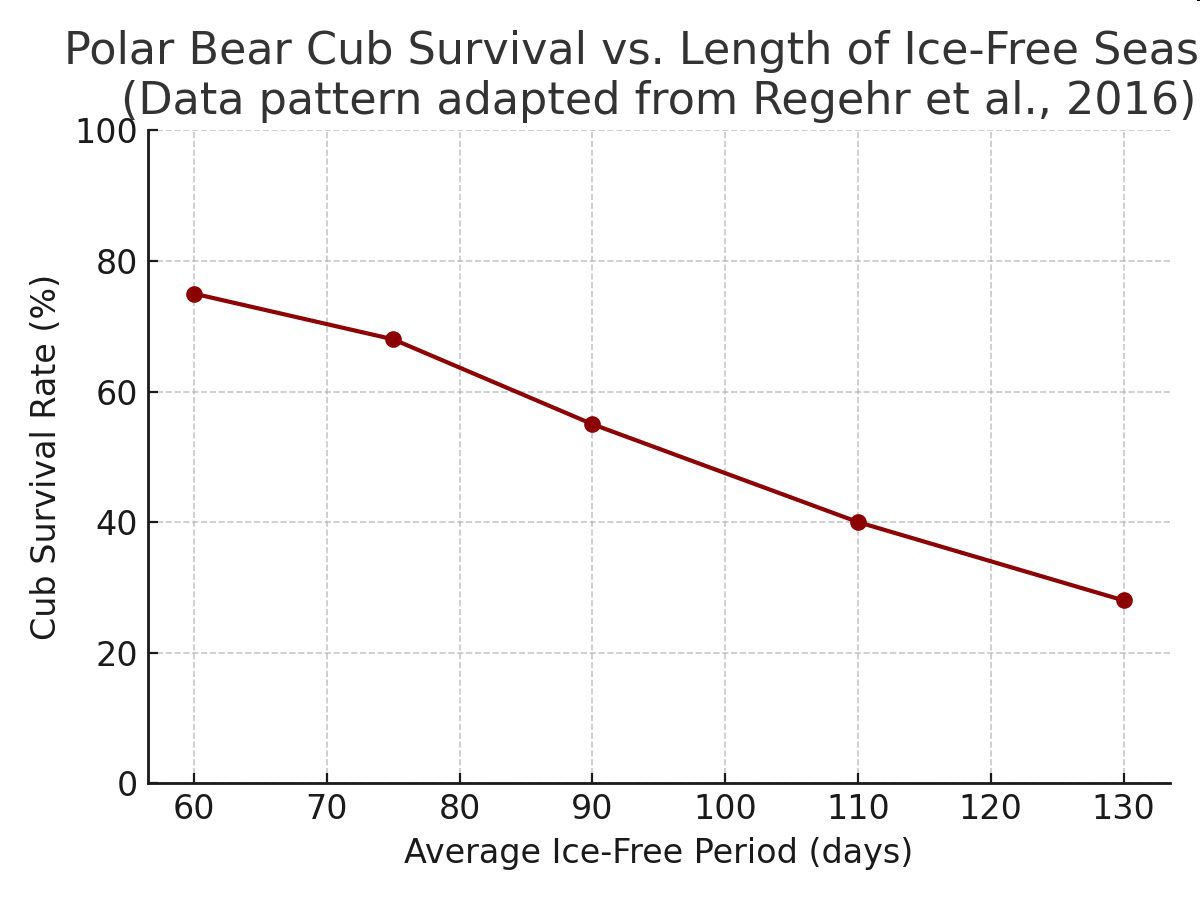
In severe ice-loss regions, cub survival drops below 30%, and adult females often fail to reproduce.
Other Arctic species show contrasting outcomes. Some seals have adapted by shifting breeding grounds northward, while others that rely on thick ice (like the ringed seal) are declining. These differences demonstrate that in a changing habitat, some species can survive well, others less well, and some not at all.
The polar bear’s dependence on sea ice provides clear, measurable evidence of how survival depends on habitat stability - and how rapid environmental change can reshape entire ecosystems.
Table 1.
Year | Average Summer Sea Ice Extent (million km$^2$) | Average Ice-Free Period (days) | Cub Survival Rate (%) |
|---|
1980 | 7.5 | 60 | 75 |
1990 | 6.8 | 75 | 68 |
2000 | 6 | 90 | 55 |
2010 | 5.1 | 110 | 40 |
2020 | 4 | 130 | 28 |
Graph of Information - Figure 1.
Graph of Information - Figure 2.