Prairie Restoration and Grassland Birds
Across North America, much of the original tallgrass prairie has been converted into farmland or urban areas, leaving less than 1% of the ecosystem intact. As a result, many grassland bird species - such as meadowlarks, bobolinks, and grasshopper sparrows - have declined sharply due to habitat loss and fragmentation.
To address this, conservation organizations and state agencies have launched prairie restoration programs that reseed native grasses and wildflowers, remove invasive plants, and reduce mowing during nesting season. These projects aim to recreate the diverse plant structure and food webs that grassland birds depend on.
Data from the Tallgrass Prairie Center in Iowa and the U.S. Fish & Wildlife Service show that restored prairie sites support much higher biodiversity than agricultural fields. Within five years of restoration:
Bird species richness increased from about 5 to 18 species per 10 hectares.
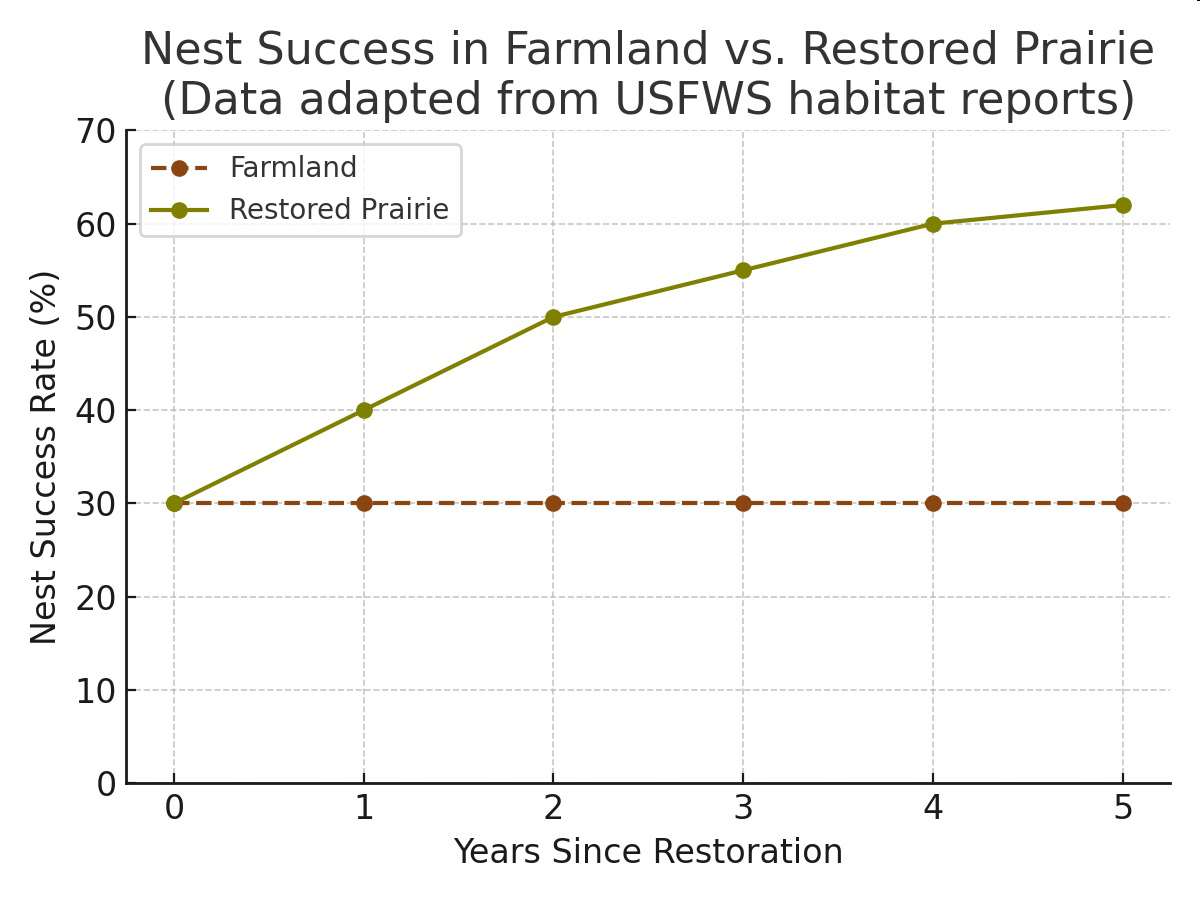
Nest success rates rose from 30% to over 60%.
Invasive plant cover decreased by more than 40%, allowing native plants and insects to return.
While prairie restoration effectively improves habitat and species recovery, it can be costly and requires ongoing management, such as controlled burns and invasive species removal. The solution’s merit lies in rebuilding ecological diversity and stabilizing bird populations, though large-scale adoption remains limited by funding and land availability.
Table 1.
Years Since Restoration | Bird Species Richness (per 10 ha) | Nest Success in Farmland (%) | Nest Success in Restored Prairie (%) |
|---|
0 | 5 | 30 | 30 |
1 | 8 | 30 | 40 |
2 | 12 | 30 | 50 |
3 | 15 | 30 | 55 |
4 | 17 | 30 | 60 |
5 | 18 | 30 | 62 |
Graph of Information - Figure 1.
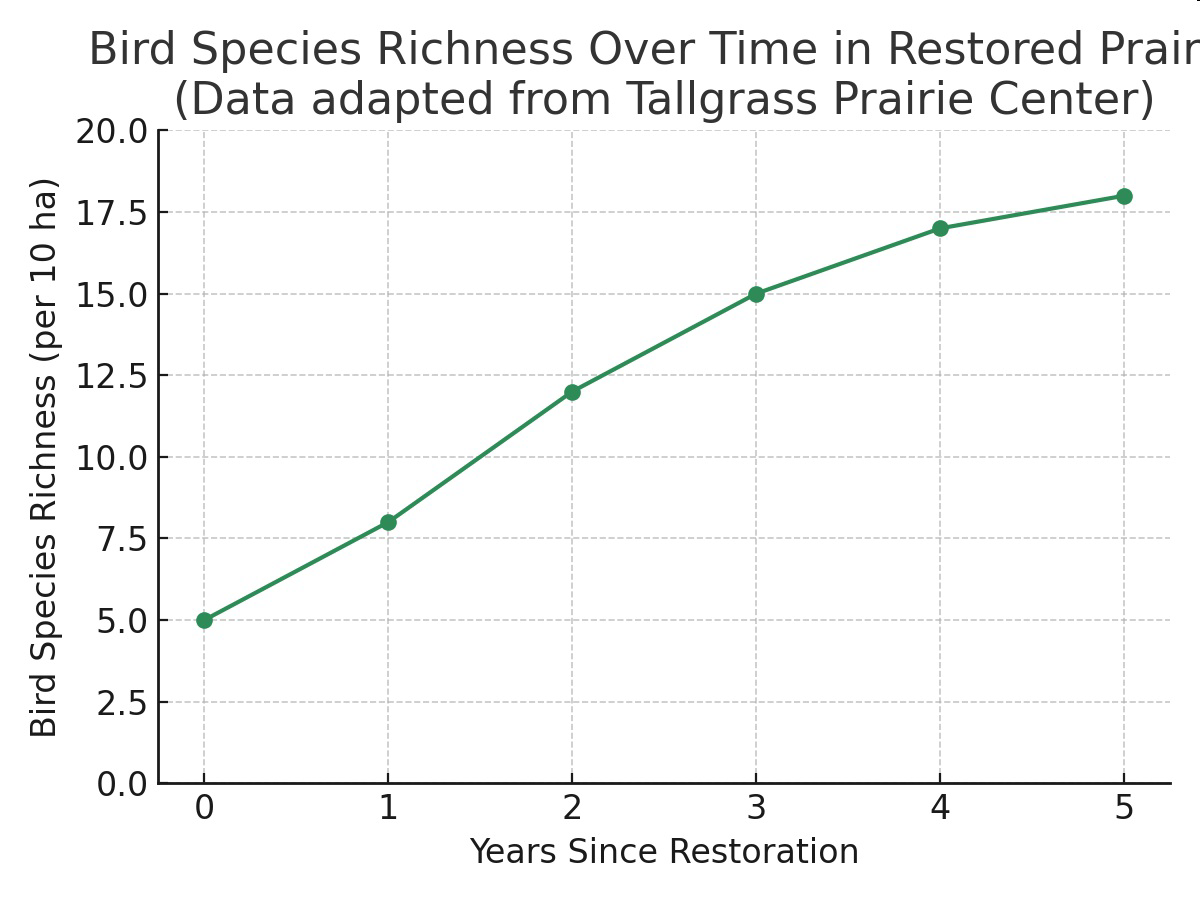
Graph of Information - Figure 2.