Schooling Fish
Many fish form schools - tightly coordinated groups that move together. Schooling can reduce an individual’s risk of being eaten through several mechanisms:
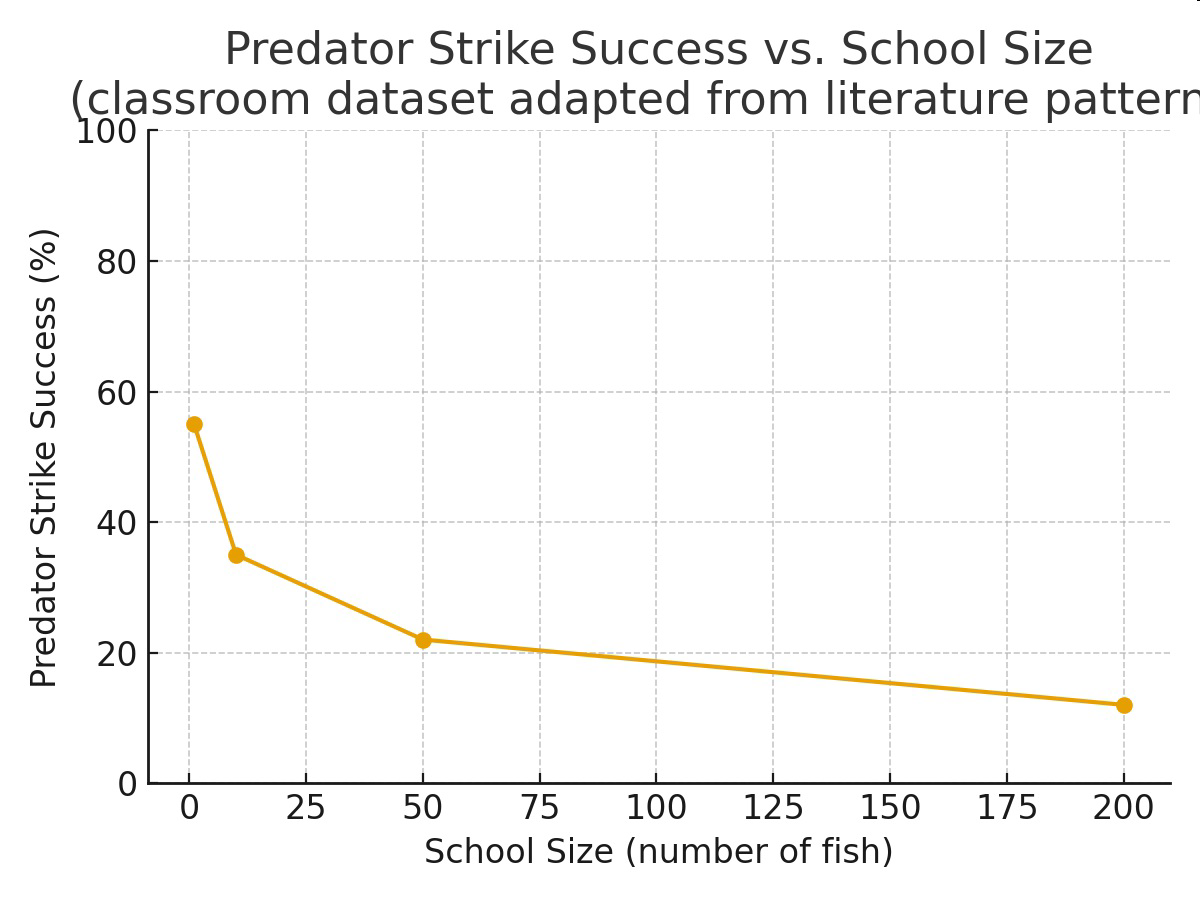
Dilution & confusion effects: As group size increases, a predator’s strike success often drops because many similar-looking targets move at once, making it harder to track a single fish (the confusion effect). These mechanisms are well documented in lab and field studies across fishes.
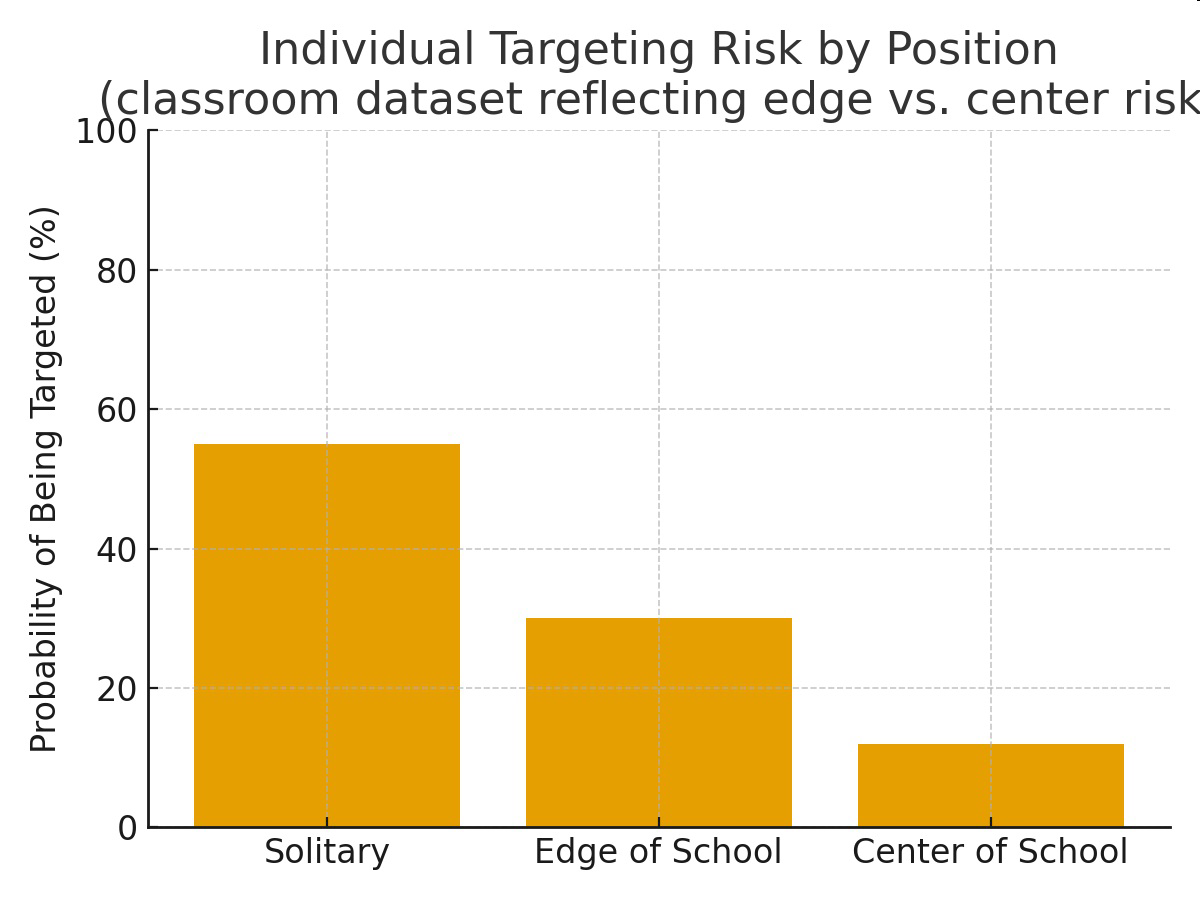
Position matters (edge vs. center): Individuals on the edge of a school are attacked more often than those in the center, so being embedded within the group further reduces individual risk. Recent high-speed video tracking confirms that predator choices depend on spatial position and motion cues within the school.
Field evidence from real predation events: Analyses of hundreds of predator strikes during the Sardine Run off South Africa show modest overall success rates per strike ($\approx 30\%$ on average), consistent with predators facing challenges when attacking dense, coordinated fish aggregations.
If predators succeed less often against larger, coordinated groups, and if central fish are targeted less than edge fish, then being in a school – especially away from the edge – lowers an individual’s chance of being caught. That means schooling is a group behavior that helps members survive.
Table 1:
School Size (number of fish) | Predator Strike Success (%) |
|---|
1 | 55 |
10 | 35 |
50 | 22 |
200 | 12 |
Graph A: Predator Strike Success vs. School Size
Graph B: Individual Targeting Risk by Position