Shell Fossils and Ocean Temperatures
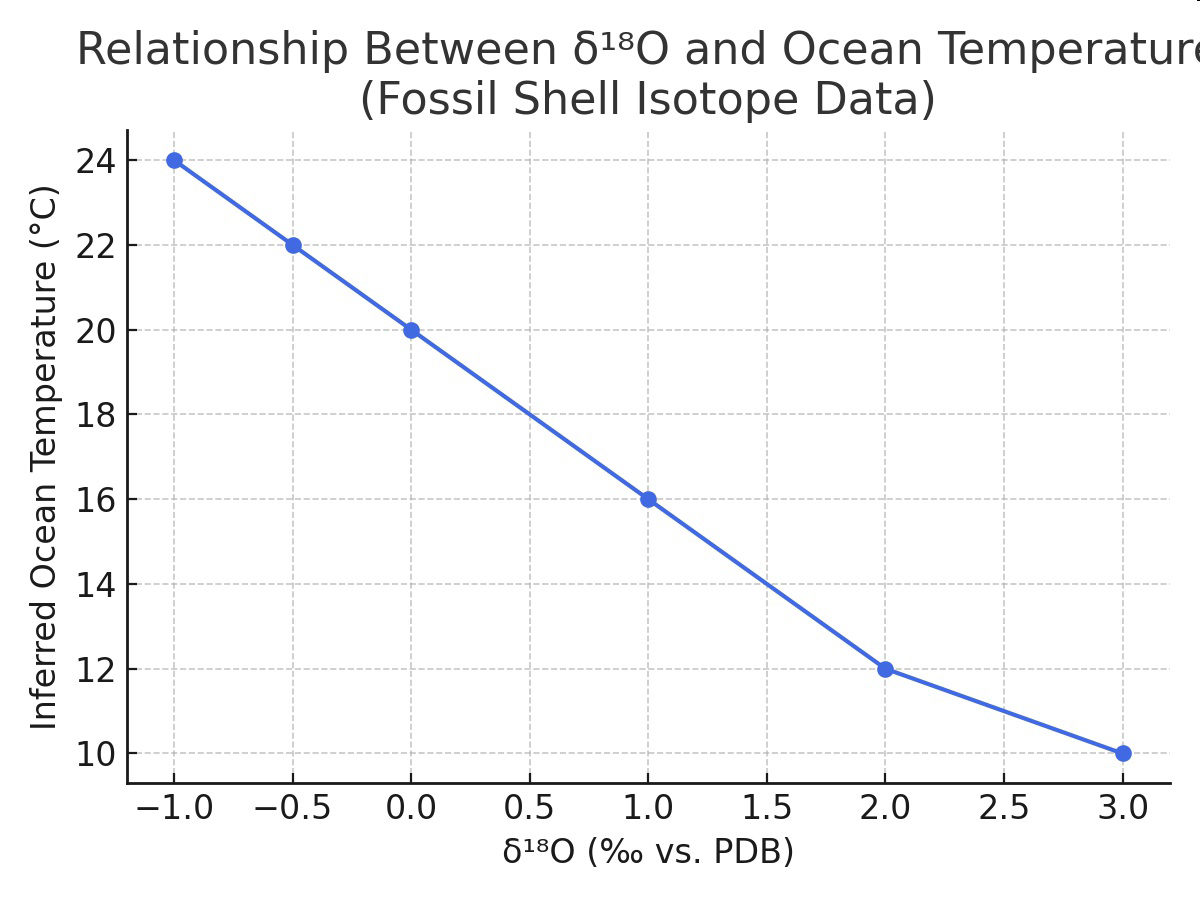
Shells from marine organisms such as clams, corals, and foraminifera contain oxygen isotopes that record information about the temperature of the water in which the animals lived. The ratio of the heavier isotope (O-18) to the lighter one (O-16) in shell calcium carbonate changes depending on ocean temperature:
More O-18 means colder water,
More O-16 means warmer water.
When scientists measure the oxygen isotope ratio (expressed as
Core samples drilled from ocean sediments contain thousands of microscopic fossil shells from different time periods. By analyzing
This isotope evidence links biological fossils with environmental change: the shells tell us that marine life once lived in much warmer oceans, and that ocean temperature - and therefore global climate - has changed dramatically over time.
Table 1.
Time (Millions of Years Ago) | Inferred Ocean Temperature (oC) | |
|---|---|---|
100 | -1 | 24 |
80 | -0.5 | 22 |
60 | 0 | 20 |
40 | 1 | 16 |
20 | 2 | 12 |
0 | 3 | 10 |
Graph of Information - Figure 1.
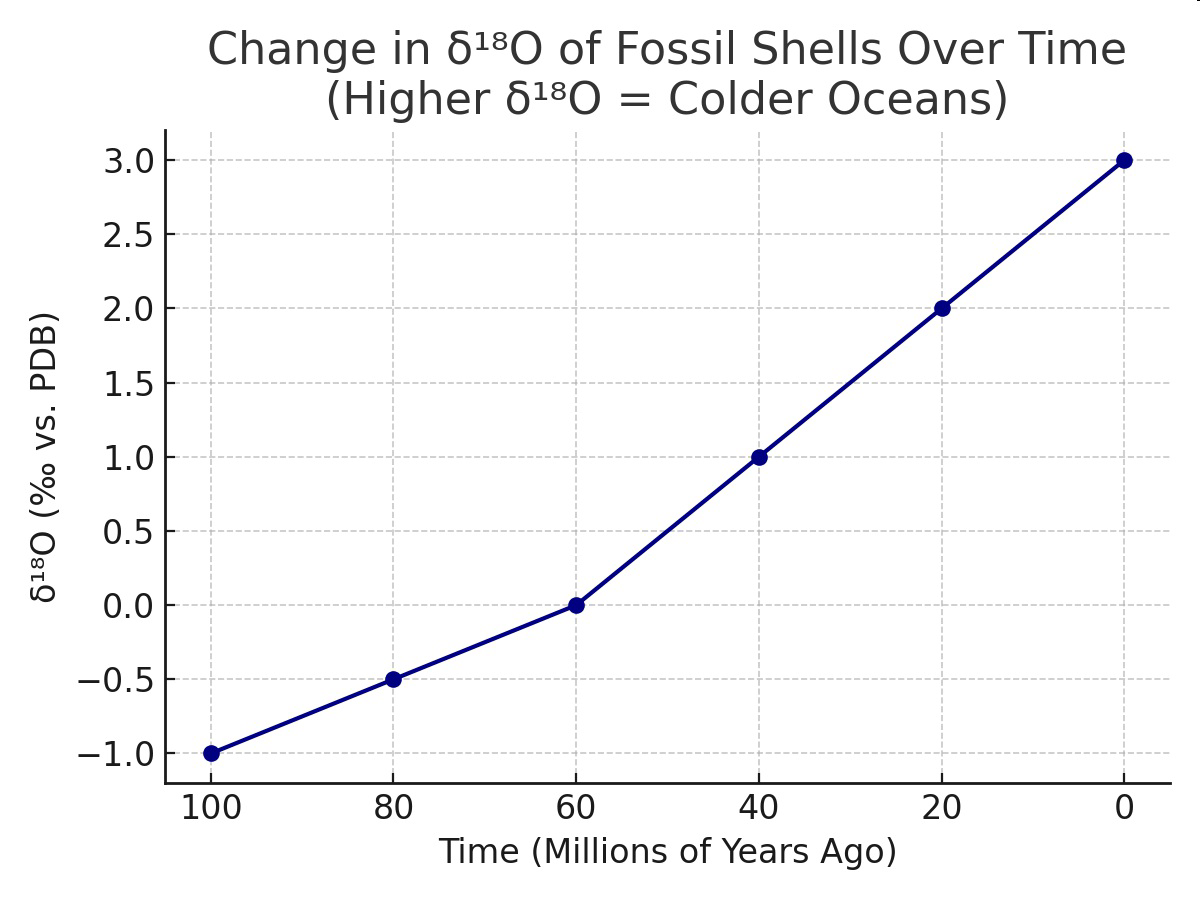
Graph of Information - Figure 2.