Trilobites
Trilobites are extinct marine arthropods that lived for over 270 million years, from the early Cambrian to the end of the Permian period. They had segmented bodies, jointed legs, and hard exoskeletons made of calcium carbonate, which fossilized easily in ocean sediments. Because of this, trilobites are among the most abundant and well-preserved fossils in Earth’s rock record.
Trilobite fossils are found mainly in limestone and shale - rocks that formed from ancient marine sediments. Limestone forms in warm, shallow seas, while shale can form in deeper, calmer water. By comparing the rock types that contain trilobite fossils, scientists can infer the environments these animals lived in.
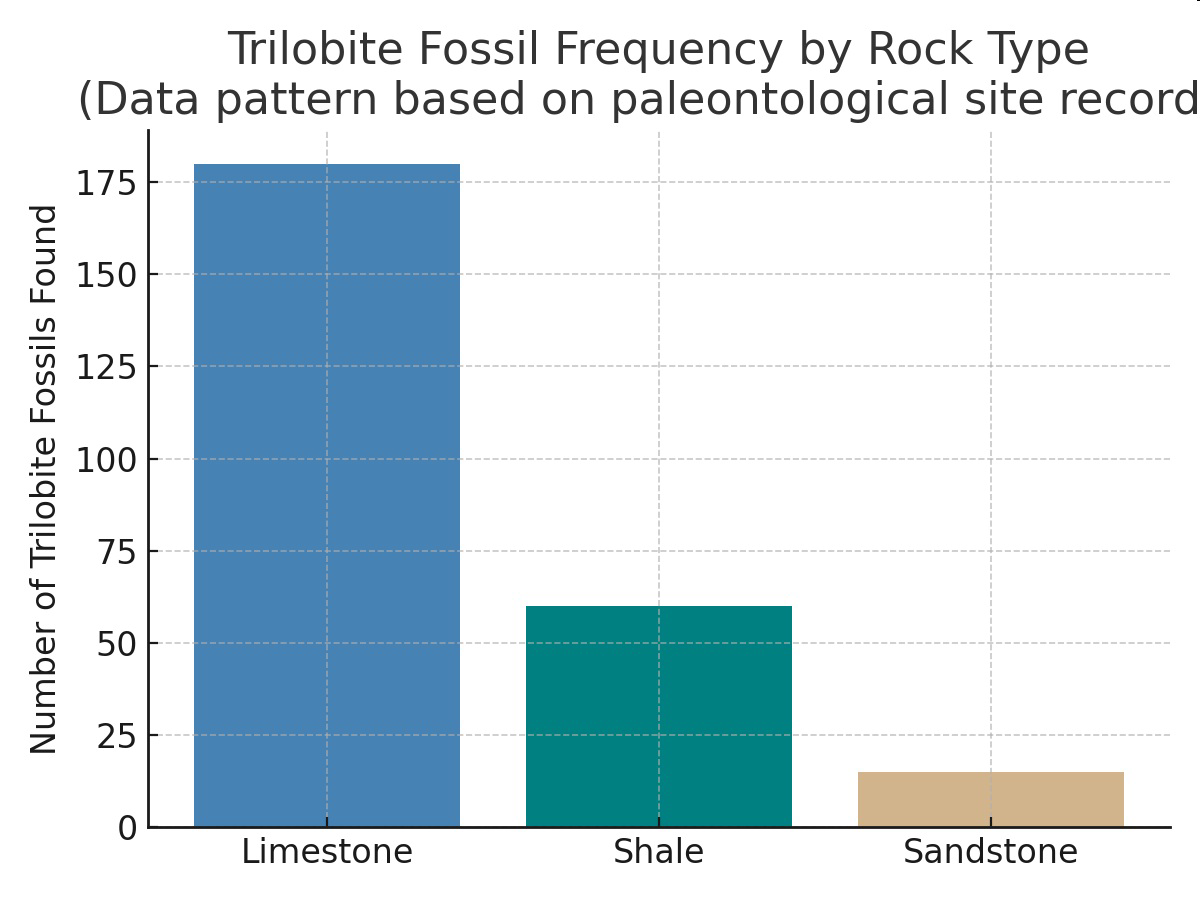
Data from fossil sites in North America, Europe, and Africa show that most trilobite fossils occur in limestone layers, suggesting that they lived primarily in shallow, sunlit seas rich in algae and oxygen. Only a small number are found in deep-water shale, indicating that few trilobite species lived far offshore.
Chemical analyses of the same rock layers also reveal marine indicators - for example, the presence of marine carbon isotopes, ripple marks, and other sea-floor fossils like crinoids and brachiopods. Together, this evidence builds a clear picture: trilobites were marine organisms, and the continents where their fossils are found today were once covered by shallow oceans.
Thus, trilobite fossil evidence tells us both what kind of organism trilobites were (marine arthropods) and what kind of environment they lived in (warm shallow seas). When such fossils appear in inland areas far from today’s oceans, they show that sea levels and continental positions have changed dramatically over geologic time.
Table 1.
Rock Type | Number of Fossils Found | Inferred Environment |
|---|---|---|
Limestone | 180 | Shallow, warm marine (reef/shelf) |
Shale | 60 | Deeper, calm marine (offshore mud) |
Sandstone | 15 | Coastal or nearshore (wave-influenced) |
Table 2.
Modern Location | Geologic Period | Fossil Evidence | Inferred Ancient Environment |
|---|---|---|---|
Utah (USA) | Cambrian | Abundant trilobites | Warm shallow sea |
Wales (UK) | Ordovician | Trilobite beds with shale | Shallow marine mud |
Morocco | Devonian | Marine shelf fossils | Tropical shelf sea |
Ontario (Canada) | Silurian | Reef limestone fossils | Coral reef zone |
Graph of Information - Figure 1.