Wildlife Corridors Across Roads
Highways and urban development fragment wildlife habitats, separating animal populations and creating barriers to migration and breeding. This fragmentation often leads to increased roadkill, reduced genetic diversity, and shrinking populations for species such as deer, bears, cougars, and amphibians.
To solve this, conservation agencies and engineers have constructed wildlife corridors - bridges and underpasses that allow animals to safely cross roads and reconnect fragmented habitats. These corridors are often landscaped with vegetation to mimic the surrounding environment, encouraging natural movement patterns.
Long-term data from Banff National Park (Canada), Florida Panther crossings (U.S.), and Netherlands ecoducts demonstrate the effectiveness of these structures:
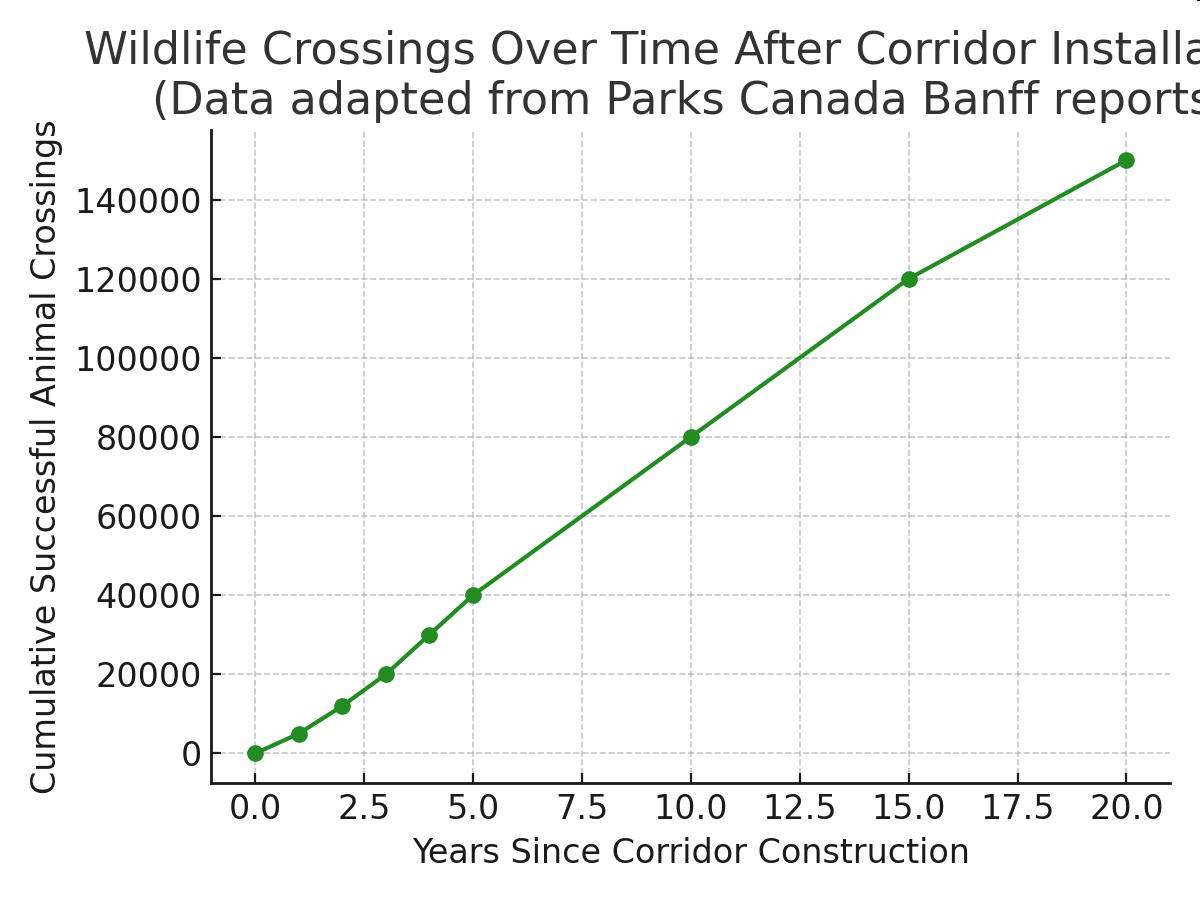
In Banff, more than 150,000 successful animal crossings were recorded between 1996 and 2020.
Roadkill in the corridor zones dropped by over 80%.
Genetic studies show that animal populations on both sides of highways are now interbreeding again, increasing genetic diversity.
Although wildlife corridors are highly effective at reducing collisions and reconnecting habitats, they can be costly to build and maintain. Their merit lies in their proven success for multiple species and their contribution to ecosystem connectivity - helping ensure long-term survival in landscapes altered by human infrastructure.
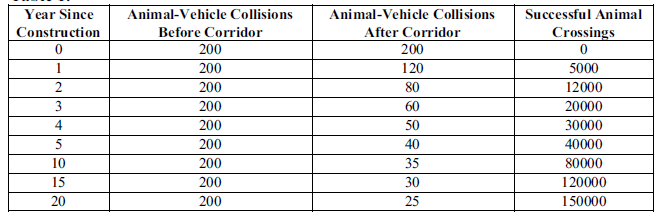
Table 1.
Graph of Information - Figure 1.
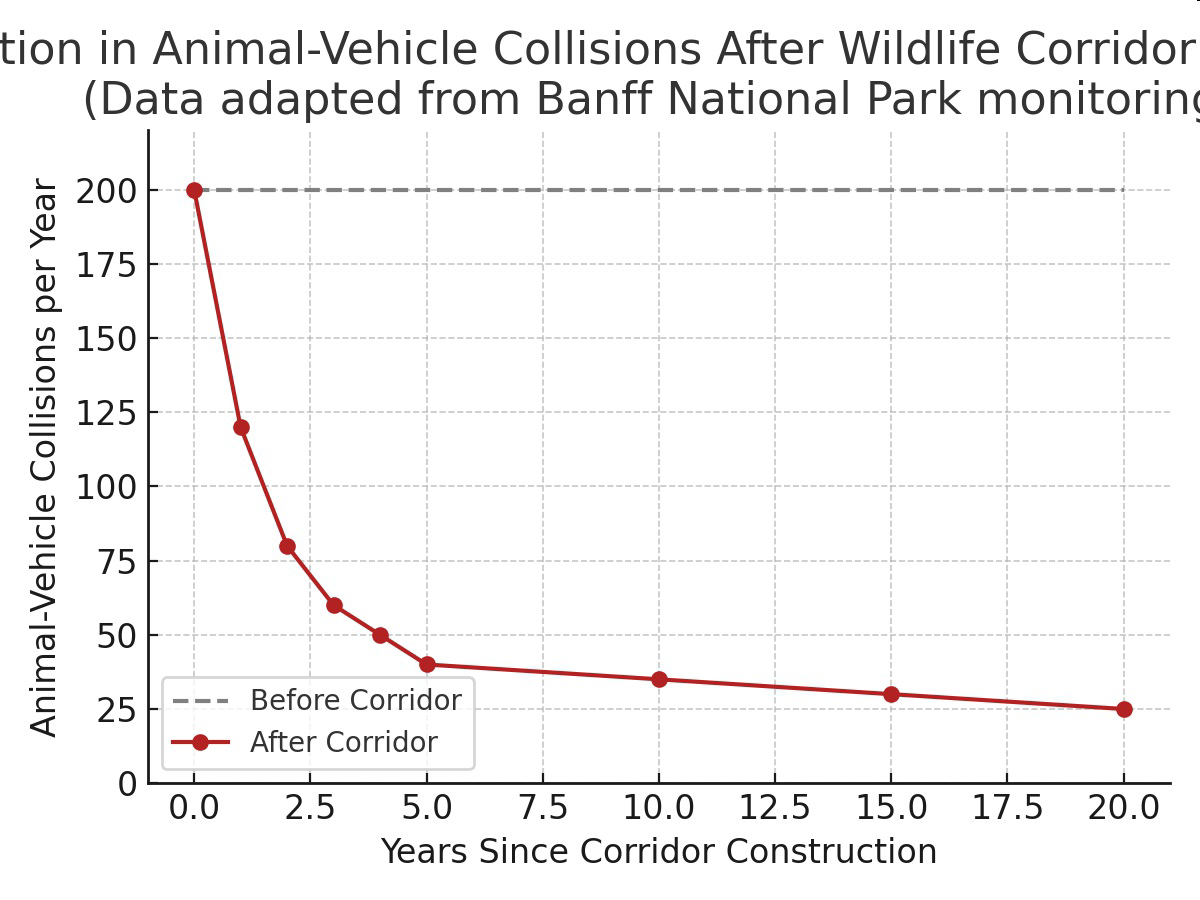
Graph of Information - Figure 2.