Compost System Matter Breakdown
In compost systems, decomposers such as bacteria, fungi, and invertebrates (like worms) break down organic waste like fruit peels, leaves, and food scraps. As they feed, they release carbon dioxide $CO_2$ into the air, water vapor, and heat - and the leftover matter becomes nutrient-rich soil that plants can use again.
Scientists at the University of Vermont Agricultural Ecology Lab studied how the mass of compost and $CO_2$ production changed over time in a managed compost pile.
Table 1.
Time (Weeks) | Compost Mass Remaining (%) | CO2 Released (g/day) | Temperature (oC) |
|---|
0 | 100 | 5 | 20 |
2 | 78 | 15 | 45 |
4 | 54 | 22 | 55 |
6 | 36 | 18 | 40 |
8 | 28 | 10 | 30 |
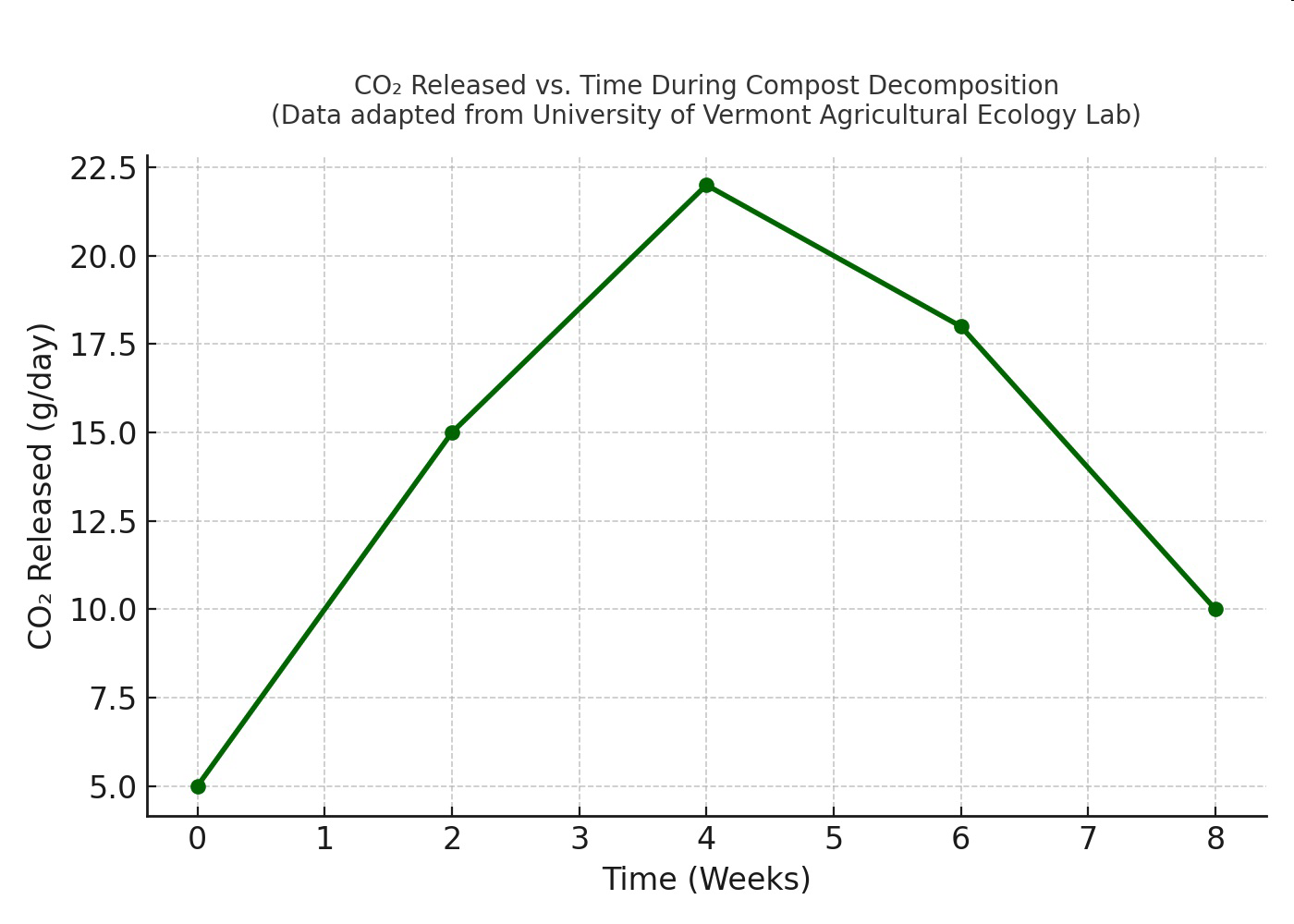
At the start, decomposers become very active, breaking down food waste quickly and releasing $CO_2$ and heat. As time passes and the food becomes more decomposed, $CO_2$ release slows, and the compost cools down. The total mass of compost decreases because matter is transformed and cycled - part becomes gas in the air, and part becomes nutrient-rich soil.
This process demonstrates that matter isn’t destroyed - it simply changes form and moves between the living and nonliving parts of the environment.
Graph of Information - Figure 1.
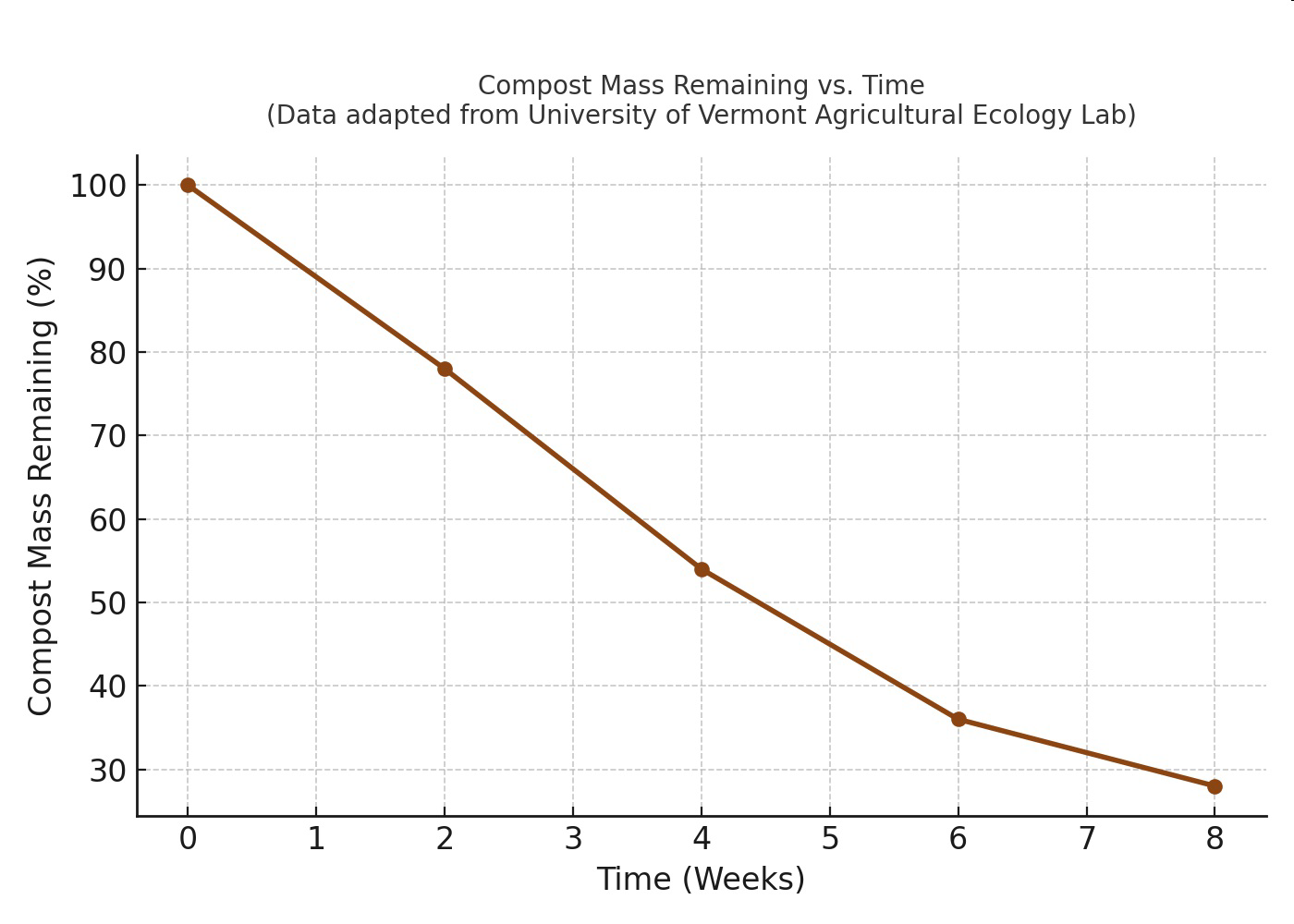
Graph of Information - Figure 2.