Decomposition of Fallen Leaves and Nutrient Return
In a forest, when leaves fall to the ground, they don’t disappear - they decompose. Microorganisms such as bacteria and fungi break down the leaf material into smaller compounds that return to the soil and atmosphere.
As decomposers feed, they release carbon dioxide $CO_2$ into the air and convert organic matter into nutrients such as nitrogen and phosphorus. These nutrients are then absorbed by plants (producers) to grow new leaves, starting the cycle again.
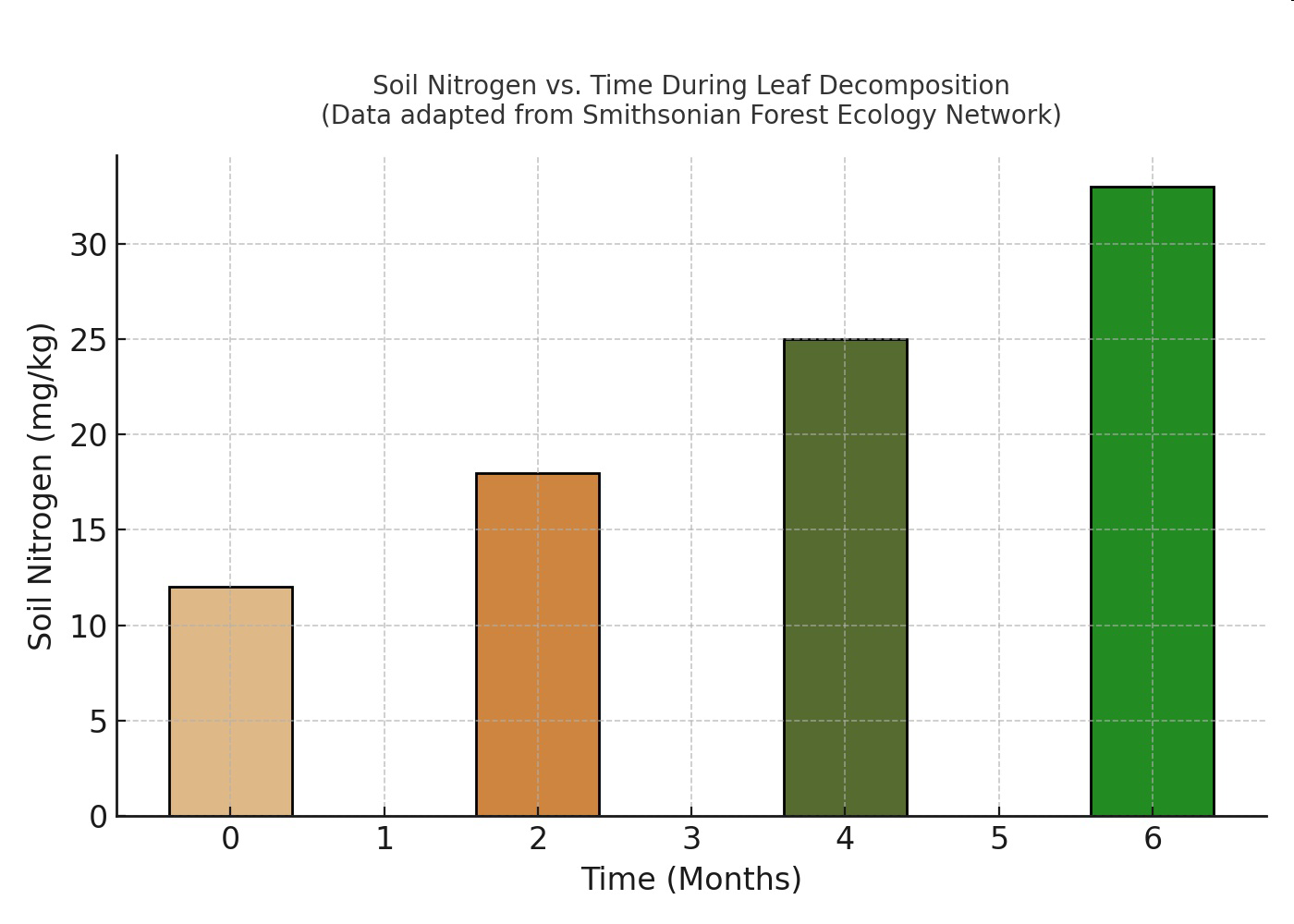
Researchers from the Smithsonian Forest Ecology Network tracked how much leaf mass remained and how soil nutrients changed over six months of decomposition.
Table 1.
Time (Months) | Leaf Mass Remaining (%) | CO2 Released (g/m²) | Soil Nitrogen (mg/kg) |
|---|
0 | 100 | 0 | 12 |
2 | 72 | 45 | 18 |
4 | 41 | 85 | 25 |
6 | 22 | 120 | 33 |
As the months pass, decomposers break down leaves, releasing $CO_2$ into the air and increasing nutrients in the soil. The matter from the leaves doesn’t vanish - it’s transformed and cycled through the ecosystem.
This experiment demonstrates that matter continually cycles between the living and nonliving parts of ecosystems.
Graph of Information - Figure 1.
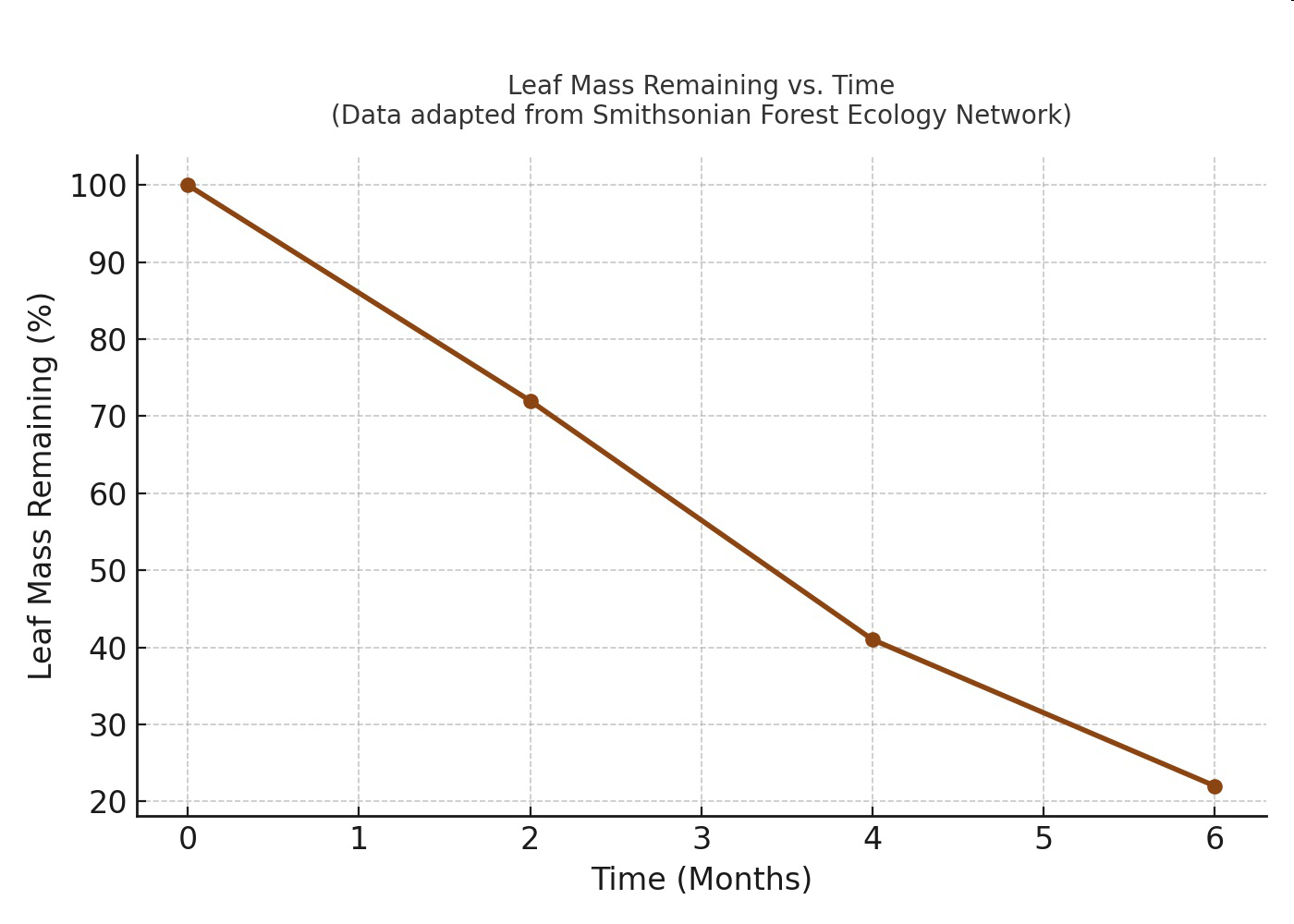
Graph of Information - Figure 2.