Grassland Food Web Energy and Matter Movement
In a grassland ecosystem, matter and energy flow from plants (producers) to herbivores (primary consumers) and then to carnivores (secondary consumers). At each level, some of the energy and matter are used for life processes and released back to the environment through respiration and waste.
When organisms die, decomposers break down their remains, returning nutrients and carbon dioxide to the soil and air, where plants can use them again.
Researchers from the Great Plains Ecology Program measured biomass (the mass of living matter) at each trophic level in a grassland ecosystem.
Table 1.
Trophic Level | Example Organisms | Average Biomass (kg/ha) | Matter Transferred to Next Level (%) |
|---|
Producers | Grasses, Wildflowers | 5000 | |
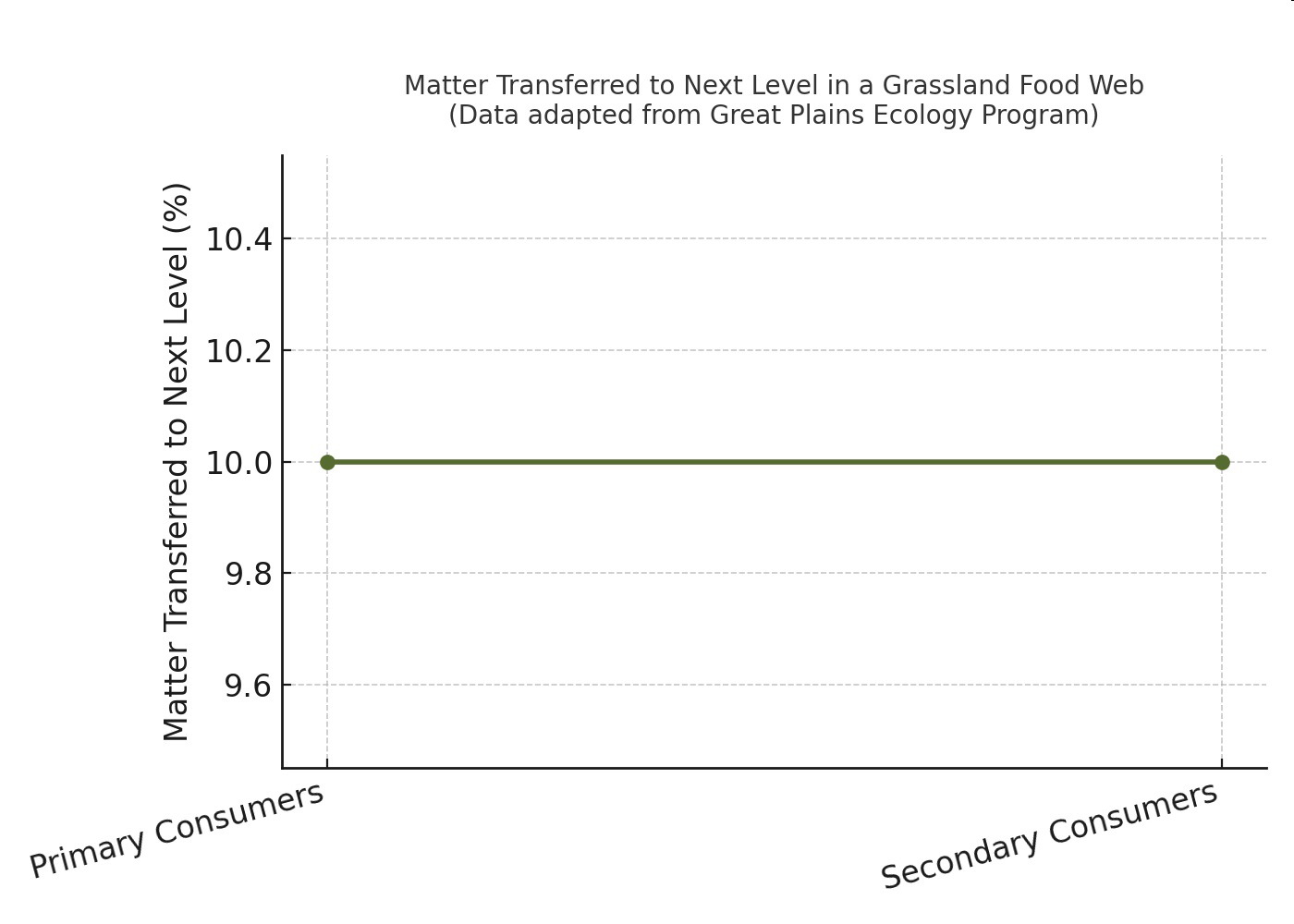
Primary Consumers | Grasshoppers, Rabbits | 500 | 10 |
Secondary Consumers | Snakes, Coyotes | 50 | 10 |
Decomposers | Fungi, Bacteria | 300 | |
Producers capture carbon dioxide and water from the environment and convert them into plant matter through photosynthesis. Consumers eat plants or other animals, transferring this matter up the food chain. Decomposers return nutrients and carbon to the soil and atmosphere, completing the matter cycle.
Although energy decreases at each level, matter is never lost - it moves continuously between organisms and the environment.
This food web shows how matter moves and transforms among all parts of the ecosystem: plants, animals, decomposers, and their surroundings. It helps students see that energy flows one way, but matter cycles endlessly.
Graph of Information - Figure 1.
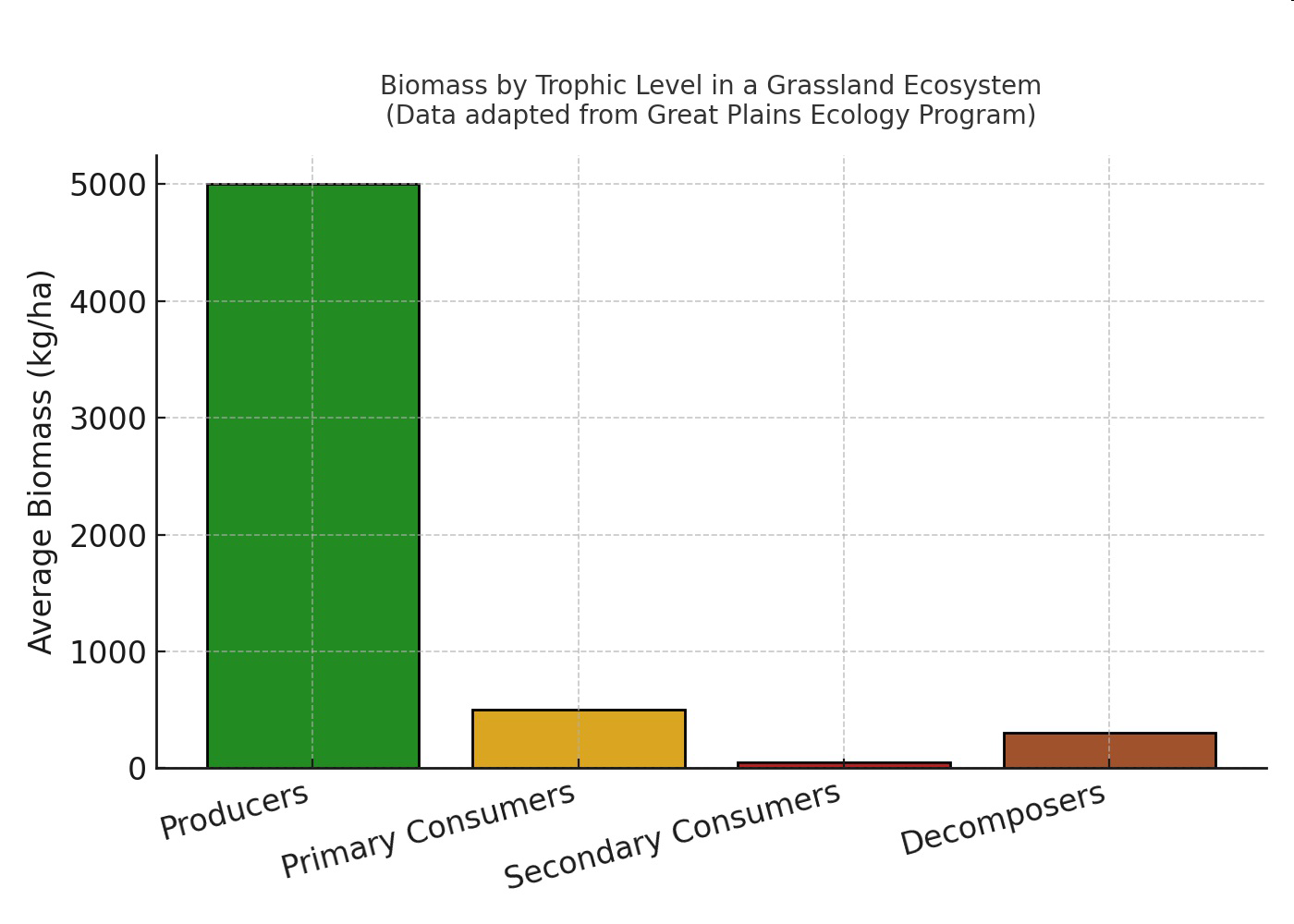
Graph of Information - Figure 2.