Hydroponic Growth Without Soil
In hydroponics, plants are grown without soil - their roots are placed in water enriched with minerals and exposed to air that contains carbon dioxide. Farmers and scientists have used this method to grow vegetables, herbs, and even fruit trees successfully.
Researchers from the University of Arizona Controlled Environment Agriculture Center grew lettuce plants under two conditions:
In soil pots watered normally.
In hydroponic systems with water and nutrients, but no soil.
Both groups received the same light, air, and water.
Table 1.
Growth Condition | Average Plant Height (cm) | Leaf Count | Dry Mass (g) | Water Used (L) |
|---|
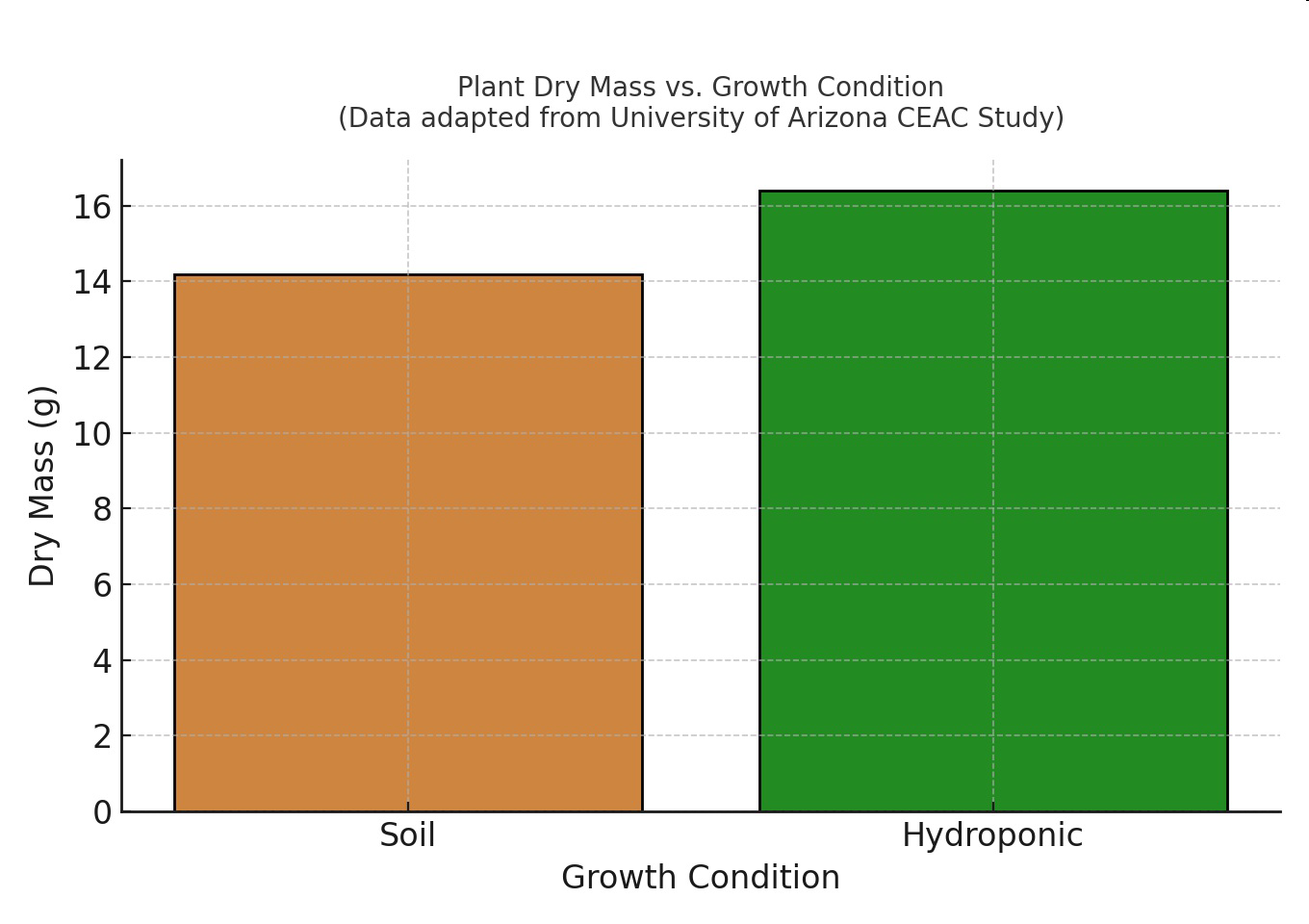
Soil | 22.5 | 16 | 14.2 | 5.8 |
Hydroponic | 25.8 | 19 | 16.4 | 5.9 |
Plants grown hydroponically (in water) grew as well as or better than plants in soil. Because no soil was present, the increase in mass must have come from carbon dioxide from the air and water used during photosynthesis. Nutrients dissolved in the water support growth, but the main mass - the carbon structure of the plant - comes from air and water.
This modern agricultural method gives strong evidence that plants don’t “eat” soil - they build their mass from air ($CO_2$) and water, just like in traditional growing environments. It’s also a real-world application that connects life science to food technology and sustainability.
Graph of Information - Figure 1.
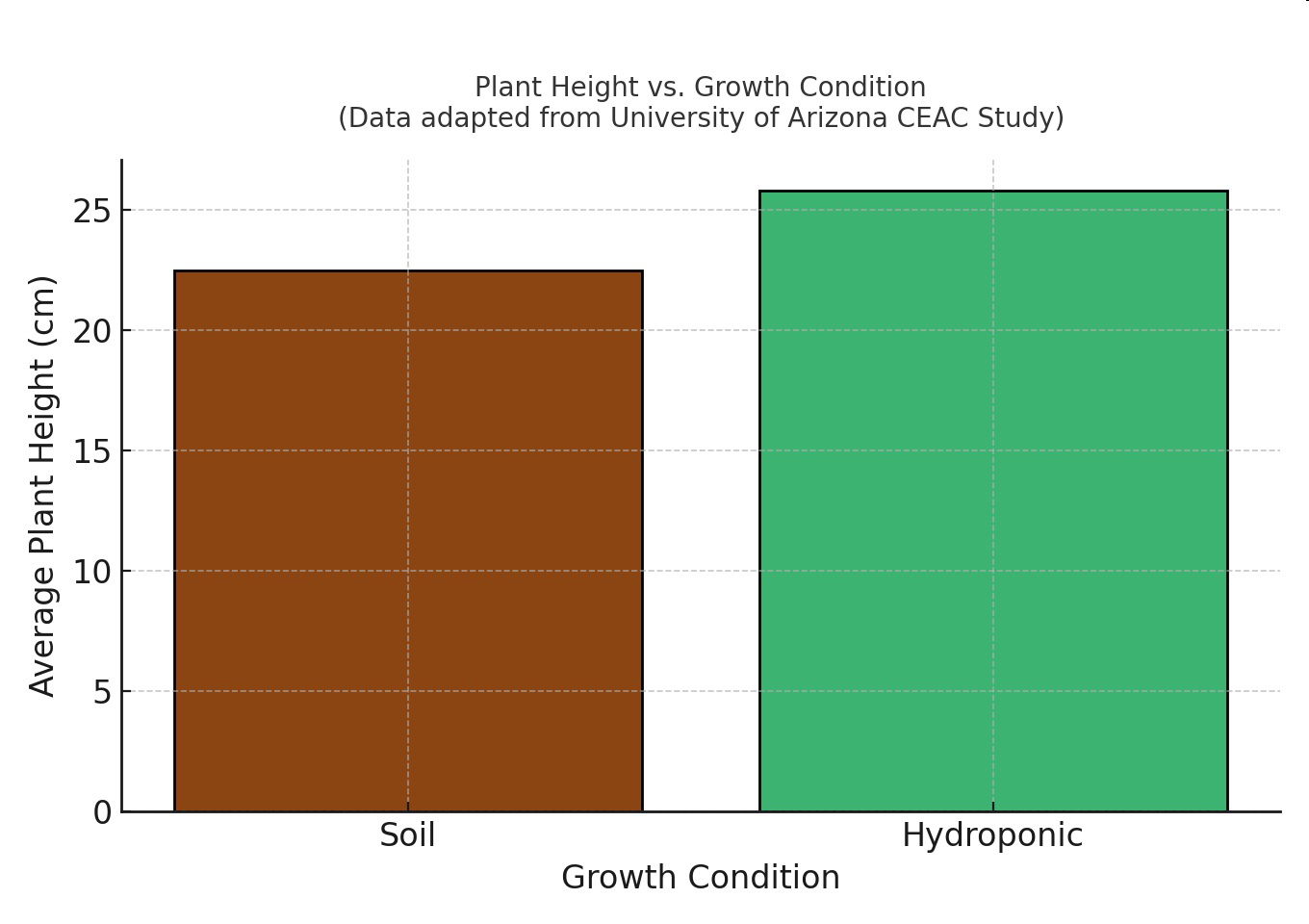
Graph of Information - Figure 2.