Butterfly Color Vision and Flower Choice
Butterflies use their eyes to see a wider range of colors than humans - including ultraviolet (UV) light. This special vision helps them identify flowers that contain more nectar. Many flowers have UV patterns that act like invisible “nectar guides,” pointing insects toward food.
When a butterfly sees a UV-reflective flower, its eyes send signals to the brain, which processes the visual information and triggers a feeding response - the butterfly lands and unrolls its proboscis to drink nectar.
Researchers from the Pollinator Behavior Research Center tested how flower color and UV reflectance influenced butterfly visitation and feeding behavior.
Table 1.
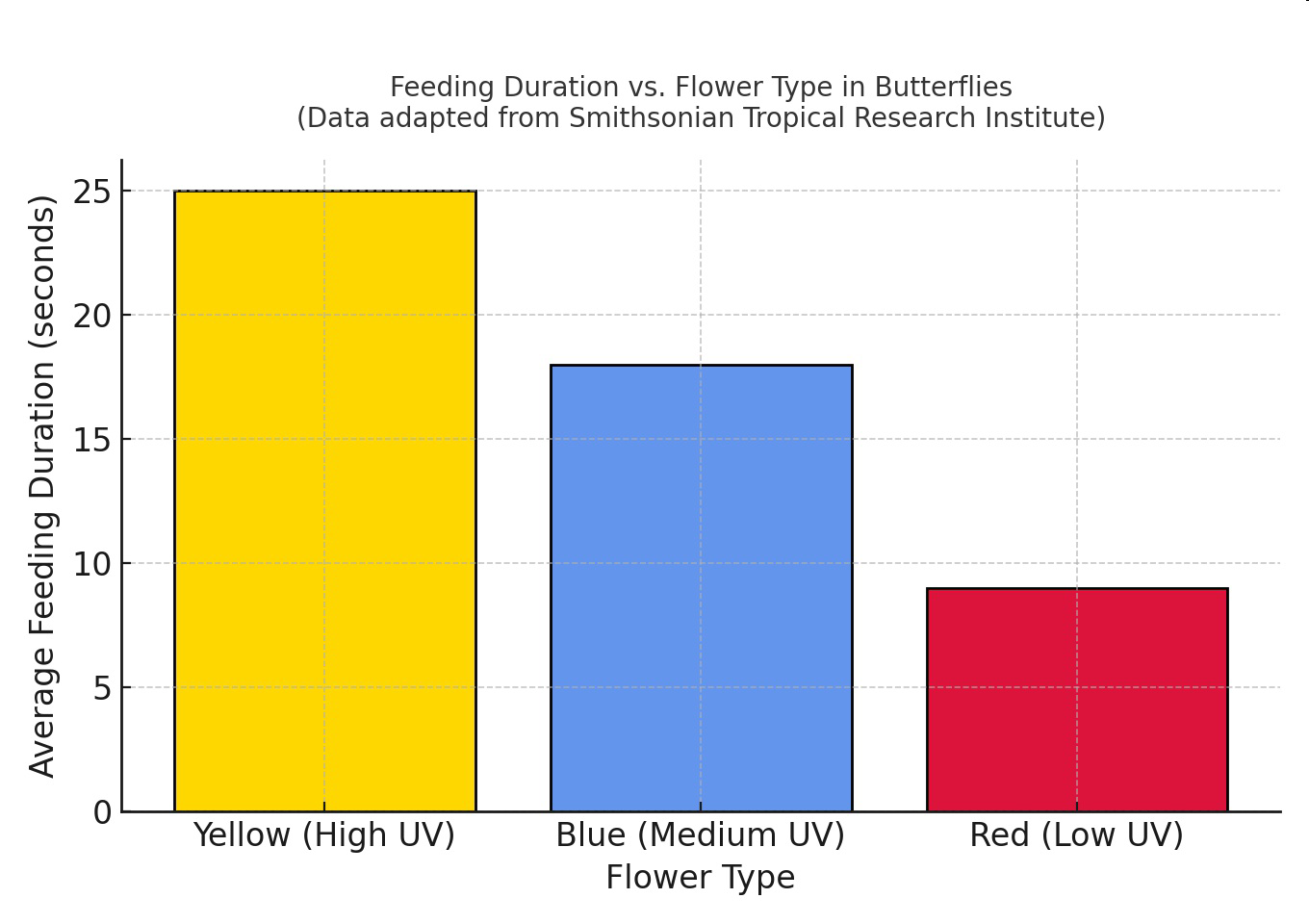
Flower Type | UV Reflectance (%) | Average Butterfly Visits per Hour | Average Feeding Duration (seconds) |
|---|---|---|---|
Yellow (High UV) | 85 | 30 | 25 |
Blue (Medium UV) | 60 | 22 | 18 |
Red (Low UV) | 10 | 8 | 9 |
Butterflies rely on their visual sense to identify flowers with higher UV reflectance, which typically contain more nectar. The brain processes this information, leading to a behavioral response - landing and feeding. This system supports both survival (finding food) and pollination, which aids reproduction for plants.
This example shows how senses and brain processing interact to produce adaptive behavior. Butterflies’ specialized color vision allows them to locate nectar-rich flowers, benefitting both themselves and the plants they visit.
Graph of Information - Figure 1.
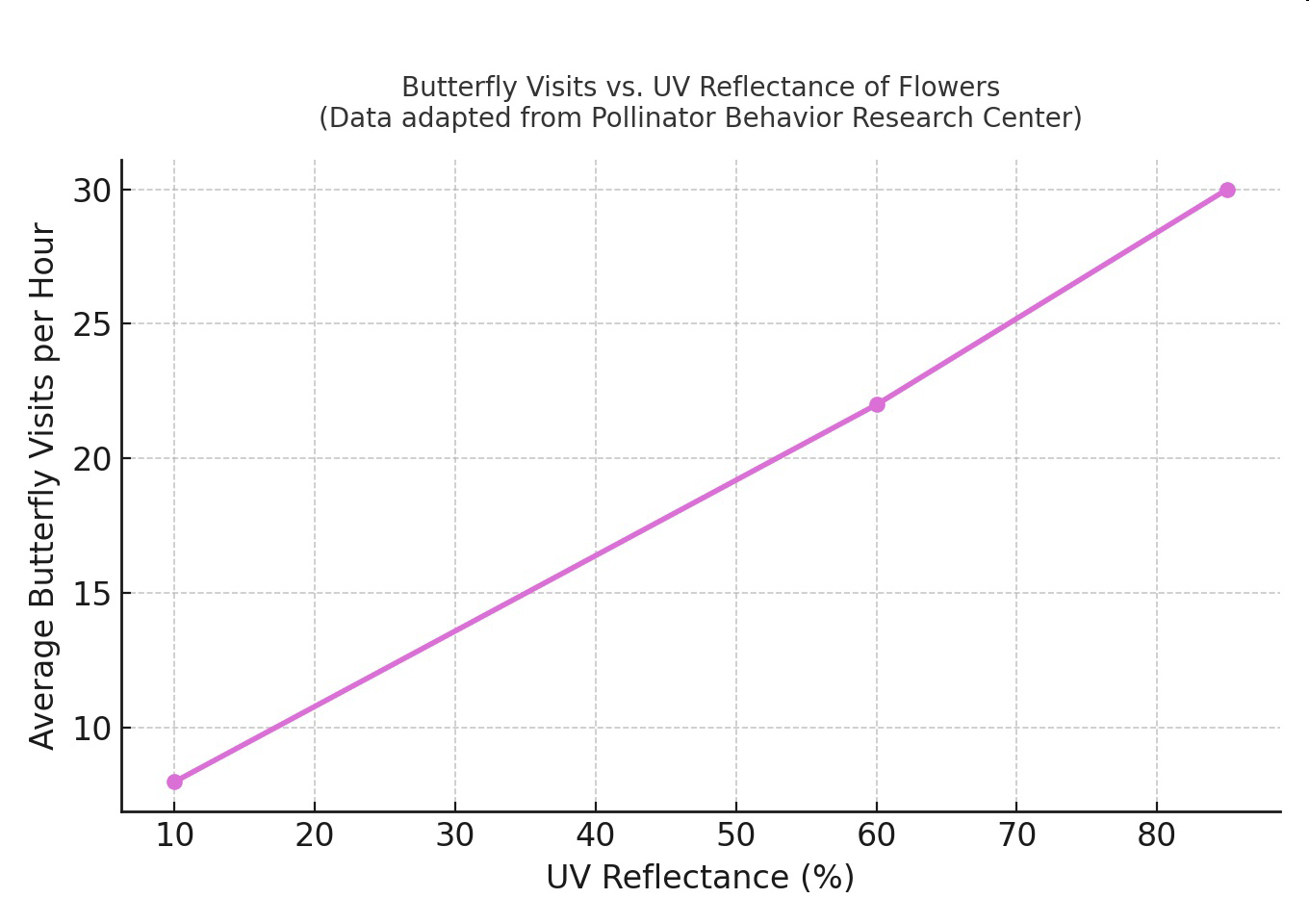
Graph of Information - Figure 2.