Twa kɔ nsɛm atitiriw so
Log in
Sign up for FREE
arrow_back
Laabri

Elephant Communication through Vibrations - ES - LS - Structure and Function

star
star
star
star
star
Last updated 4 months ago
5 Nsɛmmisa
Hyɛ no nsow a efi ɔkyerɛwfo no hɔ:

Directions: Use the information provided and your knowledge of Life Science to answer the following questions. Show all work where necessary.

Directions: Use the information provided and your knowledge of Life Science to answer the following questions. Show all work where necessary.

0
Ɛhia
6
DOK 3
4-LS1-1
Ɛhia
4
DOK 2
4-LS1-1
Ɛhia
2
DOK 1
4-LS1-2
Ɛhia
2
DOK 1
4-LS1-1
Ɛhia
4
DOK 2
3-LS4-3

Elephant Communication through Vibrations

Elephants can communicate using low-frequency sounds, called infrasound, that travel long distances through the ground as vibrations. These vibrations are too low for humans to hear, but elephants can detect them through the pads of their feet using special vibration-sensitive cells.

When an elephant senses a vibration, the information travels from its feet to the brain’s sensory center, where it’s interpreted. Depending on the message, elephants might freeze, move toward the group, or trumpet in response.

Researchers from the African Wildlife Communication Institute measured how elephants responded to vibrations at different distances and frequencies.

Table 1.

Vibration Distance (m)

Frequency Type (Hz)

Average Response Time (seconds)

Group Alert Response (%)

200

15

8

85

500

15

14

65

800

25

22

40

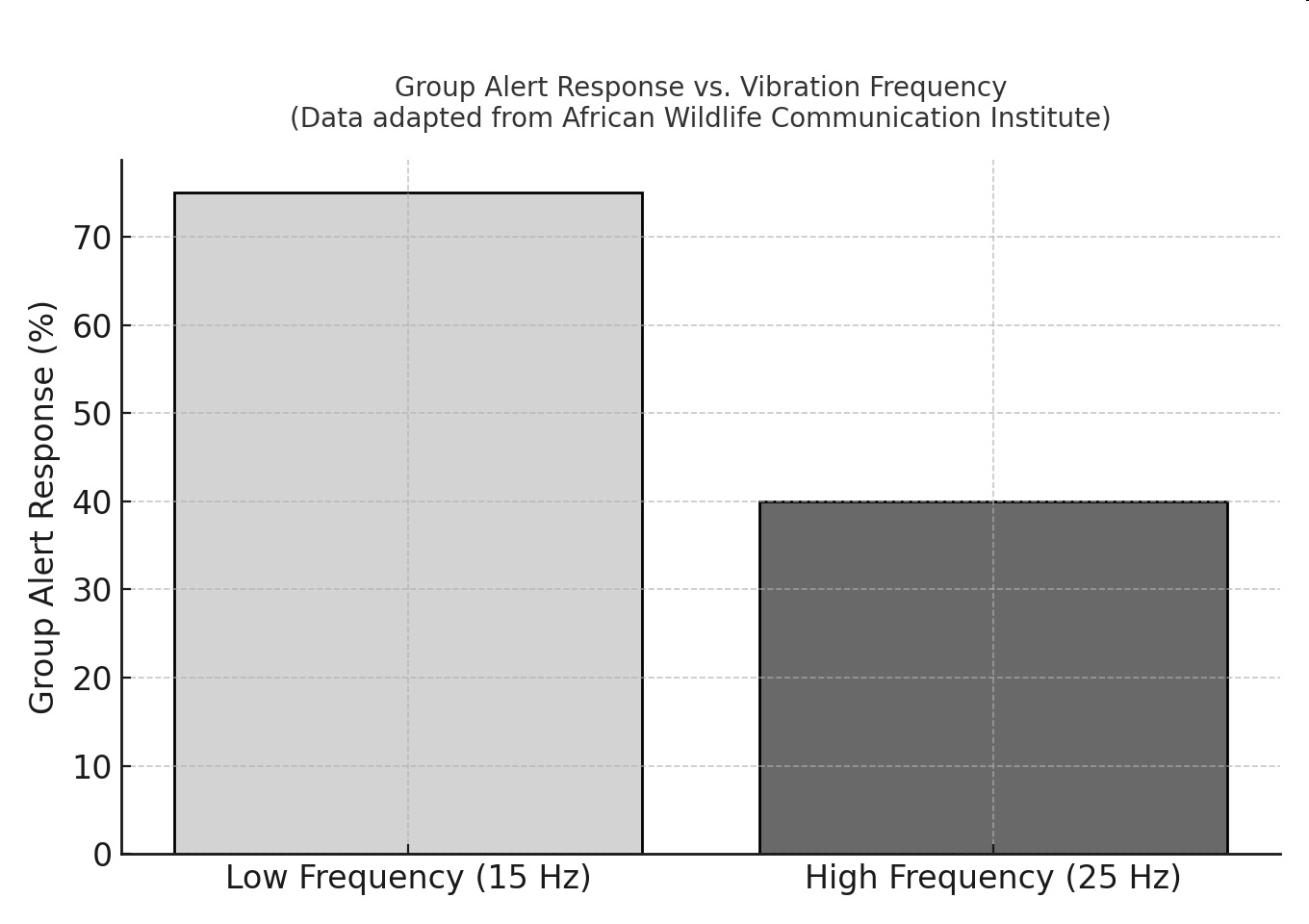
Elephants are able to detect vibrations from several hundred meters away. Lower-frequency vibrations travel farther and produce faster, stronger responses because they are easier for elephants to detect. The brain processes the vibration signals and triggers behaviors that support safety and social bonding.

This example shows that animals can receive and respond to non-visual and non-auditory information. Elephants’ specialized feet, neural processing, and behavioral coordination provide an excellent model of the senses → brain → response system.

Graph of Information - Figure 1.
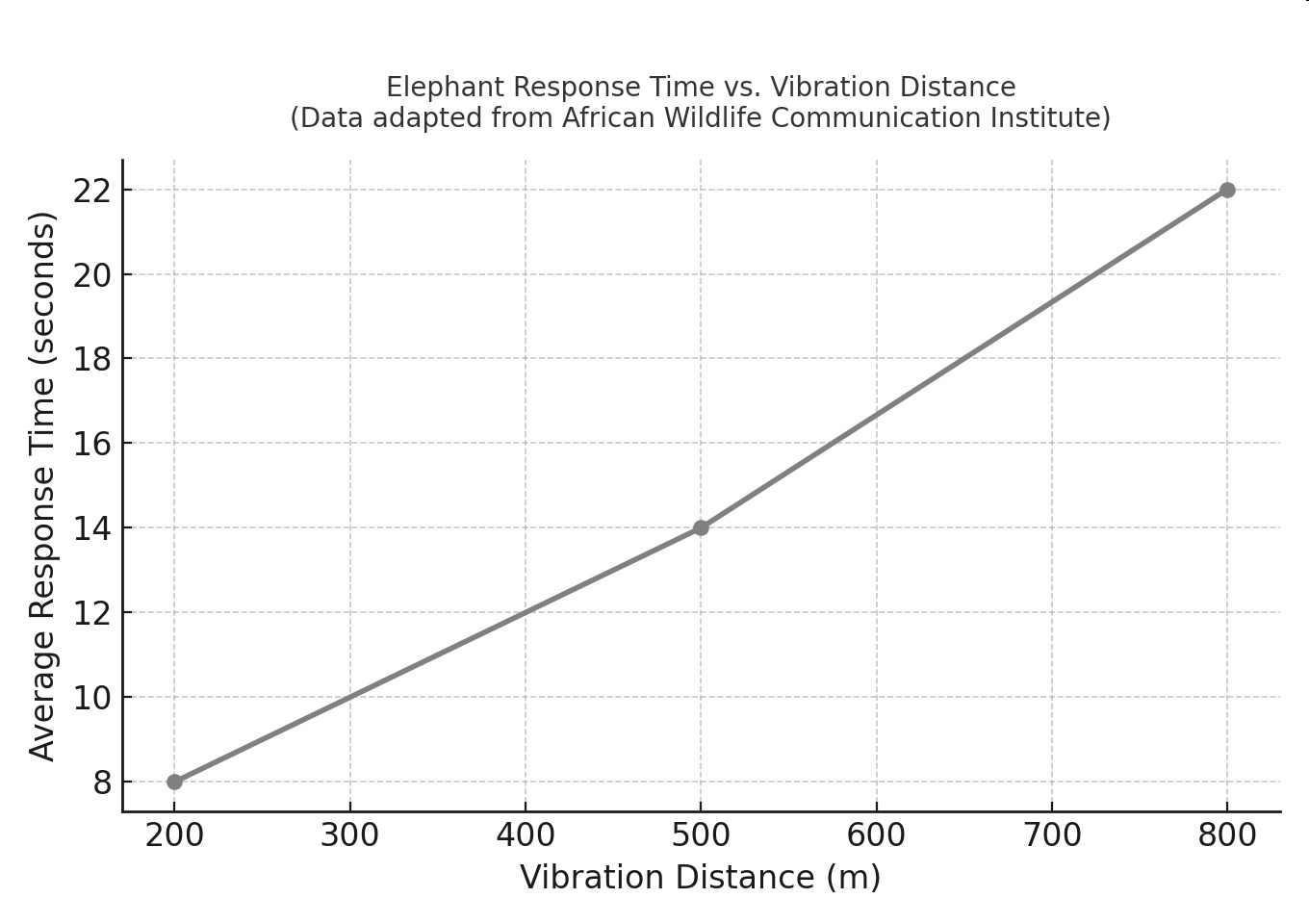
Graph titled 'Elephant Response Time vs. Vibration Distance' showing average response time in seconds increasing as vibration distance in meters increases.

Graph of Information - Figure 2.

Bar graph titled 'Group Alert Response vs. Vibration Frequency' comparing percentage of group alert response for low frequency 15 Hz and high frequency 25 Hz vibrations.

Asemmisa {{asɛmmisaAhyɛnsode}}
1.

How do elephants use vibrations in the ground to communicate?

Write your answer using Claim, Evidence, and Reasoning.

Asemmisa {{asɛmmisaAhyɛnsode}}
2.

What pattern do you notice between vibration distance and group alert response?

Use data from Table 1 in your explanation.

Asemmisa {{asɛmmisaAhyɛnsode}}
3.

After vibration information reaches an elephant’s brain, what happens next?

Asemmisa {{asɛmmisaAhyɛnsode}}
4.

Which structure allows elephants to detect vibrations in the ground?

Asemmisa {{asɛmmisaAhyɛnsode}}
5.

Explain how sensing vibrations helps elephants compete successfully in their environment.