Shark Electroreception and Prey Detection
Sharks have a remarkable sense called electroreception - the ability to detect tiny electric fields produced by the muscles and nerves of living animals. They use special sensory organs called the ampullae of Lorenzini, located around their snouts.
These sensory pores detect even the faintest electrical signals, which are then sent to the shark’s brain, where the information is processed to locate prey hidden in sand or murky water.
When a shark detects an electric field, its brain:
Interprets the signal’s strength to estimate distance.
Processes the signal’s direction to orient movement.
Triggers a behavioral response - a turn, approach, or strike.
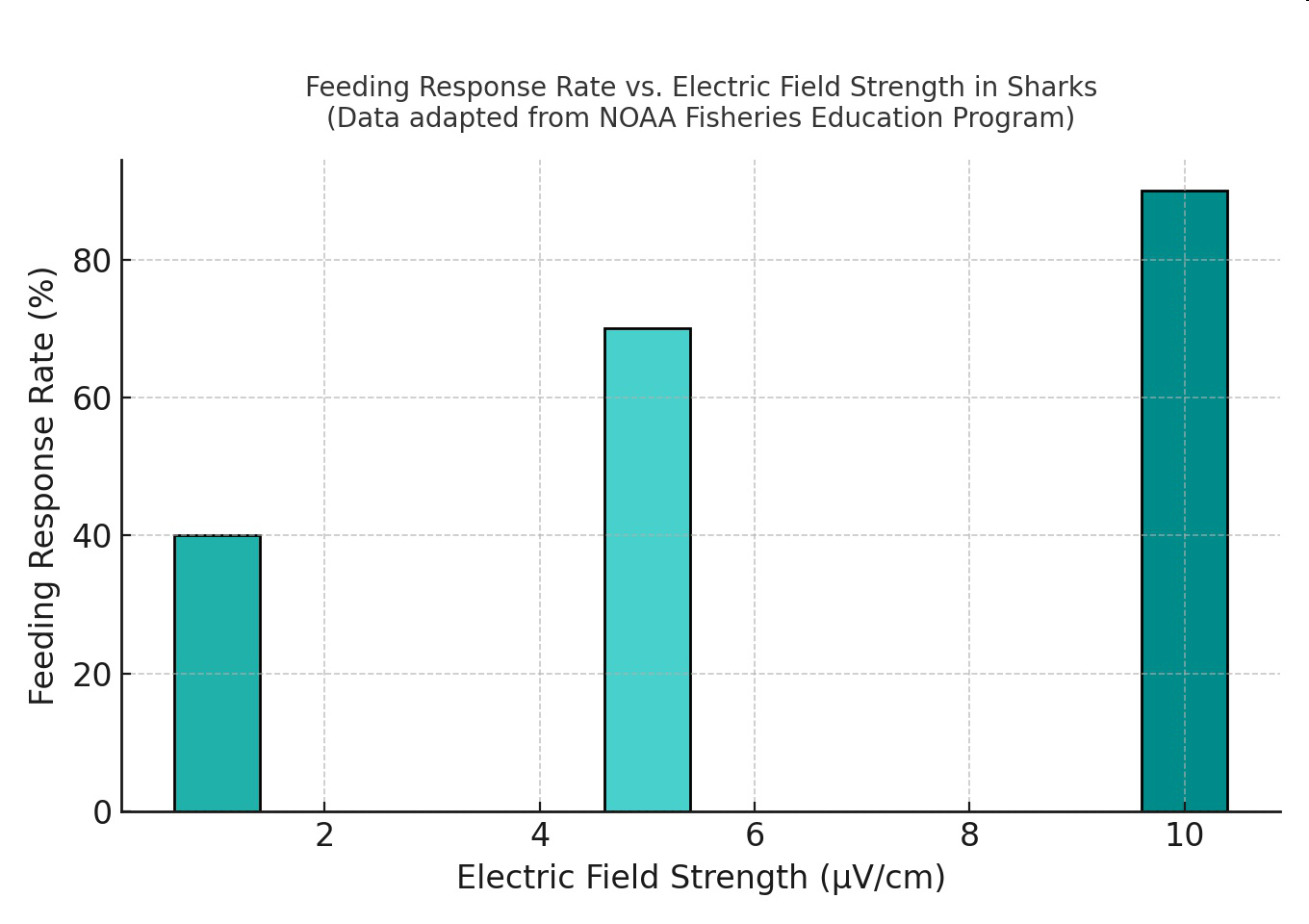
Researchers from the Marine Sensory Systems Laboratory studied how different electric field strengths affected sharks’ detection distance and feeding responses.
Table 1.
Electric Field Strength (V/cm) | Average Detection Distance (m) | Feeding Response Rate (%) |
|---|
1 | 0.5 | 40 |
5 | 1.2 | 70 |
10 | 2 | 90 |
Stronger electrical signals travel farther and are detected more easily by the shark’s sensory system. The brain processes these signals and sends motor commands that guide movement toward prey. This chain — sensory detection → brain processing → behavioral response - allows sharks to find food efficiently even when they can’t see.
This example demonstrates how animals use different types of sensory information to respond to their environment. Sharks’ ability to sense electrical fields supports survival by helping them locate hidden prey, showing the connection between structure, brain processing, and behavior.
Graph of Information - Figure 1.
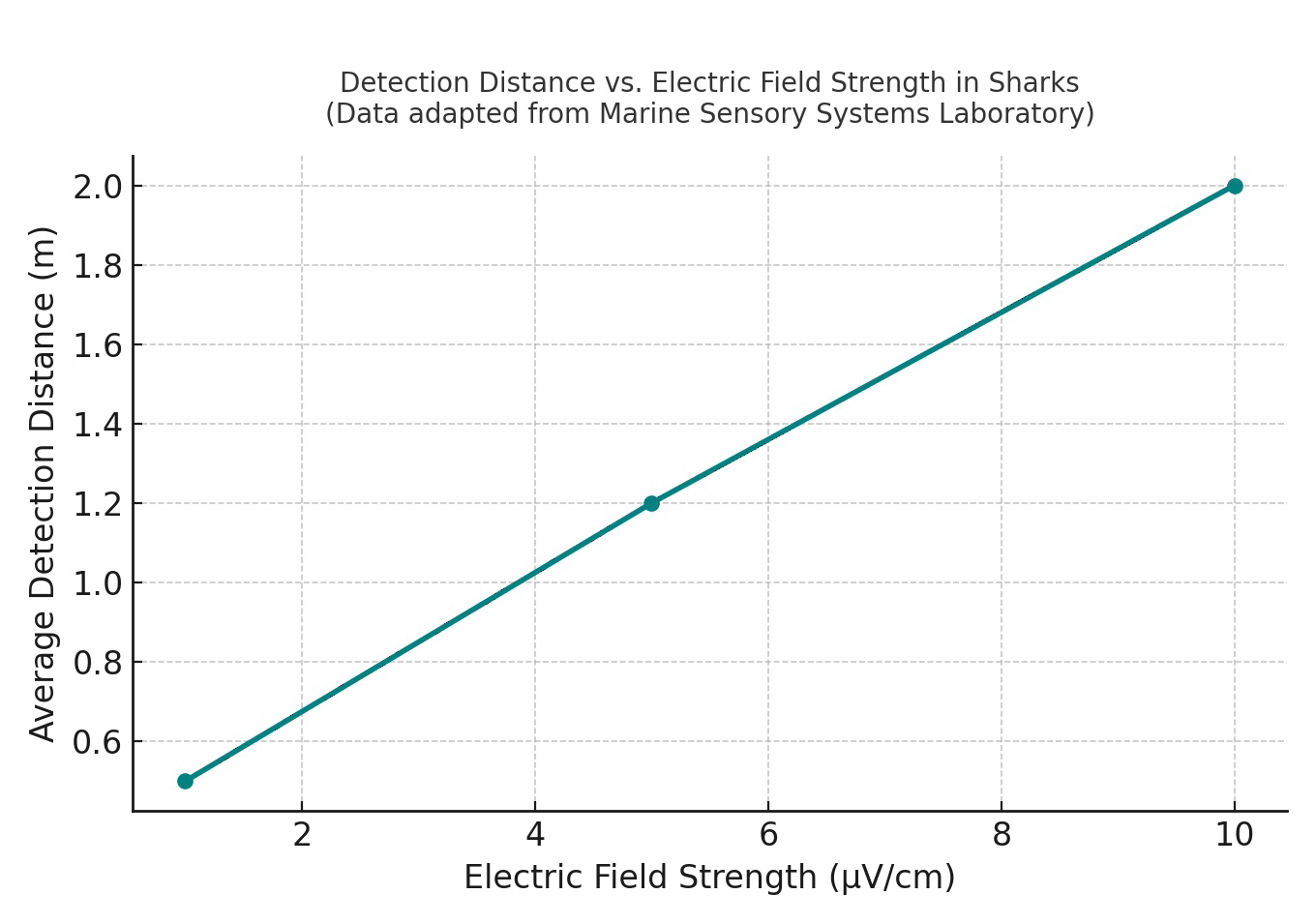
Graph of Information - Figure 2.