Log in
Sign up for FREE
arrow_back
Library
Indian Removal Act and Trail of Tears
By Amy Rigdon
star
star
star
star
star
Share
share
Last updated about 3 hours ago
29 questions
Add this activity
zoom_in
play_arrow
Trim End | 07:47
Question 1 | 01:48
Question 2 | 02:45
Question 3 | 03:38
00:00/00:00
closed_caption_disabled
slow_motion_video
fullscreen
Question 1
01:48
Question 2
02:45
Question 3
03:38
zoom_in
4
Question 4
4.
zoom_in
zoom_in
zoom_in
5
Question 5
5.
How were Native Americans similar to white settlers?
They lived in different areas.
Both lived by farming and hunting.
Only settlers farmed food.
Native Americans only traded.
5
zoom_in
5
Question 7
7.
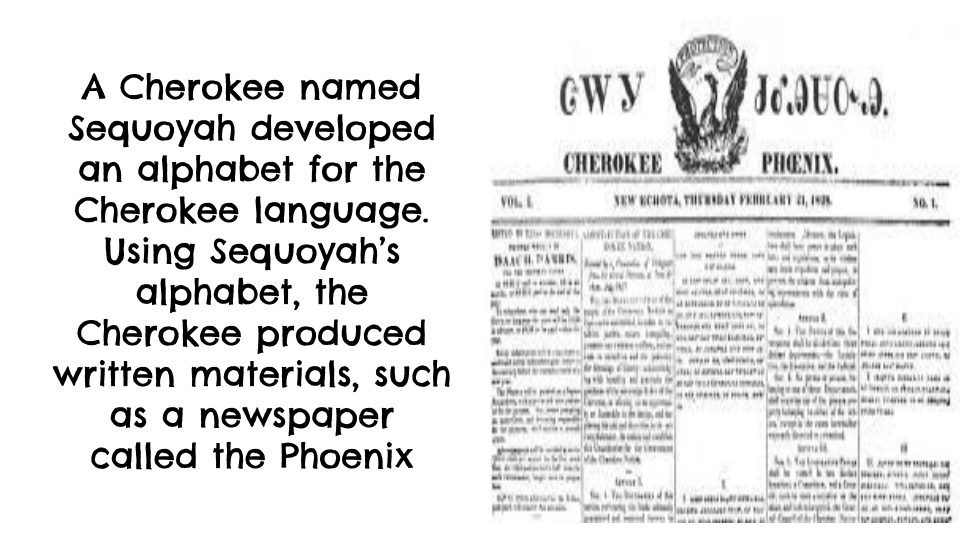
Who developed the Cherokee alphabet?
White settlers
Sequoyah
Cherokee leaders
The U.S. government
5
zoom_in
3
Question 9
9.
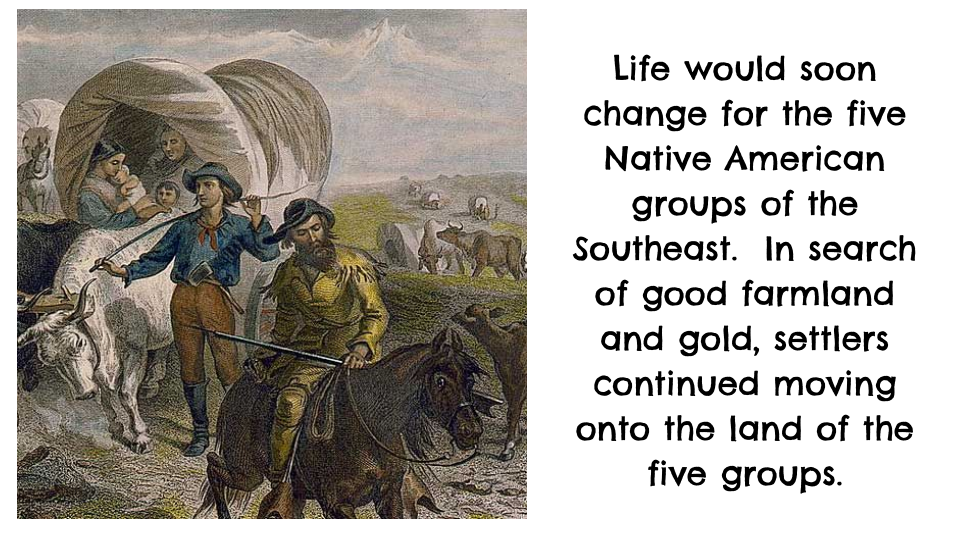
What did settlers seek when moving into Native American lands?
Good farmland and gold
More animals for farming
New types of crops
Closer access to rivers
3
zoom_in
3
3
zoom_in
3
Question 13
13.
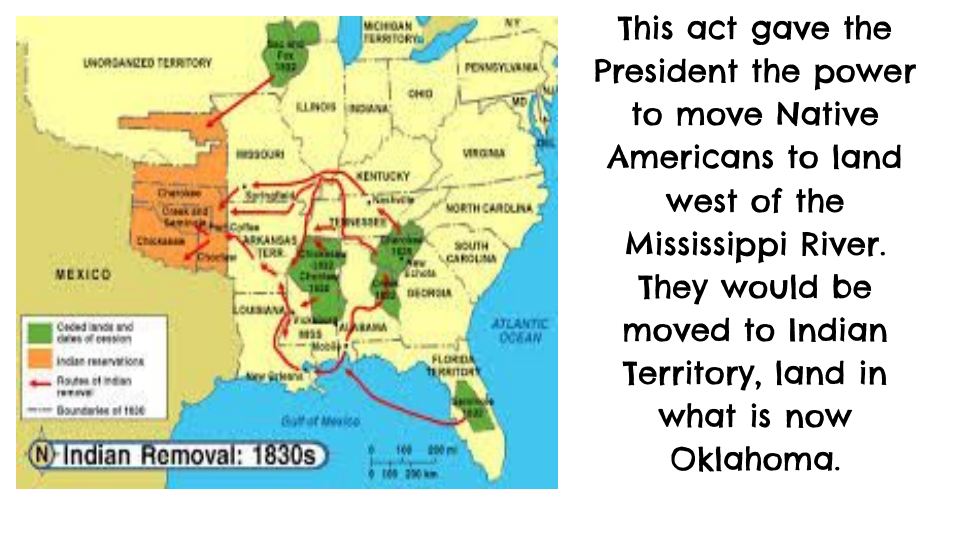
What was the main purpose of the Indian Removal Act?
To help Native Americans stay in their land.
To relocate Native Americans west of the Mississippi.
To settle disputes among tribes.
To create more farmland for settlers.
3
zoom_in
3
3
zoom_in
zoom_in
3
Question 17
17.
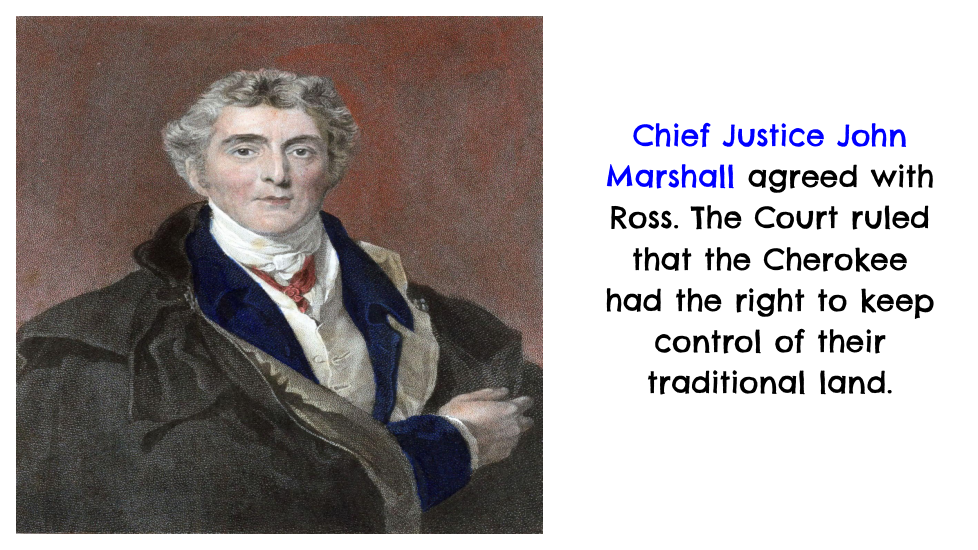
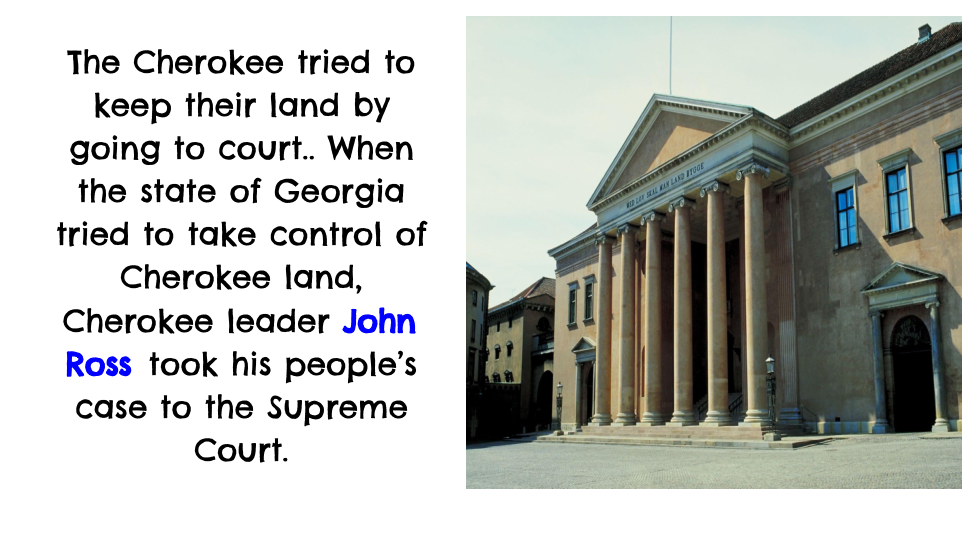
Who was the Chief Justice related to the Cherokee case?
Andrew Jackson
James Madison
John Marshall
William Penn
3
zoom_in
3
Question 19
19.
What was John Marshall's role in the government?
Senator
Governor
President
Supreme Court Chief Justice
3
zoom_in
3
3
3
3
zoom_in
3
3
3
3
zoom_in
10
Question 6
6.
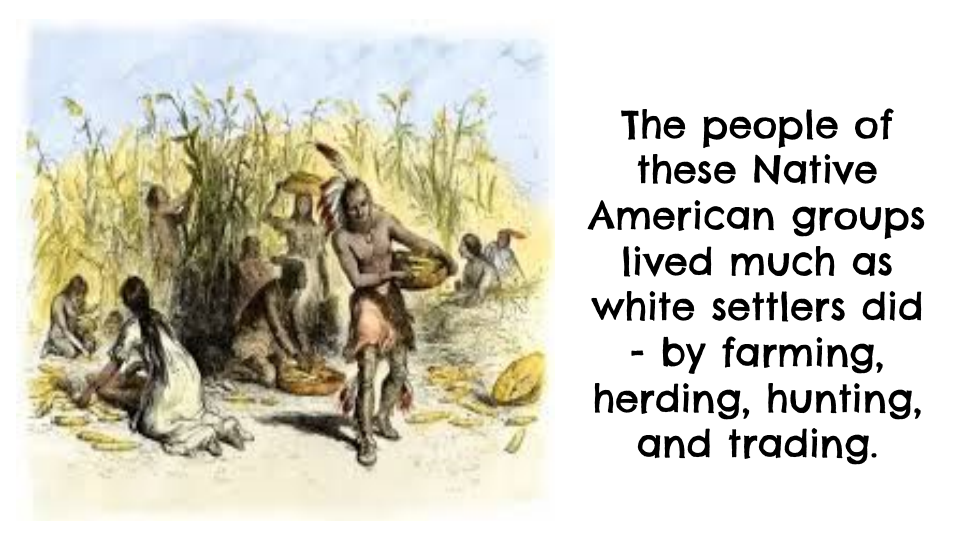
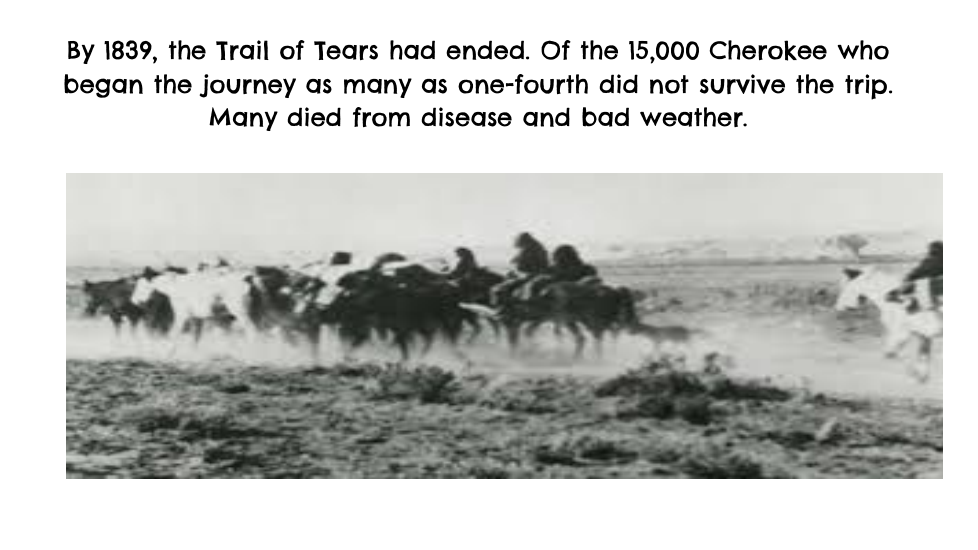
What activity is shown in the image?
They are traveling to new land.
They are preparing for a dance.
They are building houses.
People are harvesting crops together.
Question 8
8.
What did the Cherokee alphabet help produce?
Written materials
Art and crafts
Songs and stories
Oral traditions
Question 10
10.
How did the arrival of settlers change life for Native Americans?
They welcomed the settlers
Life became difficult for them
They gained more land
They learned farming techniques
Question 11
11.
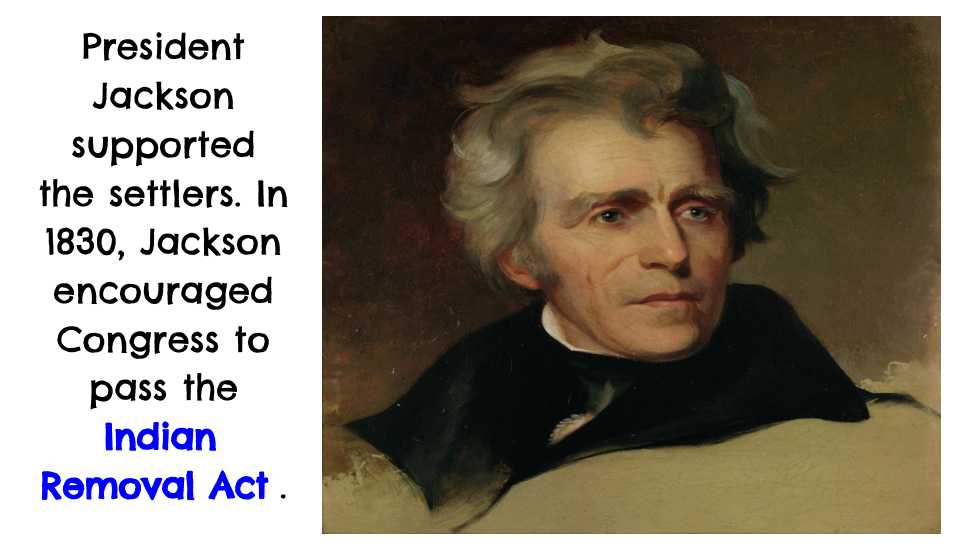
Who encouraged Congress to pass the Indian Removal Act?
President Jackson
President Lincoln
President Adams
President Washington
Question 12
12.
What was the main goal of the Indian Removal Act?
To give settlers more land
To build more railroads
To relocate Native Americans
To protect Native cultures
Question 14
14.
What river did Native Americans have to cross?
The Mississippi River.
The Missouri River.
The Ohio River.
The Colorado River.
Question 15
15.
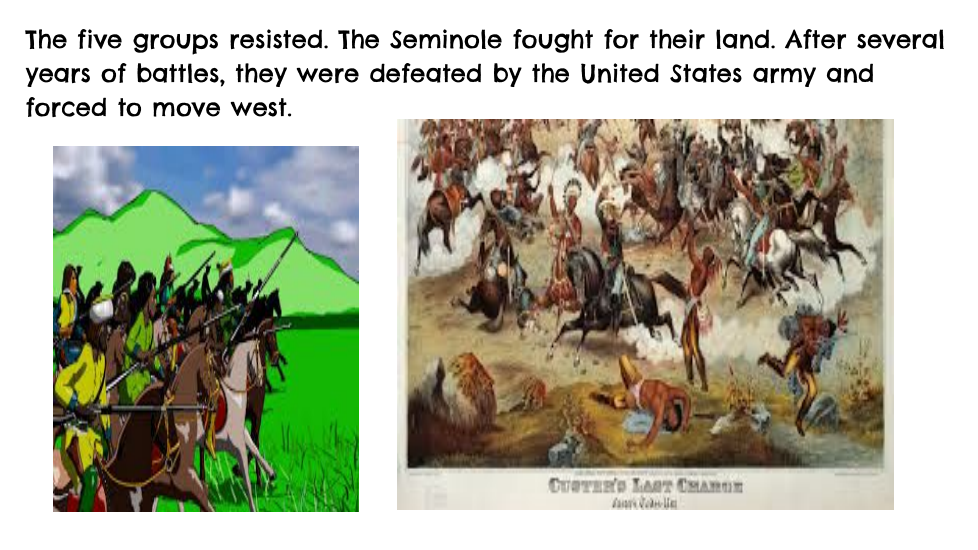
What did the Seminole fight for during the conflicts?
To join the United States
To protect their resources
Their land and rights in Florida.
To gain more territory
Question 16
16.
Who defeated the Seminole after several years of battles?
British forces
Spanish explorers
The United States army.
Other Native American tribes
Question 18
18.
What did the Court say about Cherokee land?
They could sell it to settlers
Cherokee had the right to keep it
It was owned by the U.S.
They must leave immediately
Question 20
20.
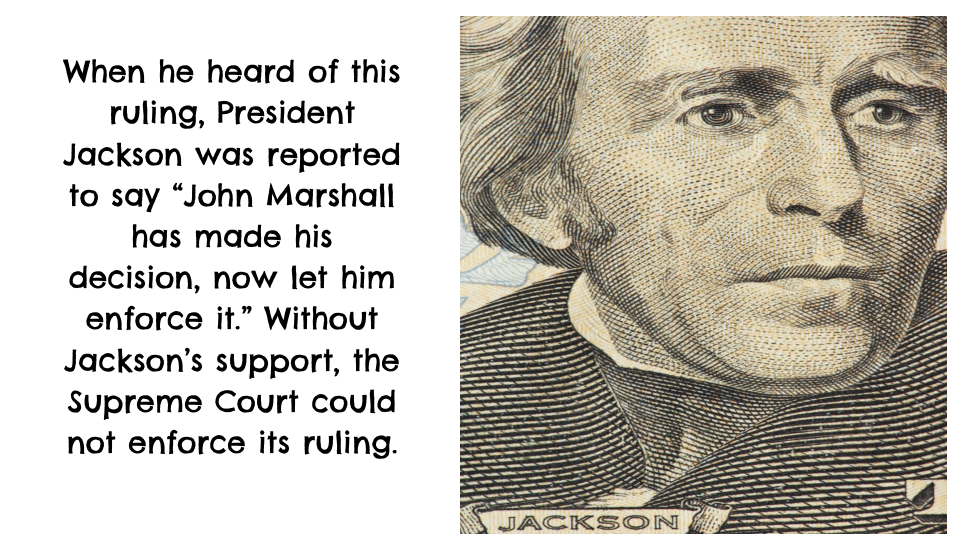
Why couldn't the Supreme Court enforce its ruling?
People disagreed with it
It had no power
Lack of support from President Jackson
Congress rejected it
Question 21
21.
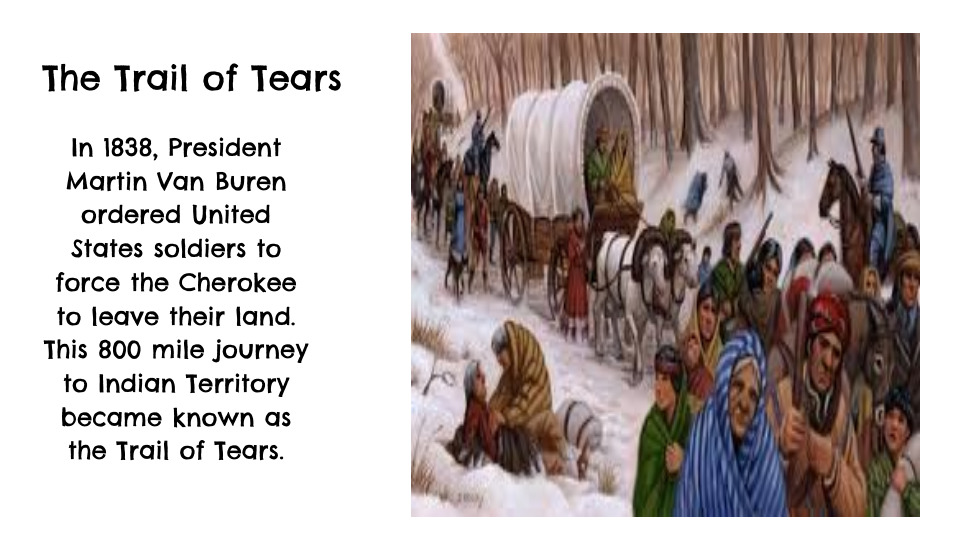
Who ordered the removal of the Cherokee in 1838?
President Martin Van Buren
Governor John Smith
General Andrew Jackson
Chief Sequoyah
Question 22
22.
What was the Cherokee's journey to Indian Territory called?
Cherokee Trail
Trail of Tears
Path of Suffering
Journey of Sorrow
Question 23
23.
How long was the Trail of Tears journey?
100 miles
1200 miles
400 miles
800 miles
Question 24
24.
What were the conditions like on the Trail of Tears?
Very difficult and harsh
Joyful and fun
Easy and quick
Safe and warm
Question 25
25.
Who was John Burnett?
A soldier who witnessed the Trail of Tears.
A government official of the time
A historian from the west
A Native American leader
Question 26
26.
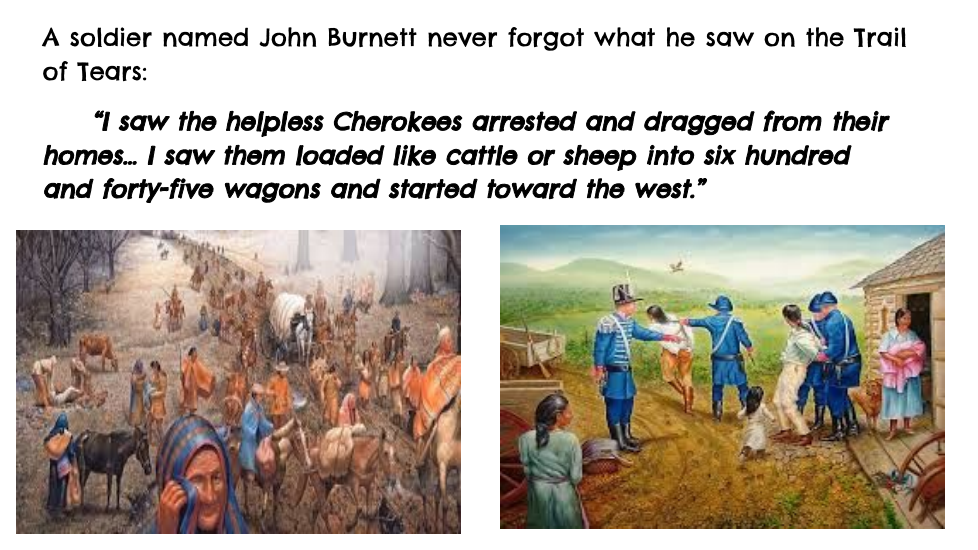
What were the Cherokees forced to do?
Join another tribe in the east
Move to a northern territory
Stay in their homeland peacefully
Leave their homes and travel west.
Question 27
27.
How were the Cherokees transported?
In wagons, like cattle or sheep.
By boats down rivers
On horseback to a new home
In trains to the west
Question 28
28.
What does the Trail of Tears refer to?
A journey of discovery
An expedition for gold
The forced removal of the Cherokee people.
A celebration of cultures