Butterfly Proboscis and Flower Type
Butterflies have a long, tube-shaped mouthpart called a proboscis, which allows them to sip nectar from flowers. This structure varies in length among butterfly species, depending on the flowers they feed from. Some flowers are deep and narrow, while others are shallow - only butterflies with a proboscis of the right length can reach the nectar inside.
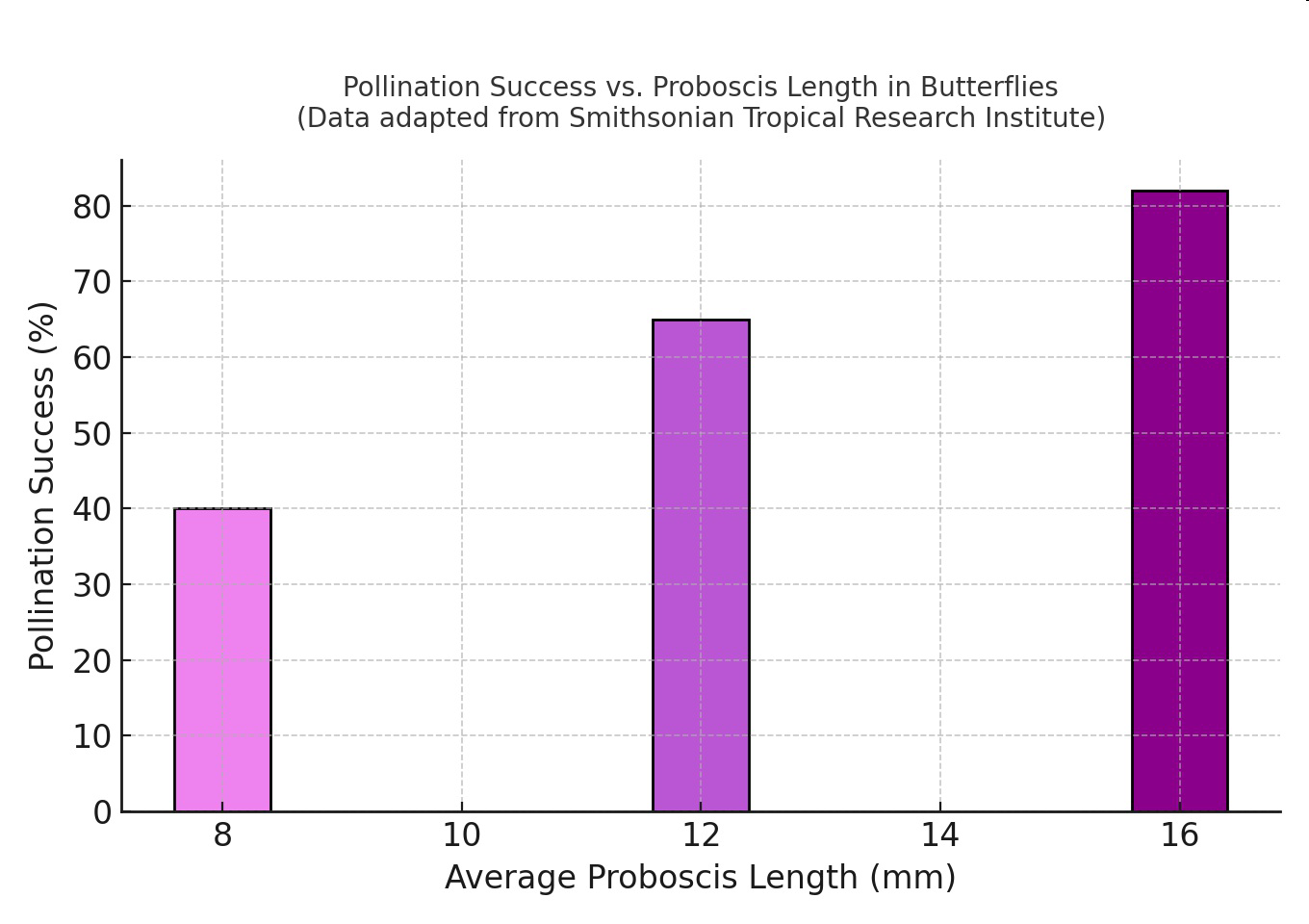
Researchers from the Pollination Ecology Institute measured how proboscis length affects nectar access rate and pollination success among three butterfly species feeding on different types of flowers.
Table 1.
Butterfly Species | Average Proboscis Length (mm) | Flower Depth (mm) | Nectar Access Rate (%) | Pollination Success (%) |
|---|---|---|---|---|
Short-Tongue (Type A) | 8 | 6 | 85 | 40 |
Medium-Tongue (Type B) | 12 | 10 | 90 | 65 |
Long-Tongue (Type C) | 16 | 14 | 95 | 82 |
Butterflies with proboscis lengths that best match the flower depth can feed more easily and stay longer at each flower. As they feed, they also transfer more pollen, helping the plant reproduce. This relationship benefits both organisms - butterflies get food, and flowers get pollinated.
This example shows how external structures can serve multiple purposes, supporting both survival (feeding) and reproduction (pollination). The specialized design of the proboscis helps butterflies thrive in specific habitats and supports the continuation of flowering plant species.
Graph of Information - Figure 1.
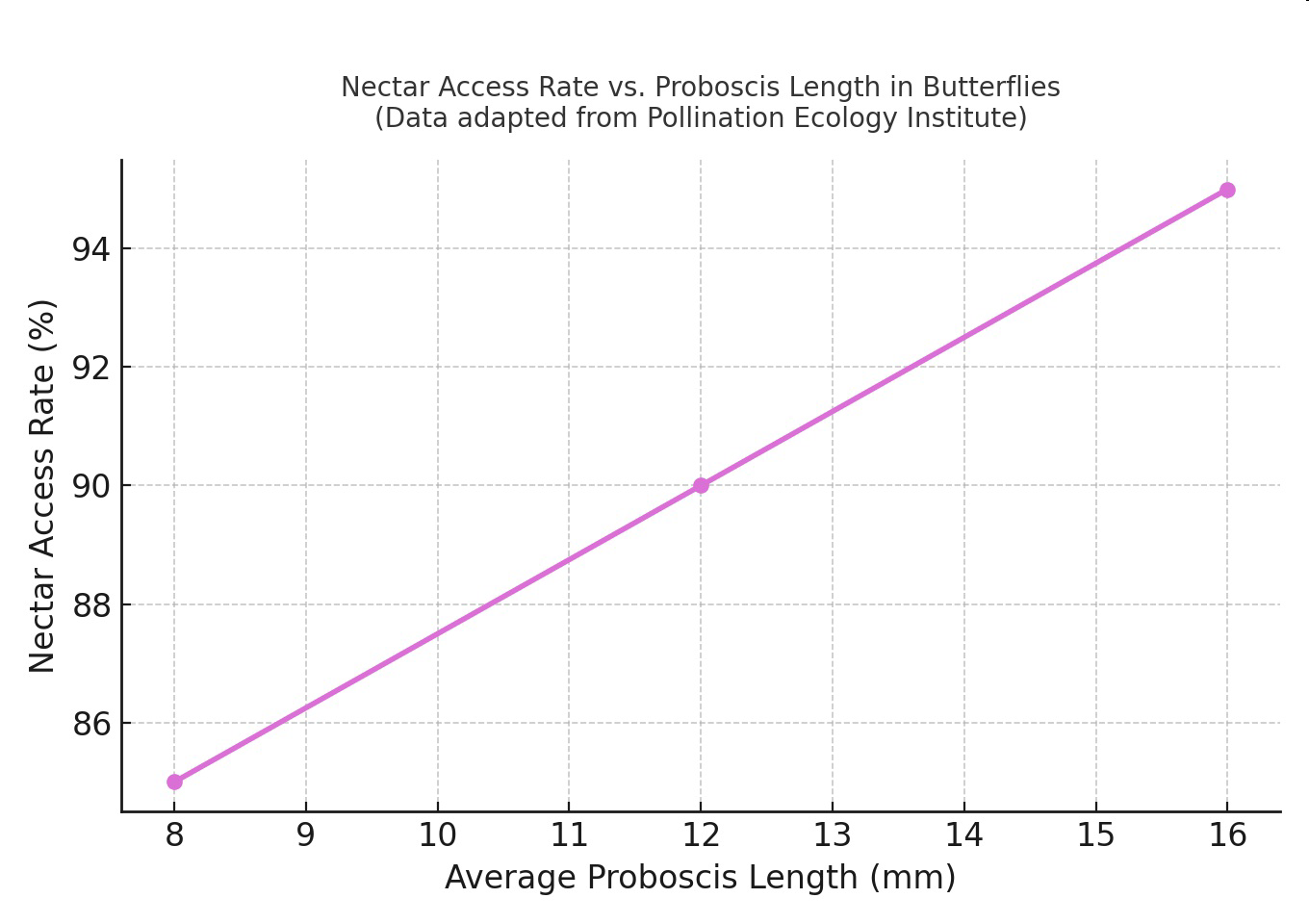
Graph of Information - Figure 2.