Cheetah Leg Muscles and Running Speed
Cheetahs are the fastest land animals, capable of reaching speeds up to
Internally, cheetahs have:
Powerful leg muscles that store and release energy for explosive acceleration.
Large lungs and heart that deliver oxygen quickly to muscles.
Flexible spine that works like a spring, allowing long strides.
Externally, they have:
Long legs for covering distance quickly.
Non-retractable claws for grip during high-speed turns.
A long tail that acts like a rudder, helping balance and steering.
Table 1.
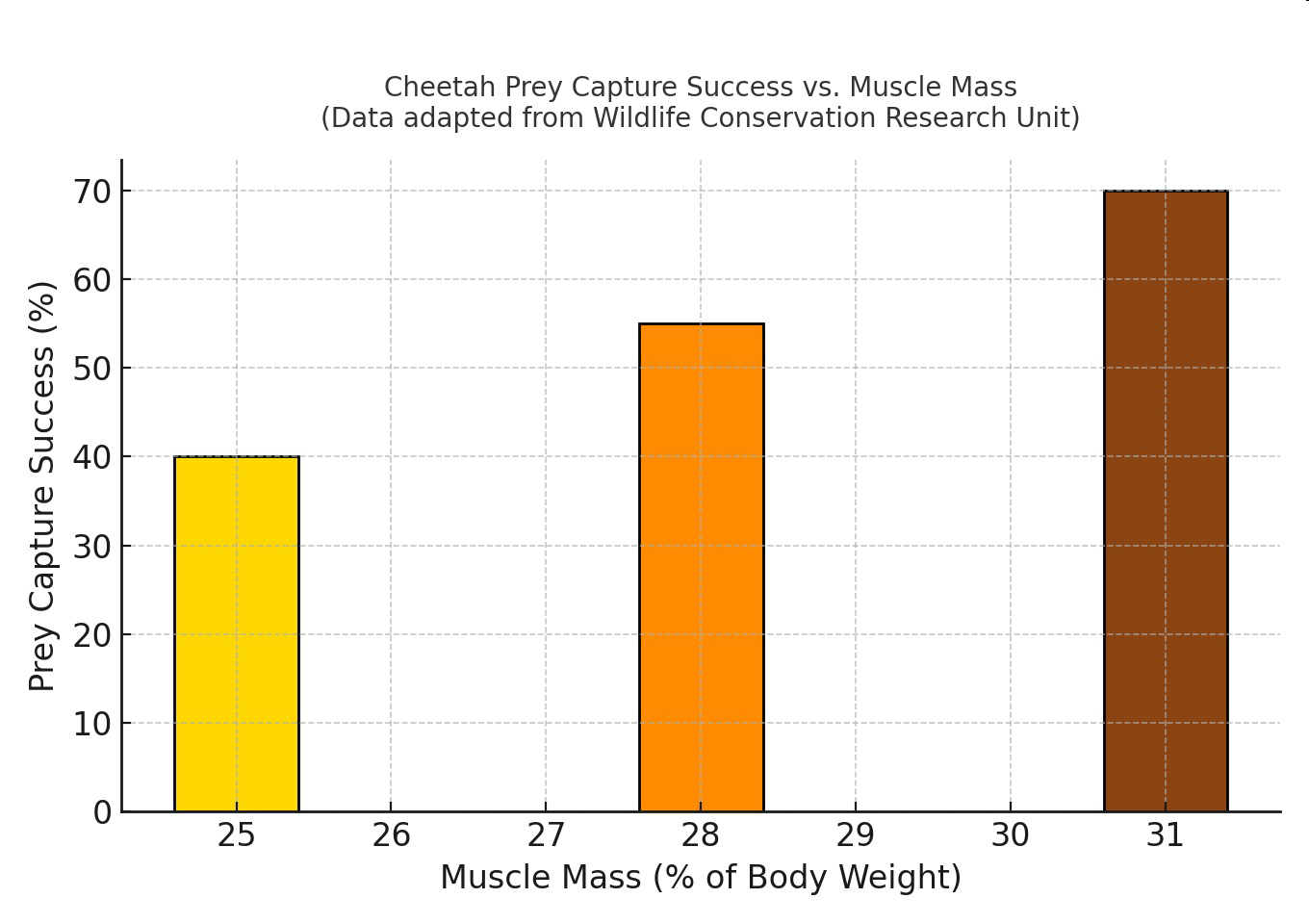
Muscle Mass (% of Body Weight) | Average Top Speed (km/h) | Prey Capture Success (%) |
|---|---|---|
25 | 80 | 40 |
28 | 95 | 55 |
31 | 110 | 70 |
These data show that cheetahs with greater leg muscle mass can reach higher speeds and catch prey more successfully. The muscles and skeleton work together to support their survival behavior - hunting.
Cheetahs’ internal structures (muscles, lungs, heart) and external structures (legs, claws, tail) function together to support survival and reproduction. Without these features, they wouldn’t be able to catch food or compete for mates.
Graph of Information - Figure 1.
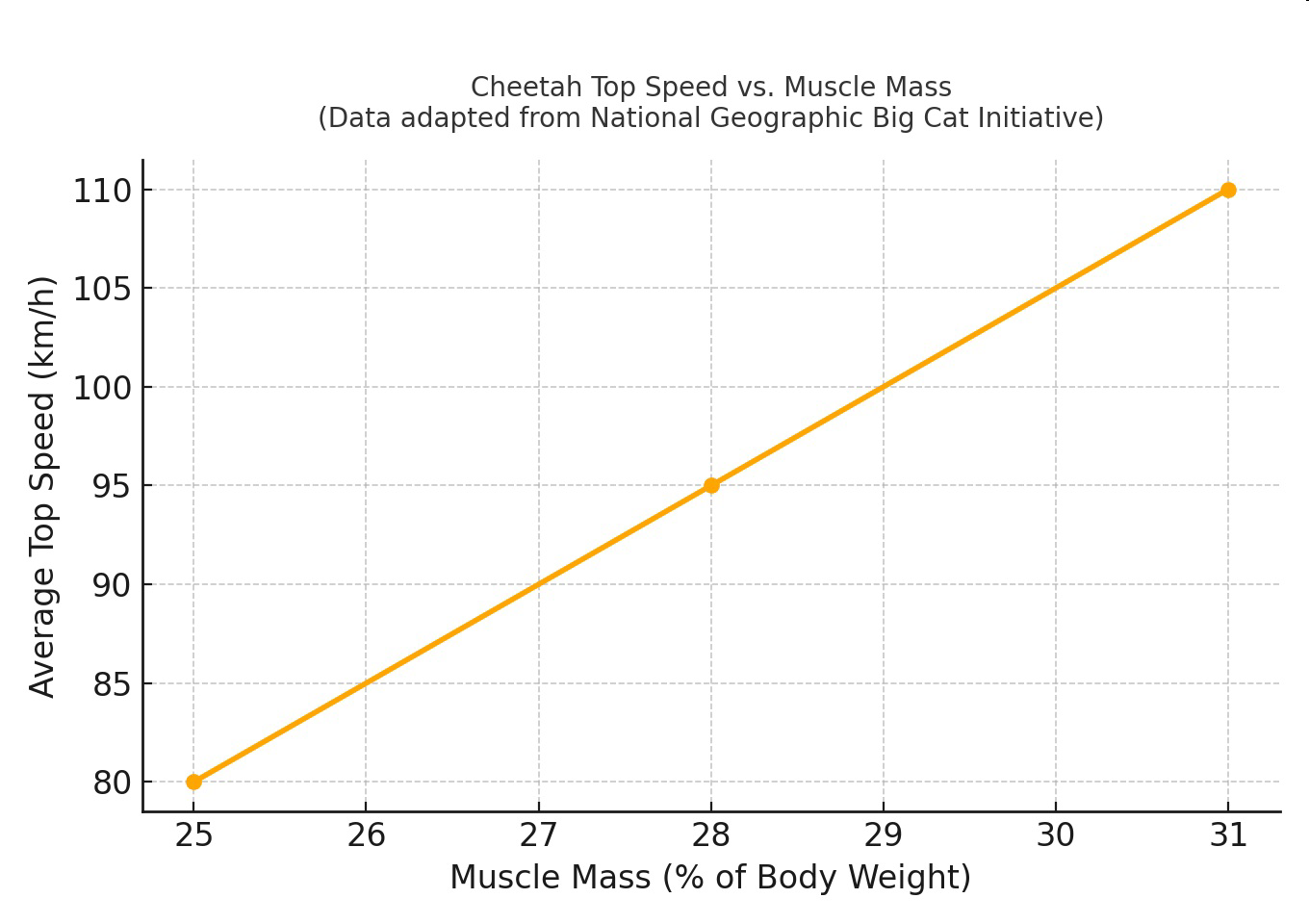
Graph of Information - Figure 2.