Elephant Communication through Vibrations
Elephants can communicate using low-frequency sounds, called infrasound, that travel long distances through the ground as vibrations. These vibrations are too low for humans to hear, but elephants can detect them through the pads of their feet using special vibration-sensitive cells.
When an elephant senses a vibration, the information travels from its feet to the brain’s sensory center, where it’s interpreted. Depending on the message, elephants might freeze, move toward the group, or trumpet in response.
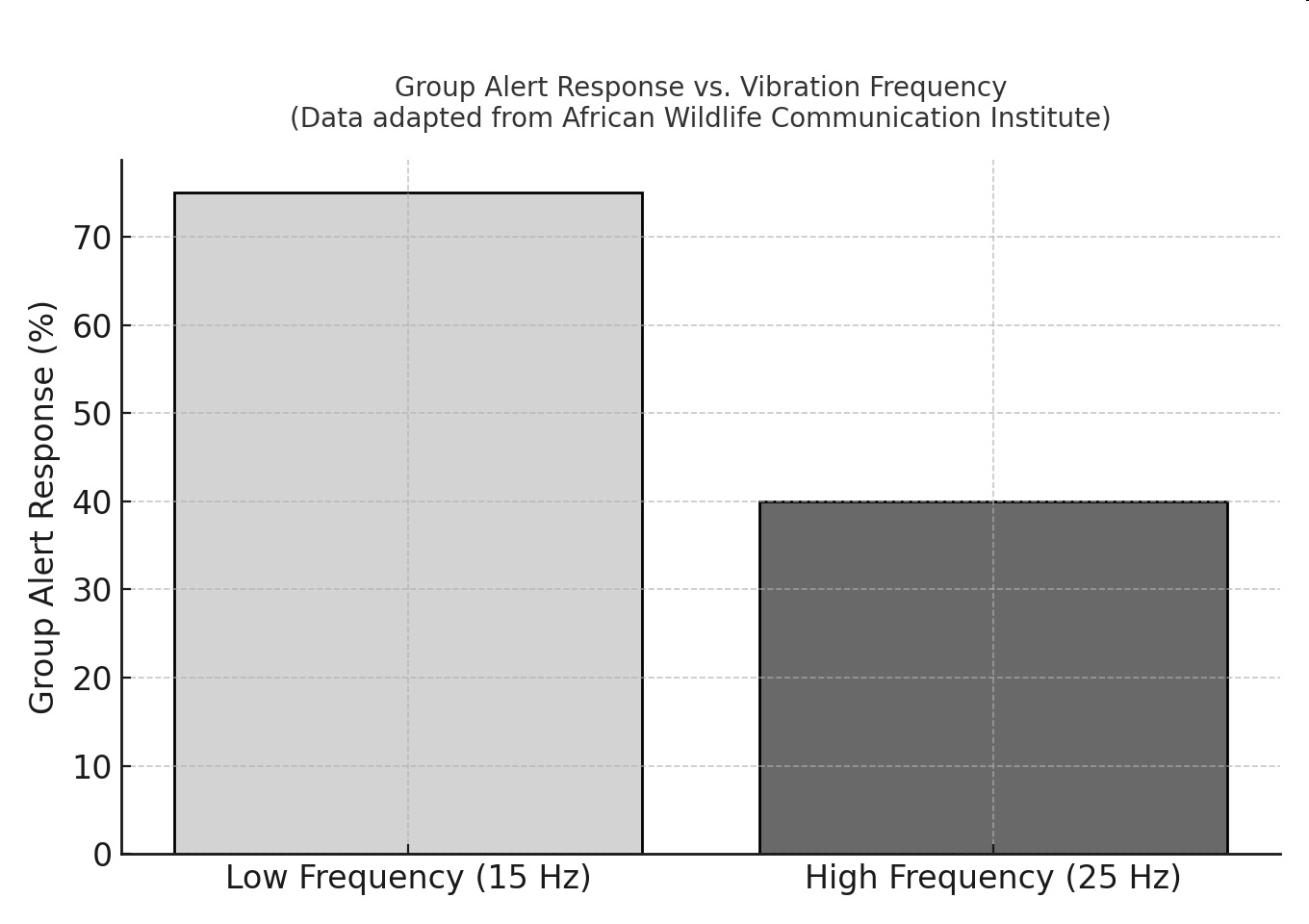
Researchers from the African Wildlife Communication Institute measured how elephants responded to vibrations at different distances and frequencies.
Table 1.
Vibration Distance (m) | Frequency Type (Hz) | Average Response Time (seconds) | Group Alert Response (%) |
|---|---|---|---|
200 | 15 | 8 | 85 |
500 | 15 | 14 | 65 |
800 | 25 | 22 | 40 |
Elephants are able to detect vibrations from several hundred meters away. Lower-frequency vibrations travel farther and produce faster, stronger responses because they are easier for elephants to detect. The brain processes the vibration signals and triggers behaviors that support safety and social bonding.
This example shows that animals can receive and respond to non-visual and non-auditory information. Elephants’ specialized feet, neural processing, and behavioral coordination provide an excellent model of the senses → brain → response system.
Graph of Information - Figure 1.
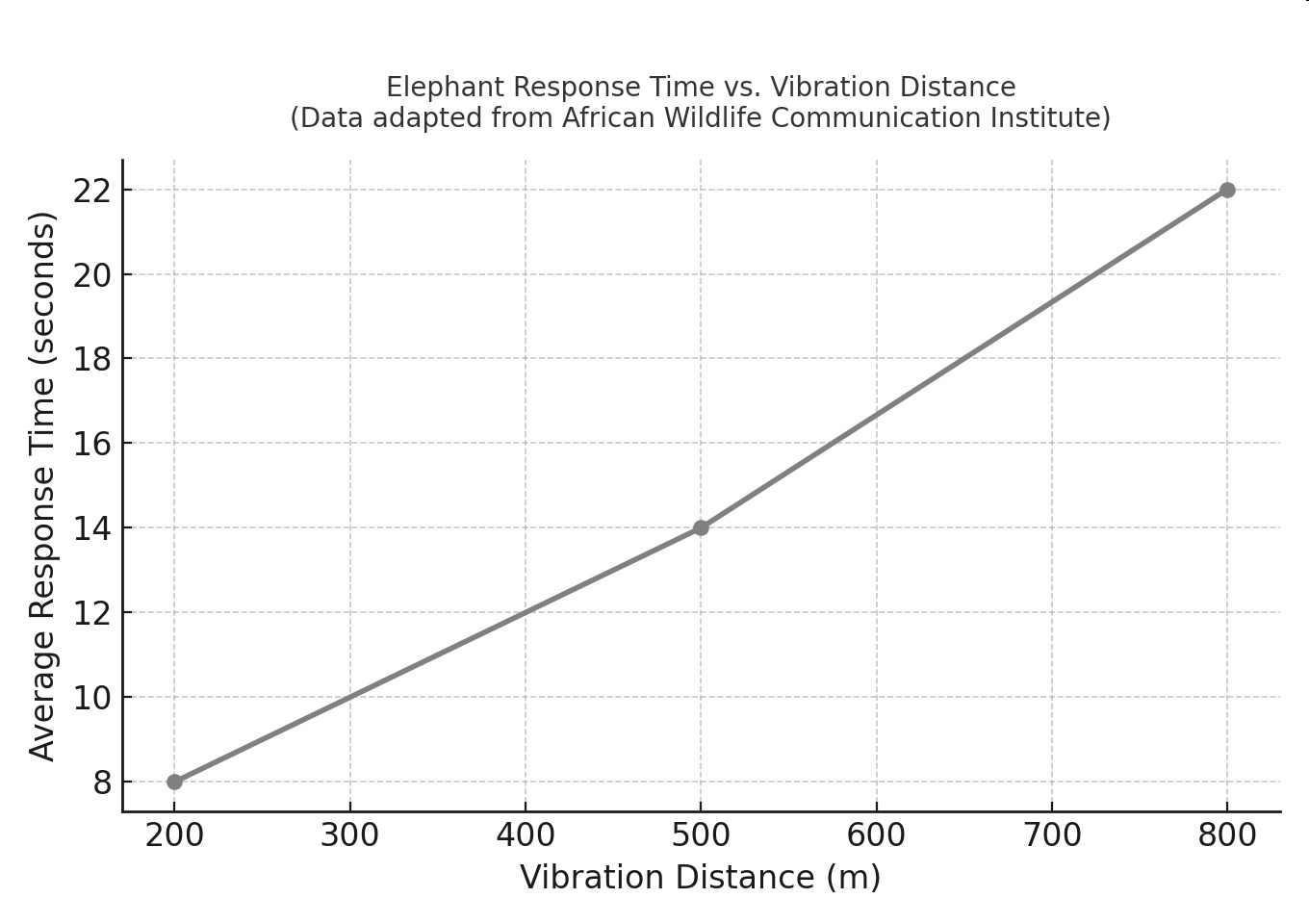
Graph of Information - Figure 2.