Twa kɔ nsɛm atitiriw so
Log in
Sign up for FREE
arrow_back
Laabri

Fish Gills and Oxygen Uptake - ES - LS - Structure and Function

star
star
star
star
star
Last updated 4 months ago
5 Nsɛmmisa
Hyɛ no nsow a efi ɔkyerɛwfo no hɔ:

Directions: Use the information provided and your knowledge of Life Science to answer the following questions. Show all work where necessary.

Directions: Use the information provided and your knowledge of Life Science to answer the following questions. Show all work where necessary.

0
Ɛhia
6
DOK 3
4-LS1-1
Ɛhia
4
DOK 2
4-LS1-1
Ɛhia
2
DOK 1
4-LS1-2
Ɛhia
2
DOK 1
4-LS1-1
Ɛhia
4
DOK 2
3-LS4-3

Fish Gills and Oxygen Uptake

Fish live in water, where oxygen levels are much lower than in air. To survive, they have specialized internal structures called gills, which extract dissolved oxygen from water as it passes over thin membranes.

Inside each gill are thousands of tiny filaments rich in capillaries - small blood vessels that absorb oxygen and release carbon dioxide. This structure gives gills a very large surface area, which is essential for efficient gas exchange.

Researchers from the Marine Life Physiology Institute measured how gill surface area affects oxygen uptake and fish activity levels in several species.

Fish with larger gill surface areas can extract more oxygen, supporting longer and more active swimming periods. This internal structure allows them to survive, find food, escape predators, and reproduce in aquatic environments.

This example shows how internal structures, such as gills, have specific functions that support survival and behavior. Fish depend on the design of their gills to live successfully underwater - a perfect model of structure supporting function.

Table 1.

Gill Surface Area (cm$^2$)

Oxygen Uptake Rate (mg O$_2$/hour)

Active Swimming Time (minutes/hour)

20

25

15

35

42

32

50

60

50

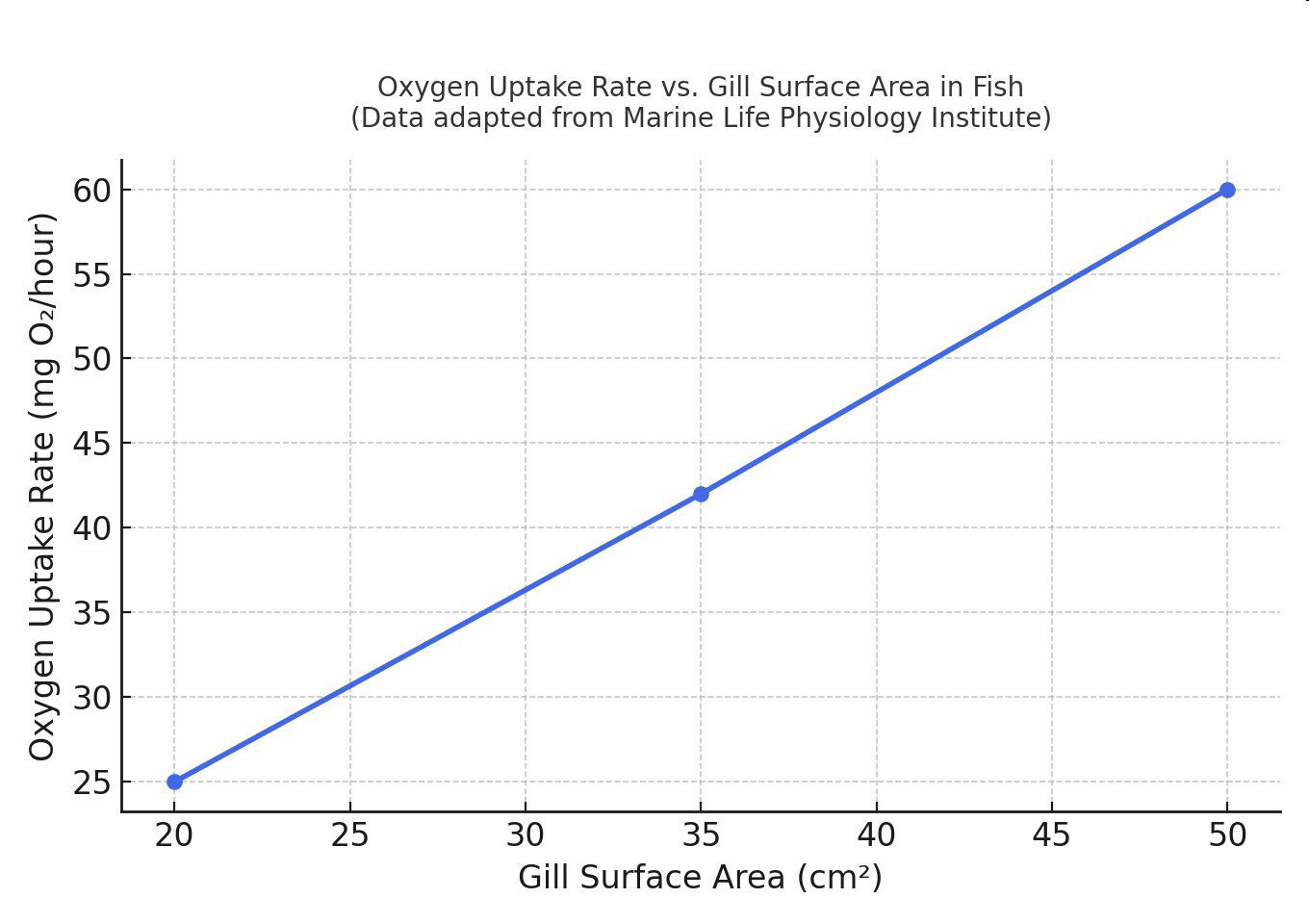
Graph of Information - Figure 1.

Graph of oxygen uptake rate vs. gill surface area in fish.

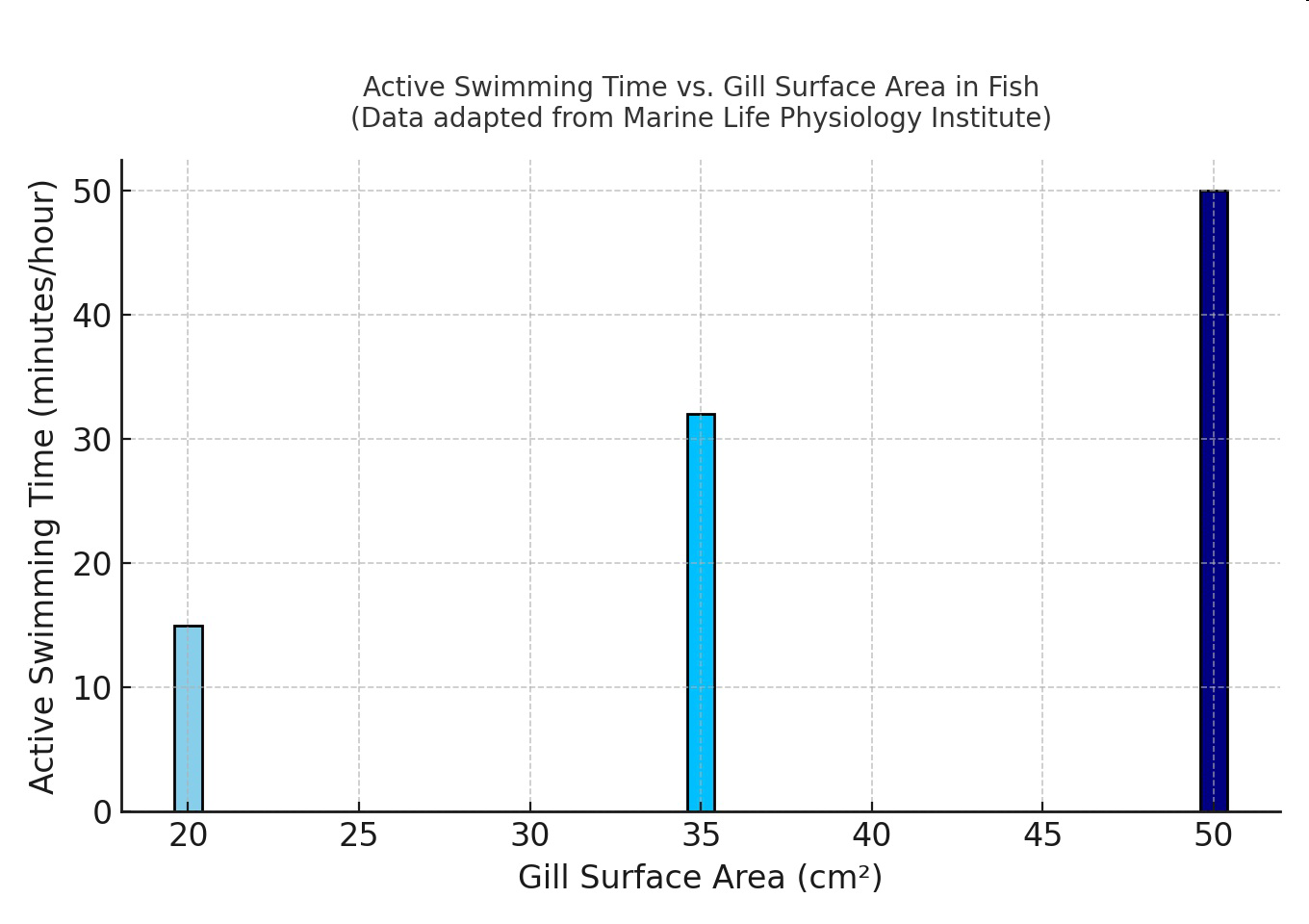
Graph of Information - Figure 2.

Bar graph of active swimming time vs. gill surface area in fish.

Asemmisa {{asɛmmisaAhyɛnsode}}
1.

How do fish gills support survival in aquatic environments?

Respond using Claim, Evidence, and Reasoning:

Claim: Explain your main idea about how gills help fish survive.

Evidence: Use details from the text, table, or graphs.

Reasoning: Connect your evidence to your claim.

Asemmisa {{asɛmmisaAhyɛnsode}}
2.

Based on Table 1, how does gill surface area relate to active swimming time?

Use evidence from the data in your explanation.

Asemmisa {{asɛmmisaAhyɛnsode}}
3.

Why do fish need a large gill surface area?

Asemmisa {{asɛmmisaAhyɛnsode}}
4.

Which structure inside the gills helps absorb oxygen into the bloodstream?

Asemmisa {{asɛmmisaAhyɛnsode}}
5.

Explain how the structure of gills helps fish survive and compete for resources in their environment.