Owl Hearing and Hunting Behavior
Owls are nocturnal hunters that rely heavily on hearing to locate prey in the dark. Their ears are positioned asymmetrically on their heads - one slightly higher than the other - allowing them to detect tiny differences in how sound reaches each ear. This structure helps the brain calculate the exact direction and distance of a sound source.
When an owl hears a mouse moving, its brain processes:
Timing difference between when each ear detects the sound.
Volume difference between the two ears.
Brain computation to pinpoint prey location.
The owl then turns its head and dives precisely to that spot - even in total darkness.
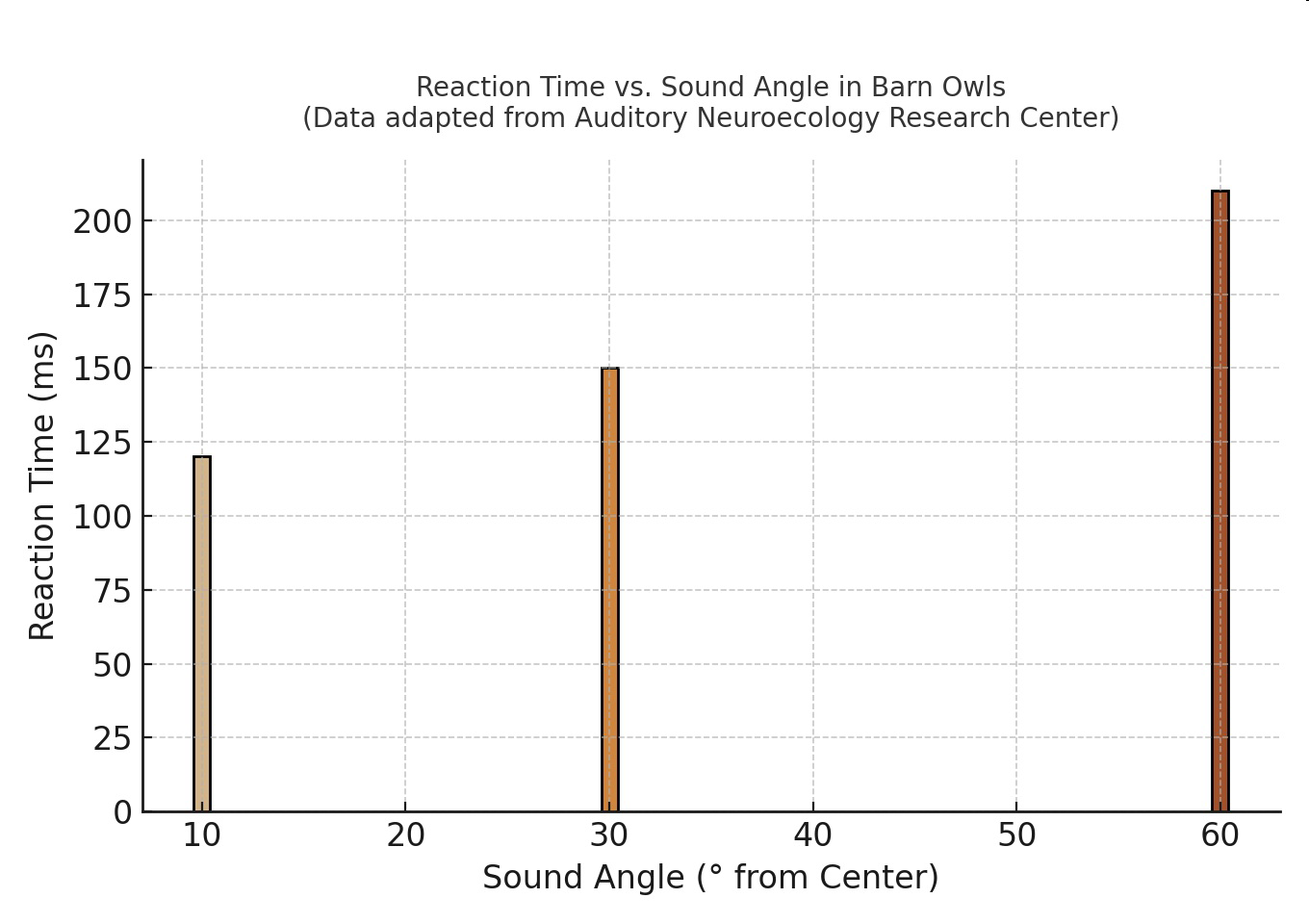
Researchers from the Auditory Neuroecology Research Center tested owl accuracy under different sound angles and intensities to measure how hearing affects hunting success.
Table 1.
Sound Angle (o from Center) | Prey Capture Accuracy (%) | Reaction Time (ms) |
|---|
10 | 95 | 120 |
30 | 85 | 150 |
60 | 65 | 210 |
Owls receive sound information through their ears, send it to the brain's auditory center for processing, and respond by adjusting head movement and flight path. This chain - sensory input to brain processing to motor response - helps them survive by hunting efficiently in low light.
This phenomenon models how animals process sensory information and act on it. Owls� specialized hearing structures and brain adaptations show how structure and behavior work together to support survival.
Graph of Information - Figure 1.
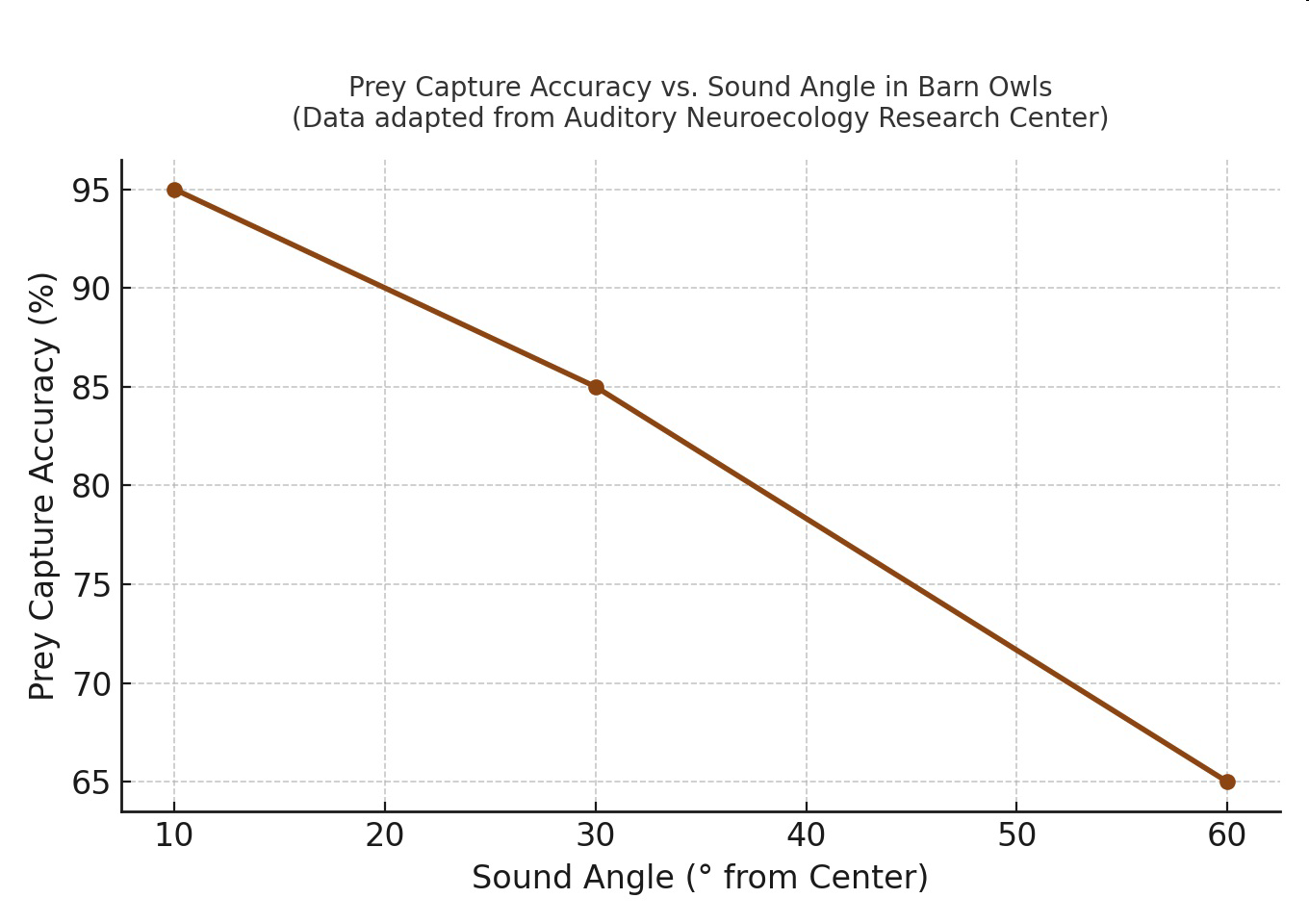
Graph of Information - Figure 2.