Sunflower Stem and Leaf Structure
Sunflowers are tall plants that can grow over two meters high. To survive and grow effectively, they rely on external structures - their stems and leaves - that work together to support their height and capture sunlight.
The stem is thick and sturdy, allowing the sunflower to stand upright even in the wind. It also contains xylem and phloem tissues, which transport water and nutrients to the leaves and flowers.
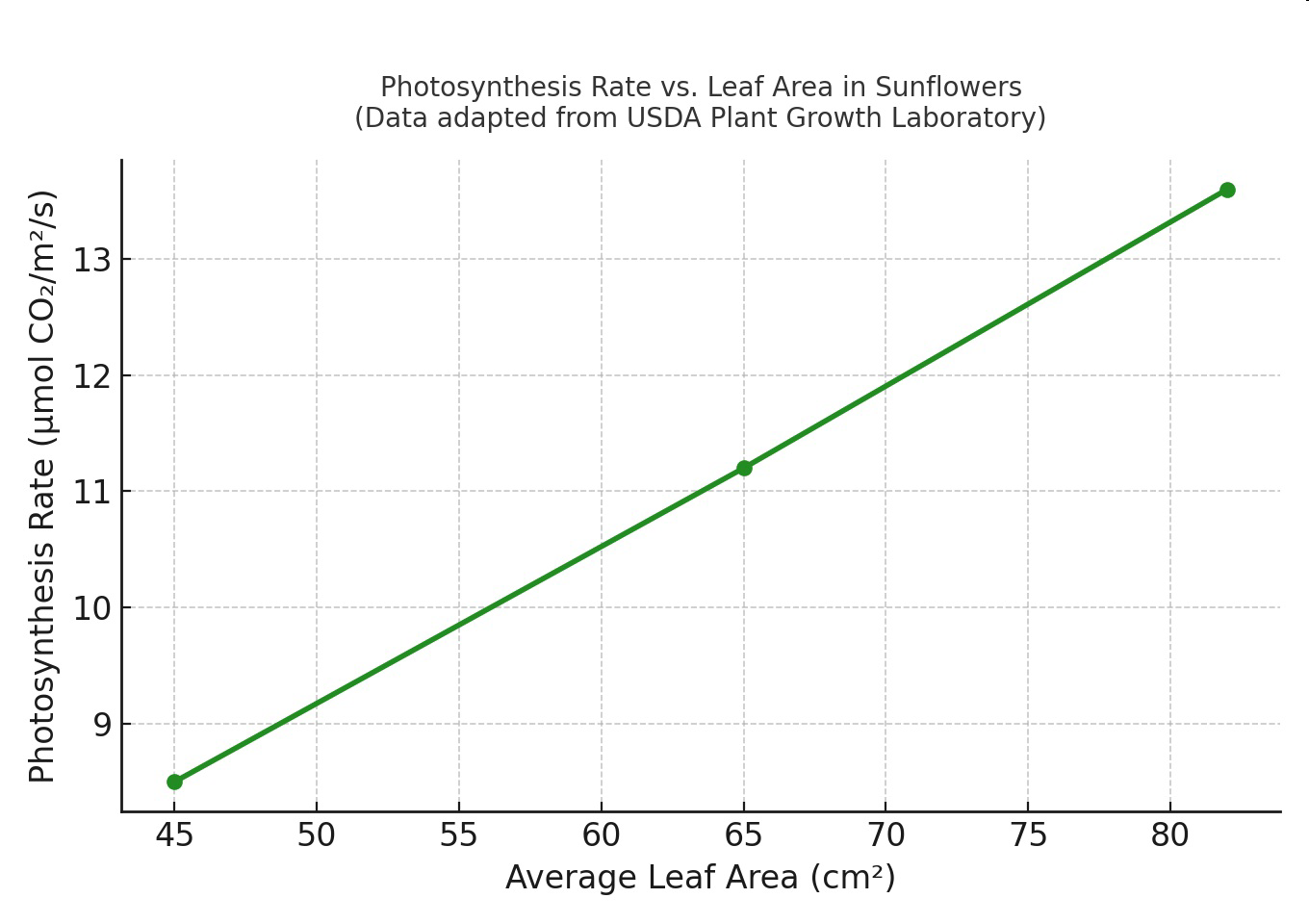
The leaves are wide and broad, allowing the plant to capture sunlight efficiently for photosynthesis, the process by which plants make their own food.
Researchers from the USDA Plant Growth Laboratory measured how stem thickness affects height stability and how leaf area affects the rate of photosynthesis.
Sunflowers with thicker stems are better able to support their height, keeping them upright to face the sun. Those with larger leaves capture more sunlight and perform photosynthesis more efficiently, allowing for better growth and reproduction. Both stem and leaf structures directly contribute to the plant’s ability to survive and thrive.
This example shows that external plant structures - stems and leaves - have specific functions that support growth and survival. Plants with stronger stems and larger leaves are more likely to grow tall, resist wind, and produce more seeds, ensuring the species continues.
Table 1.
Stem Thickness (mm) | Average Plant Height (cm) | % of Plants Standing Upright | Average Leaf Area (cm$^2$) | Photosynthesis Rate µmol CO$_2$/m$^2$/s) |
|---|
4 | 80 | 70 | 45 | 8.5 |
6 | 120 | 90 | 65 | 11.2 |
8 | 150 | 98 | 82 | 13.6 |
Graph of Information - Figure 1.
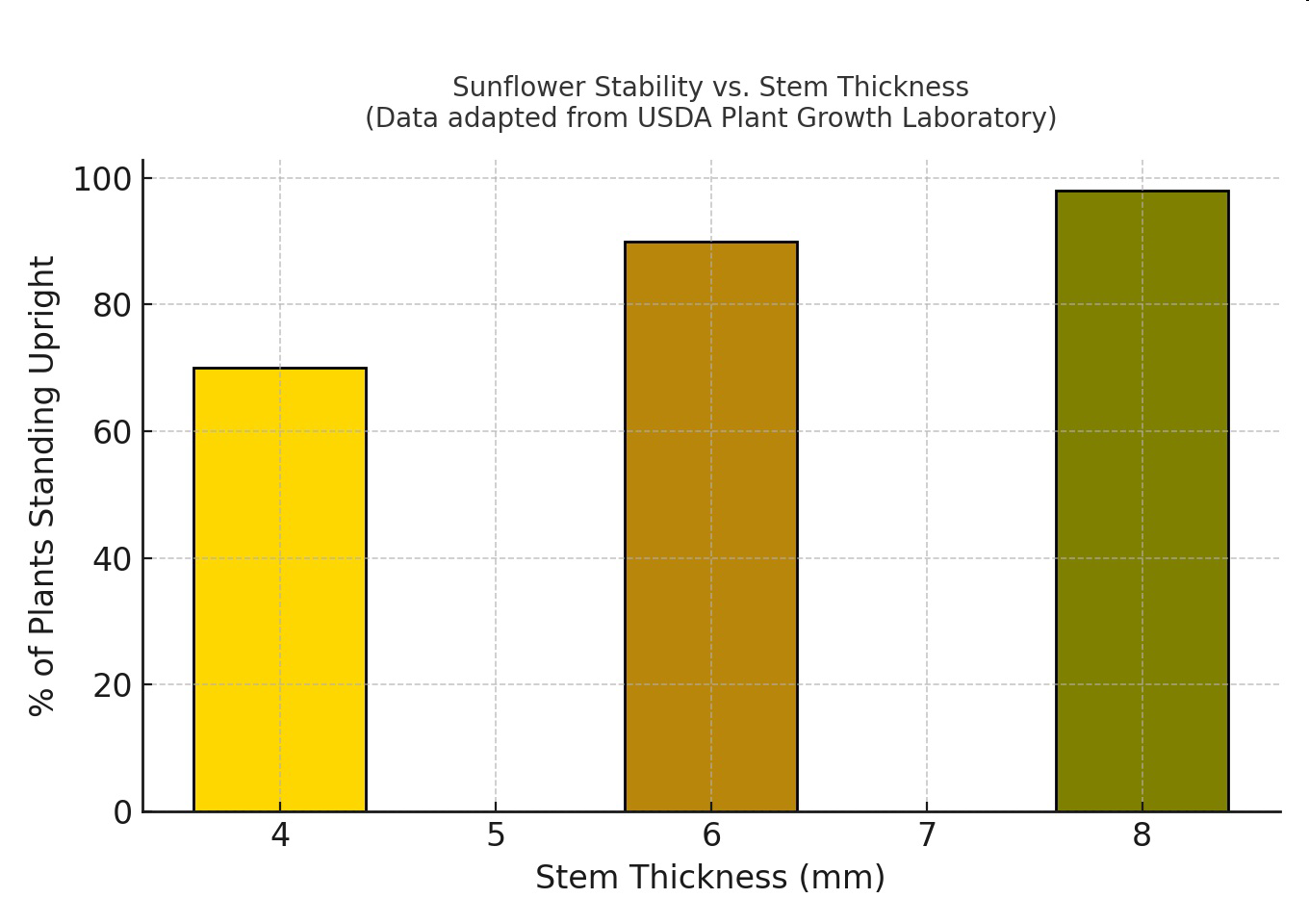
Graph of Information - Figure 2.