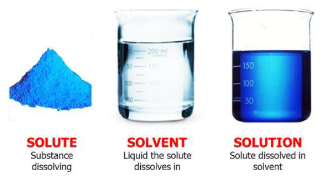
What happens when a solute dissolves in a solvent?
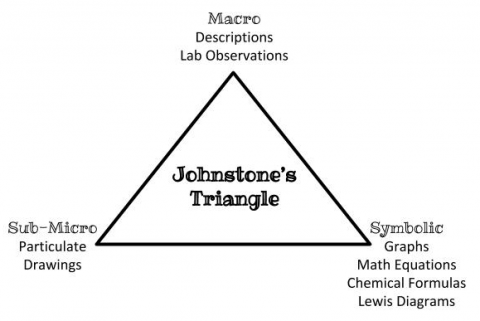
How can we represent this event?
What happens when a solute dissolves in a solvent?
How can we represent this event?
Match the following to the type of mixture:
Ocean water
Oil and vinegar salad dressing
Fog
Air
Metal alloys: bronze
Muddy Water
Jello
Solution
Colloid
Suspension
Which statements below are true of solutions?
A physical change of sugar C12H22H11(s) is shown below in the video clip.
This change pertains to our current study of solution chemistry.
After watching the video:
Write the equation to symbolically represent the macroscopic event on the video.
Draw a particle model of the process with two boxes showing before the solution is mixed and the final result.
All particles should be represented with symbols and a key included.
Equation and Particle models
Take 2:
When a solid solute dissolves to form a solution with a solvent, the general equation can be written:
choose all that apply
To review: place the compounds under the following categories.
Look up the structure of any compound if you are unsure where to place it.
Sugar, C12H22O11
Table salt, NaCl
Ice melt, MgCl2
Epsom salts, MgSO4
Olive oil, C88H164O10
Methane, CH4
Hydrofluoric acid, HF
Ionic Compound
Non-polar Covalent Compound
Polar Covalent Compound
What may dissolve in water? (Remember 'like dissolves like').
Represent the final result of the mixture submicroscopically with a particle model.
Use symbols to represent particles and include a key.
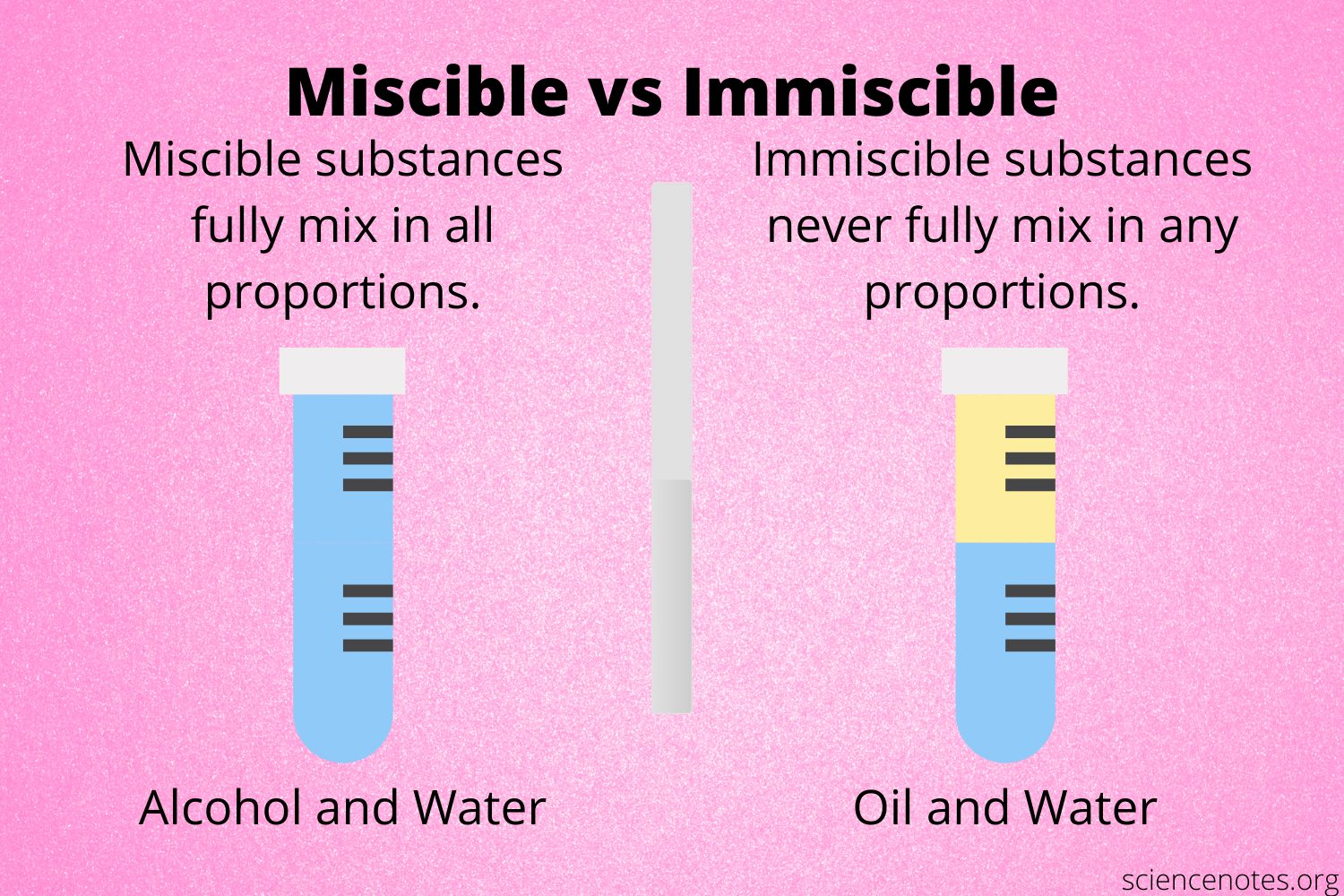
When two liquids will mix into a solution, the liquids are considered miscible. When two liquids will not form a solution, the liquids are considered immiscible. Oil and water are __________________.
'Like dissolves like' is explained with the structure of substances interacting. Polar substances (and many ionic substances) will dissolve in polar solvents. Non-polar solutes will dissolve in non-polar solvents.
Which statements are true?
Represent each solution listed below sub-microscopically by drawing a particulate model in each beaker:
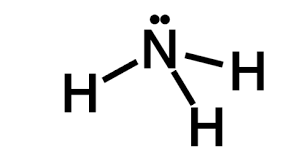
I. Ammonia, NH3 and water mixed
structure of ammonia
II. Bromine Br2 liquid and water mixed
structure of bromine
Use symbols to represent particles and include a key.
When a solid will not dissolve in a solvent, it is considered insoluble. When a solid will dissolve in a solvent, it is considered soluble. Some substances are slightly soluble and an equilibrium is produced.
What substances were insoluble in water?
Because solubility is due to attractive forces, it can be a complex dynamic to predict solubility. You may recall learning about soluble and insoluble ionic compounds when studying double replacement reactions.
Solubility in water is not as simple as the category of the solute.
The two insoluble substances above are not the same type of substance. Look up each to see an explanation for why these two substances, one a covalent molecule and one being an ionic salt, are not soluble. Based on your research, make a few notes about what you learned as the reason for each.
Sugar and table salt are both soluble in water due to the chemical structures of solute and solvent and the attractive interactions between the solute and solvent.
However, the covalent bonds of sugar determine that it remains an intact molecule when dissolve. You modeled this process in Modeling Solutions 1.
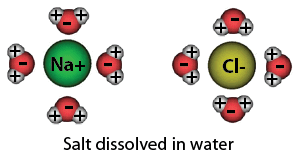
In contrast, the attractice force between the ions in ionic compounds is overcome when an ionic salt dissolves and the positive and negative ions separate from each other, each becoming surrounded by water.
Watch the animation below which models the solvation of an ionic compound in water:
Water forms a 'ring of hydration' around ions of NaCl, however, the water molecules are oriented differently around a negative ion, Cl- than they are around a positive ion, Na+:
Draw a particulate model depicting the solvation of the ionic salt KBr in water.
Write the equation.
Use three panes to show different points in the process: before mixing, during the mixing and final result
Use symbols to represent particles and include a key.
When solutes dissolve, the particle may remain intact or separate into ions. Look at each equation and determine the number of particle produced by one initial solid particle.
Tips: Remember covalent molecues do not separate into ions. Count the number of ions in an ionic compound to determine the number of ions that will separate when dissolved.
C12H22O11 (s)
NaCl (s)
MgCl2(s)
MgSO4(s)
Produces 1 (one) dissolved particle (aq) per 1 solid particle (s)
Produces 2 (two) dissolved particles (aq) per 1 solid particle (s)
Produces 3 (three) dissolved particles (aq) per 1 solid particle (s)
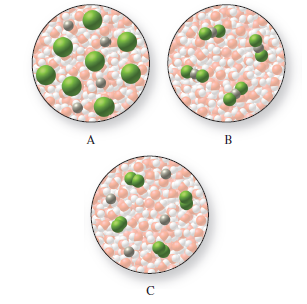
The net ionic equation for the dissolving of MgCl2 is shown below:
MgCl2(s) --> Mg2+(aq) + 2 Cl-(aq)
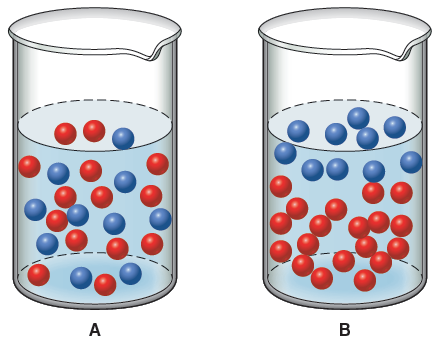
Look at the diagrams and determine which shows the dissolving of MgCl2 best.
When ionic compounds dissolve, they disassociate into charged particle called ions. Charged particles can conduct electricity. [Acids, which we learned in previous units are covalent compounds, also ionize into charged particles. We will learn more about this in the next unit when we study acids and bases.]
Solutes that separate into ions and form a solution that will conduct electricity are called electrolytes.
Watch the video and take short notes.
Classify each substance as: element, covalent compound, ionic compound.
Which substances conduct electricity when dissolved into a solution? Which do not?
Upload notes and answers to questions.