Twa kɔ nsɛm atitiriw so
Log in
Sign up for FREE
arrow_back
Laabri

Bouncing Balls from Different Heights - ES - PS - Energy

star
star
star
star
star
Last updated 4 months ago
6 Nsɛmmisa
Hyɛ no nsow a efi ɔkyerɛwfo no hɔ:

Directions: Use the information provided and your knowledge of Physical Science to answer the following questions. Show all work where necessary.

Directions: Use the information provided and your knowledge of Physical Science to answer the following questions. Show all work where necessary.

Bouncing Balls from Different Heights

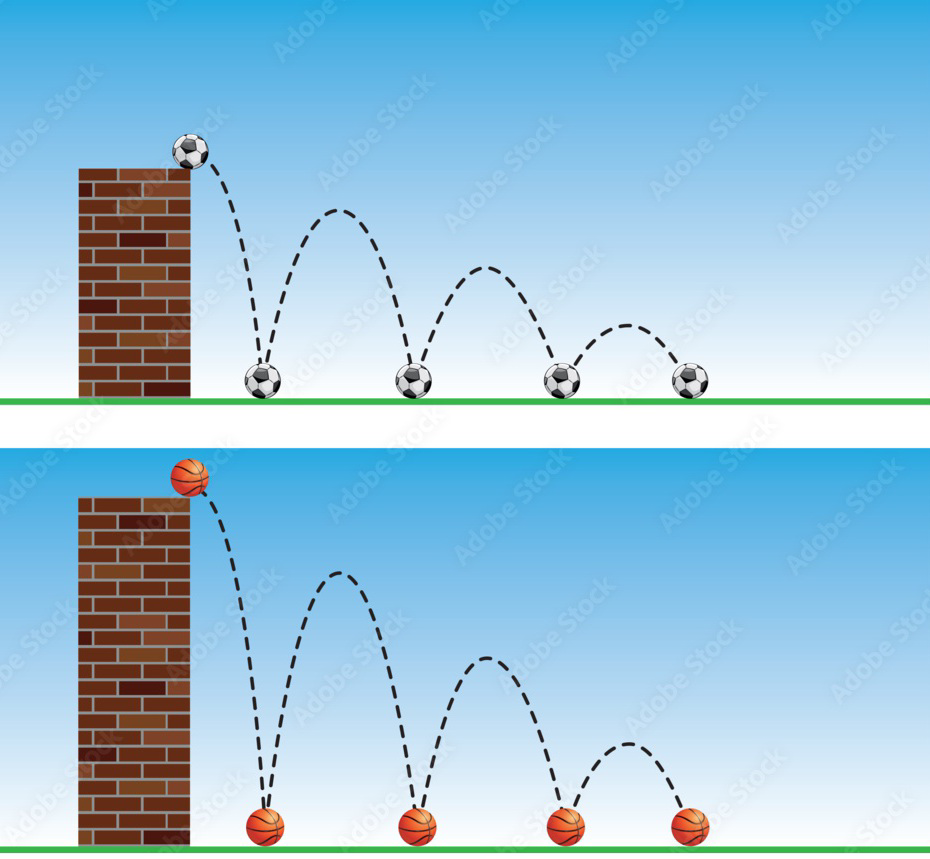
Diagram 1.

Diagram showing paths of bouncing balls dropped from a height.

Source:

https://stock.adobe.com/images/bouncing-of-a-ball-falling-from-different-heights-in-physics-action-reaction-movement-newton-s-lawsof-

motion-vertical-shooting-motion-physics-ball-drop-from-height/601333437

Ɛhia
6
DOK 3
4-PS3-3
Ɛhia
4
DOK 2
4-PS3-3
Ɛhia
6
DOK 3
4-PS3-3
Ɛhia
6
DOK 3
4-PS3-3
Ɛhia
4
DOK 2
4-PS3-3
Ɛhia
8
DOK 4
4-PS3-3

Phenomenon:

Students drop the same rubber ball from a low, medium, and high height. From the low height, the ball barely bounces. From the medium height, it bounces higher. From the high height, it bounces the highest and makes a louder sound on the floor. Students wonder: How does changing the starting height help us predict what will happen when the ball collides with the ground?

When an object is lifted off the ground, it has stored energy because of its height. The higher you lift it, the more stored energy it has. When the object is dropped, this stored energy changes into motion energy as it falls. Right before the object hits the ground, it has its greatest motion energy.

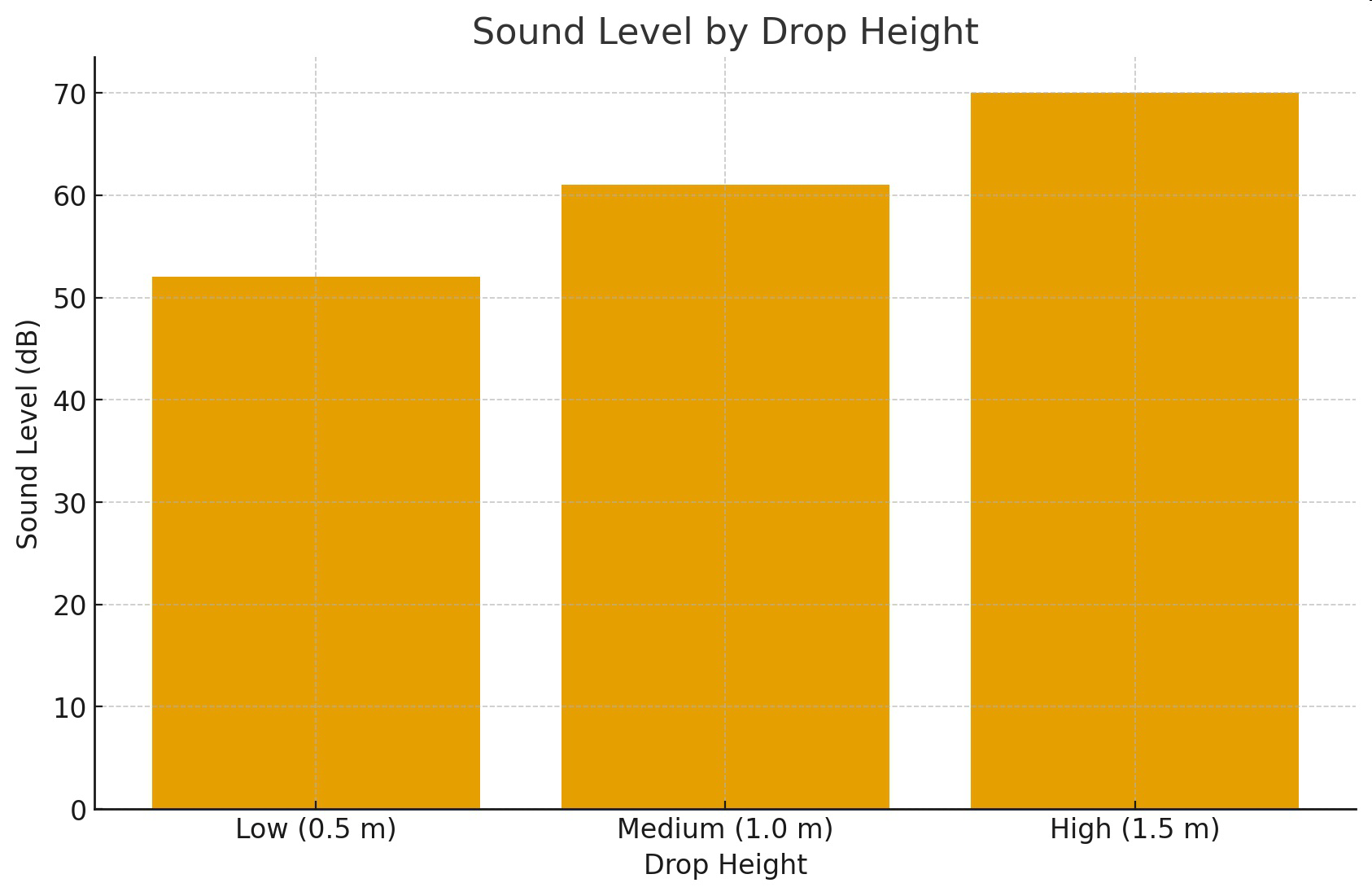
During the collision with the ground, this energy is transferred and converted. Some becomes sound energy, which you hear as a louder “thump” when the ball is dropped from higher up. Some becomes heat energy in the ball and floor. Some is transferred back into the ball, pushing it upward and causing it to bounce. Because energy is conserved, the changes we observe depend on how much motion energy the ball had before the collision.

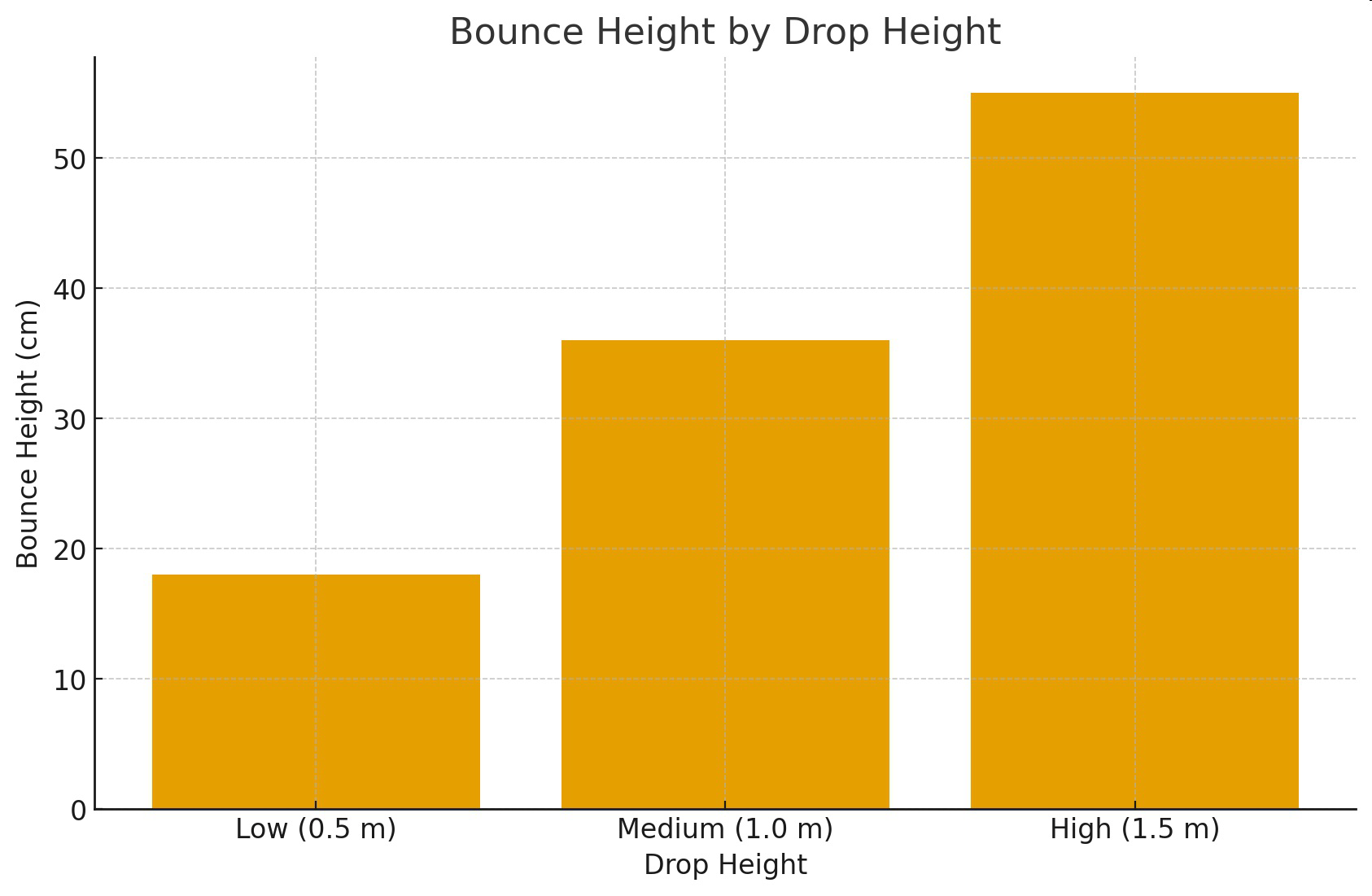
Students can explore this by dropping a ball from different heights and measuring how high it bounces. A ball dropped from a greater height has more stored energy, which becomes more motion energy, which produces a higher bounce. These observations help us ask and predict: If we change the drop height, how will the collision outcomes change?

Table 1.

Drop Height

Bounce Height (cm)

Sound Level (dB)

Low (0.5 m)

18

52

Medium (1.0 m)

36

61

High (1.5 m)

55

70

Graph of Information - Figure 1.

Graph of Information - Figure 2.
Asemmisa {{asɛmmisaAhyɛnsode}}
1.

Look at Table 1. How do the bounce height and sound level change as the drop height increases from low to high?

Asemmisa {{asɛmmisaAhyɛnsode}}
2.

From which drop height does the ball have the most energy just before hitting the ground?

Asemmisa {{asɛmmisaAhyɛnsode}}
3.

Using Figure 1, describe the pattern between drop height and bounce height.

Asemmisa {{asɛmmisaAhyɛnsode}}
4.

Explain why the ball dropped from the lowest height makes the quietest sound when it hits the ground.

Asemmisa {{asɛmmisaAhyɛnsode}}
5.

Which piece of evidence best supports the idea that greater energy causes greater changes during a collision?

Asemmisa {{asɛmmisaAhyɛnsode}}
6.

How does changing the drop height help you predict what will happen when the ball collides with the ground?

Claim:
Evidence:
Reasoning: