Hand-Crank Night-Light
Phenomenon
Students design a small hand-crank “emergency” night-light.
They attach a crank to a small generator (or motor used as a generator) and connect it to an LED. When they turn the crank, the LED lights up.
Their challenge:
After cranking, the LED should stay lit long enough to be useful in a short power outage.
They test different crank times and cranking speeds to see how to make the device work better.
Design goal:
Apply scientific ideas to design, test, and refine a device that converts motion energy into electrical energy, and then into light energy.
A hand-crank night-light is a good example of energy being converted from one form to another. When a student turns the crank, their muscles do work and give the crank motion energy. The crank spins a small generator. Inside the generator, the spinning motion causes charges to move in the wires, creating electrical energy. The electrical energy then flows to the LED, which converts it into light energy (and a little heat).
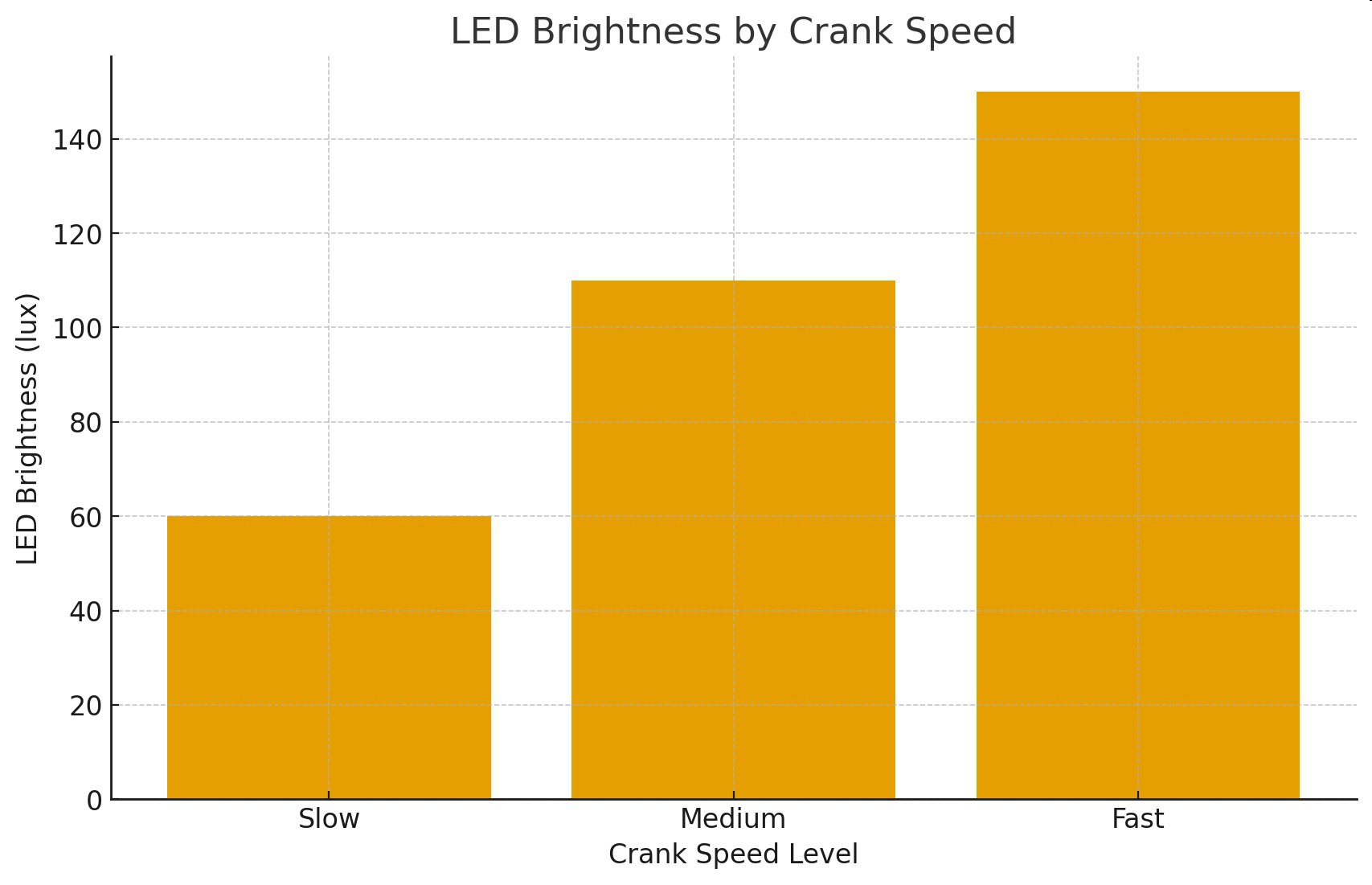
Scientific ideas can help students improve this device. Cranking for a longer time can store more energy in a small capacitor or battery, so the LED can stay on longer. Cranking faster can increase the amount of electrical energy produced each second, which often makes the light brighter. However, cranking too fast might be uncomfortable or hard to keep going.
Students can test their designs by measuring how long the LED stays on after different crank times and how bright it is at different cranking speeds. Then they refine their design using data, making choices that help the night-light convert more of the motion energy into electrical and light energy in a useful way.
Table 1.
Trial | Crank Time (s) | LED On Time After Cranking (s) |
|---|---|---|
1 | 10 | 15 |
2 | 20 | 32 |
3 | 30 | 50 |
Graph of Information - Figure 1.
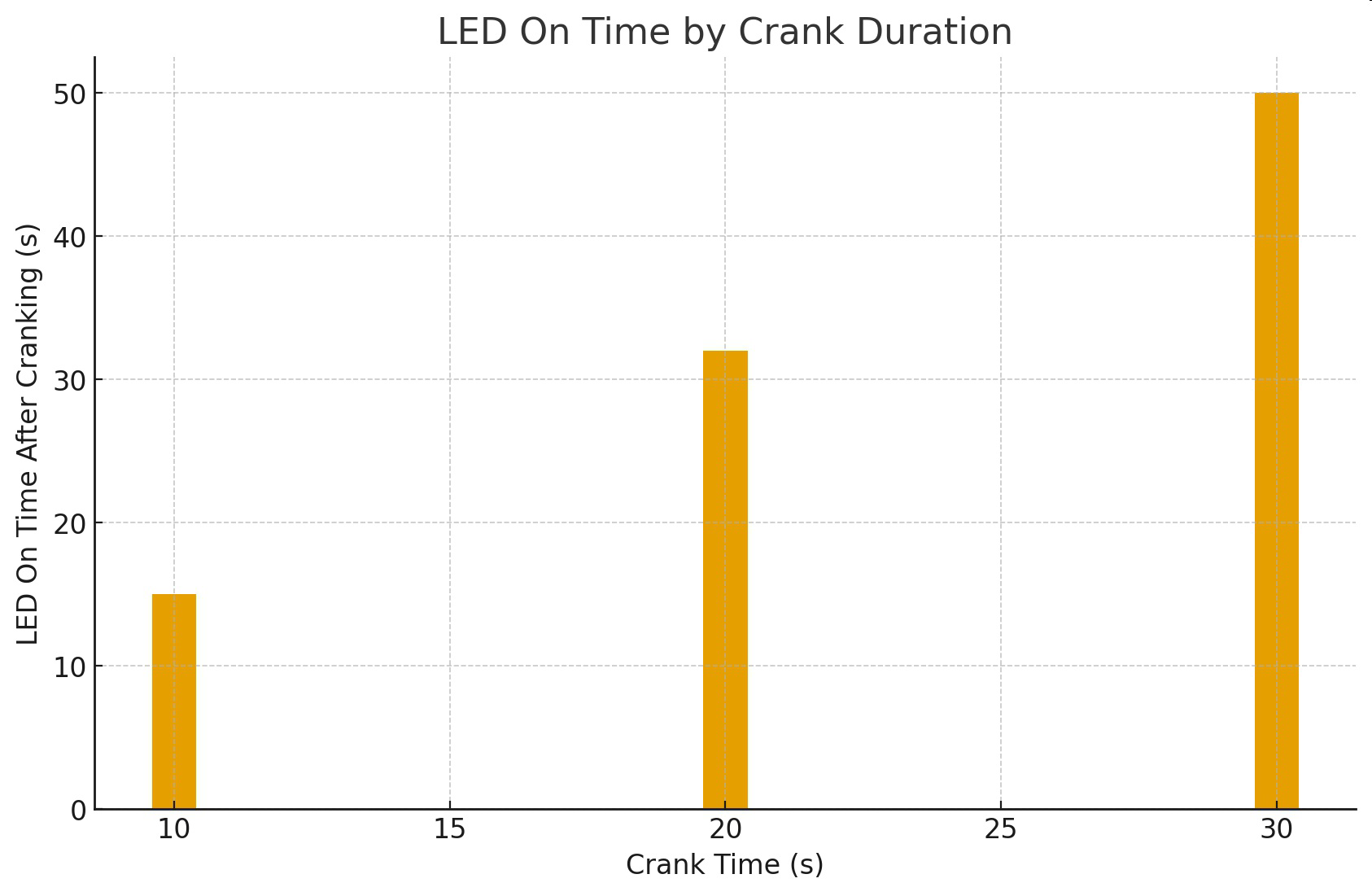
Table 2.
Crank Speed Level | Turns per Second | LED Brightness (lux) |
|---|---|---|
Slow | 1 | 60 |
Medium | 2 | 110 |
Fast | 3 | 150 |
Graph of Information - Figure 2.