A Rabbit Eating Grass
Diagram 1.
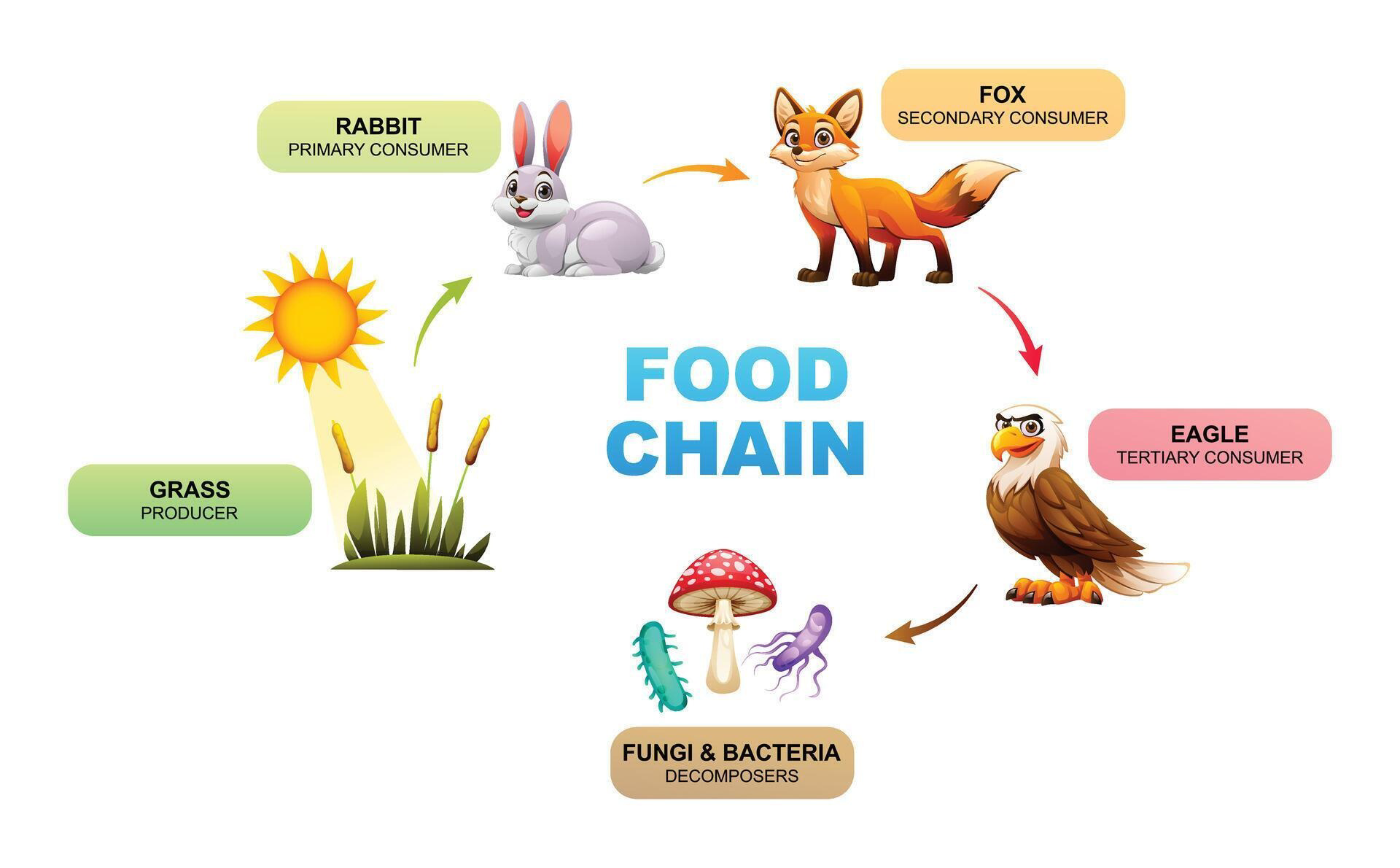 Source:
https://www.vecteezy.com/vector-art/46551536-food-chain-showing-the-relationships
Phenomenon
Students observe a rabbit nibbling on fresh green grass in a sunny field. The rabbit hops, twitches its ears, grows over time, and stays warm.
Students wonder:
Where does the rabbit’s energy really come from?
The investigation explores how the energy in the rabbit’s food was once energy from the Sun.
All animals need energy to move, grow, repair their bodies, and stay warm. But animals cannot make their own energy directly from sunlight. Instead, they get energy from food, and that food connects back to the Sun.
Grass and other plants use sunlight to make their own food through a process called photosynthesis. The Sun’s energy becomes stored inside the plant as chemical energy. When a rabbit eats grass, the rabbit is actually taking in the Sun’s stored energy. Inside the rabbit’s body, that energy is released and used for hopping, breathing, growing, and keeping its body warm.
Scientists can measure how much energy a rabbit receives from plants by looking at the amount of plant food eaten and how much energy it contains. They can also measure how much energy the rabbit uses for movement or body warmth.
The important idea is that the energy in the rabbit’s food originally came from the Sun. Even though the rabbit was never in a solar panel lineup, its body runs on sunlight - just secondhand.
Table 1.
Day | Grass Eaten (g) | Energy in Grass (kJ) |
|---|
1 | 30 | 180 |
2 | 35 | 210 |
3 | 40 | 240 |
Graph of Information - Figure 1.
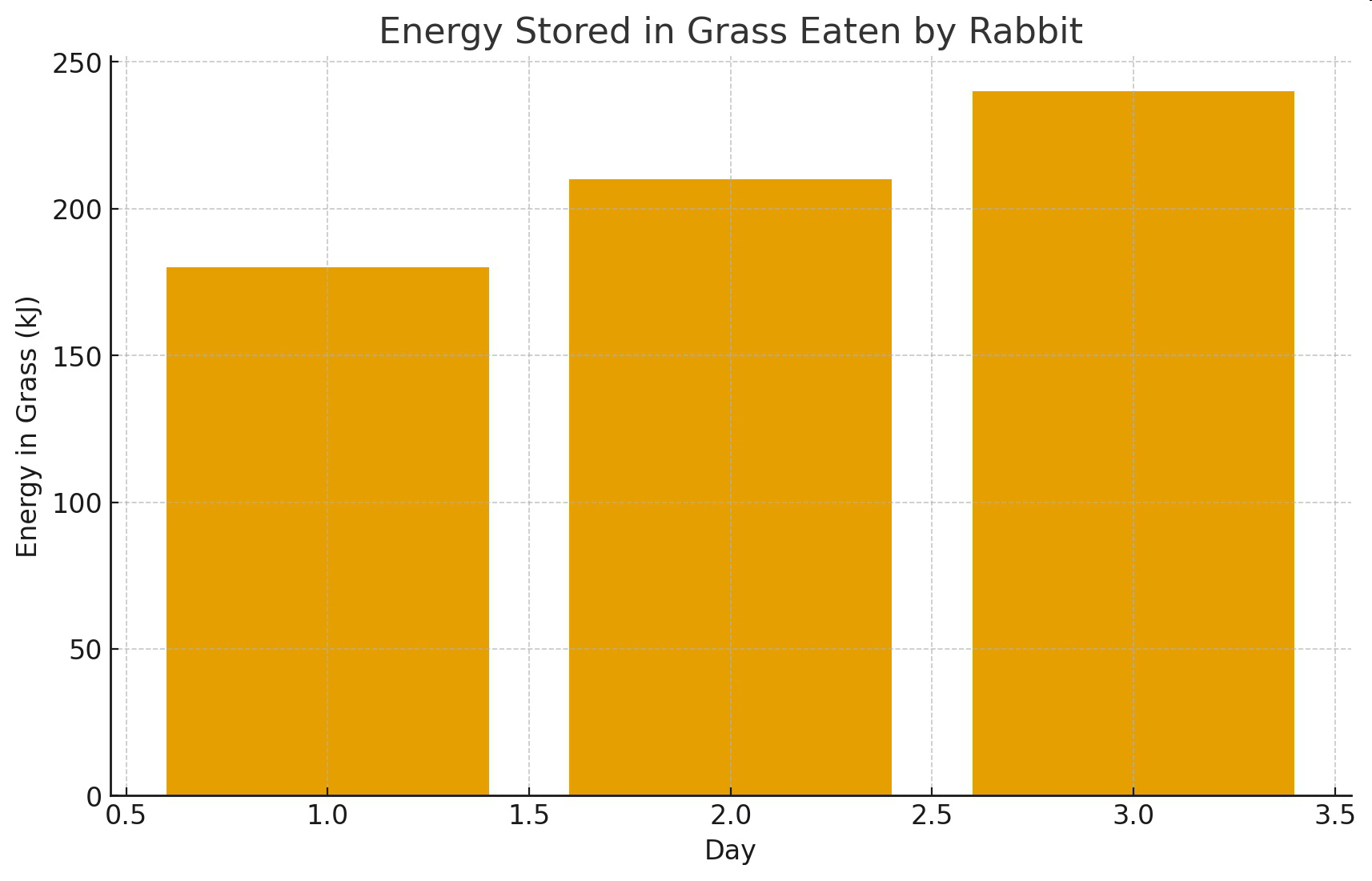
Table 2.
Activity | Energy Used (kJ) |
|---|
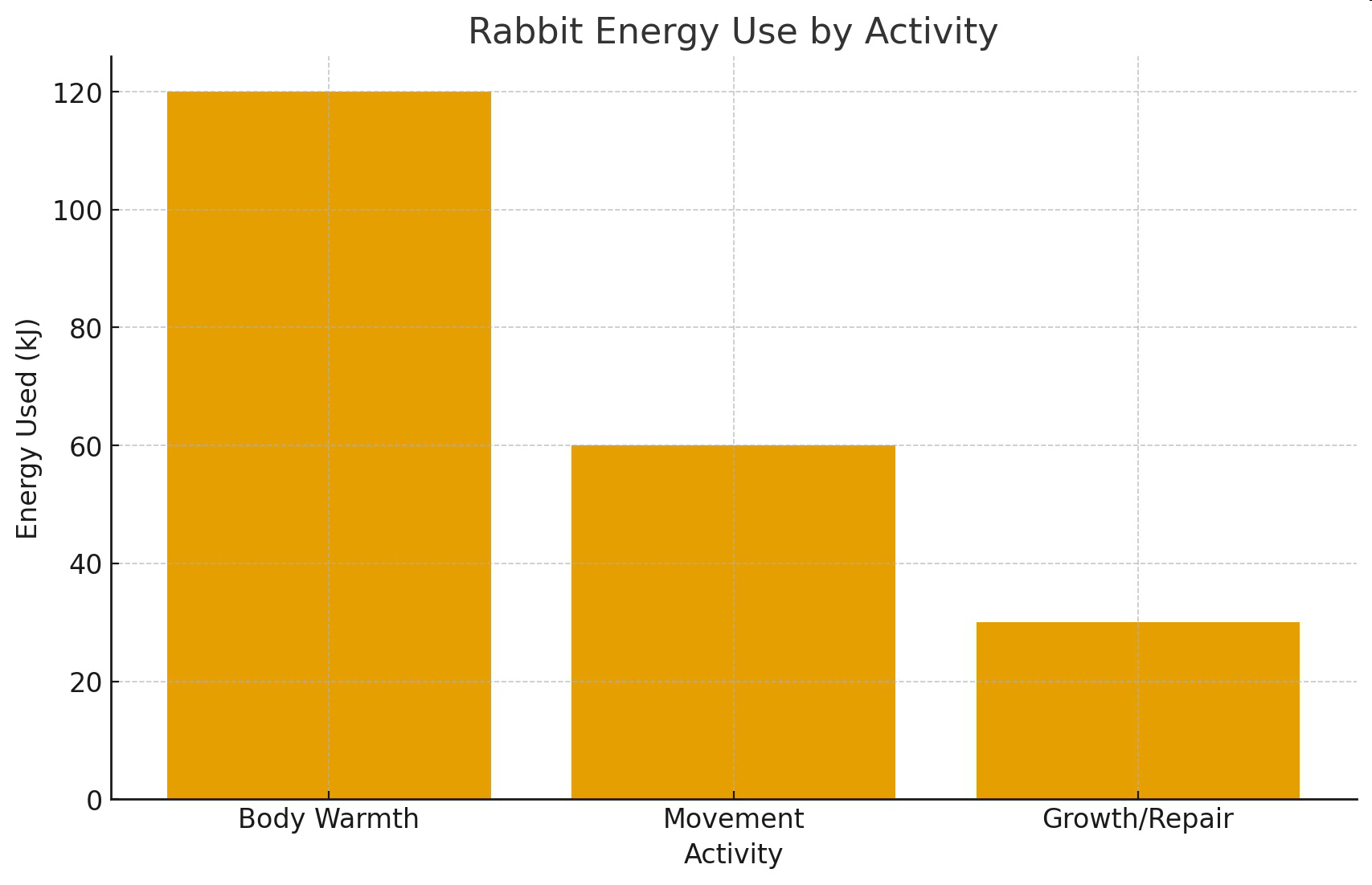
Body Warmth | 120 |
Movement | 60 |
Growth/Repair | 30 |
Graph of Information - Figure 2.