Bumper Car-Style Chair Collisions
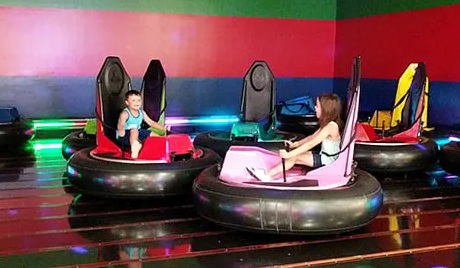
Diagram 1.
Phenomenon:
Students sit on rolling chairs facing each other. They place their hands together and push off. They observe:
If both students push equally, both roll backward.
If one pushes harder, the other rolls faster and farther.
Even when only one pushes, both students move.
Students wonder:
How does pushing off help us ask questions and predict how energy changes when two moving objects interact?
When two students on rolling chairs push off from one another, they create a type of collision. Instead of crashing together, they push apart. During this push, energy is transferred from one student to the other. The harder the push, the more motion energy each chair receives.
If both students push with the same strength, they move away at similar speeds. If one student pushes harder, more energy is transferred to the partner, causing the partner’s chair to move faster and travel farther. Even if only one student pushes, both students move, because the energy from the push is shared between them.
Energy is conserved during this interaction. The energy the pushing student uses does not disappear - it becomes the motion energy of both chairs. Students can observe patterns such as how fast each chair moves and how far each travels. These patterns help students ask and predict:
What will happen if one student pushes harder?
What if one student is heavier?
How does changing the push strength change the collision outcome?
These observations show how energy changes and transfers when two objects interact.
Table 1.
Push Strength | Partner Speed (m/s) | Distance Partner Travels (m) | Distance Pusher Travels (m) |
|---|---|---|---|
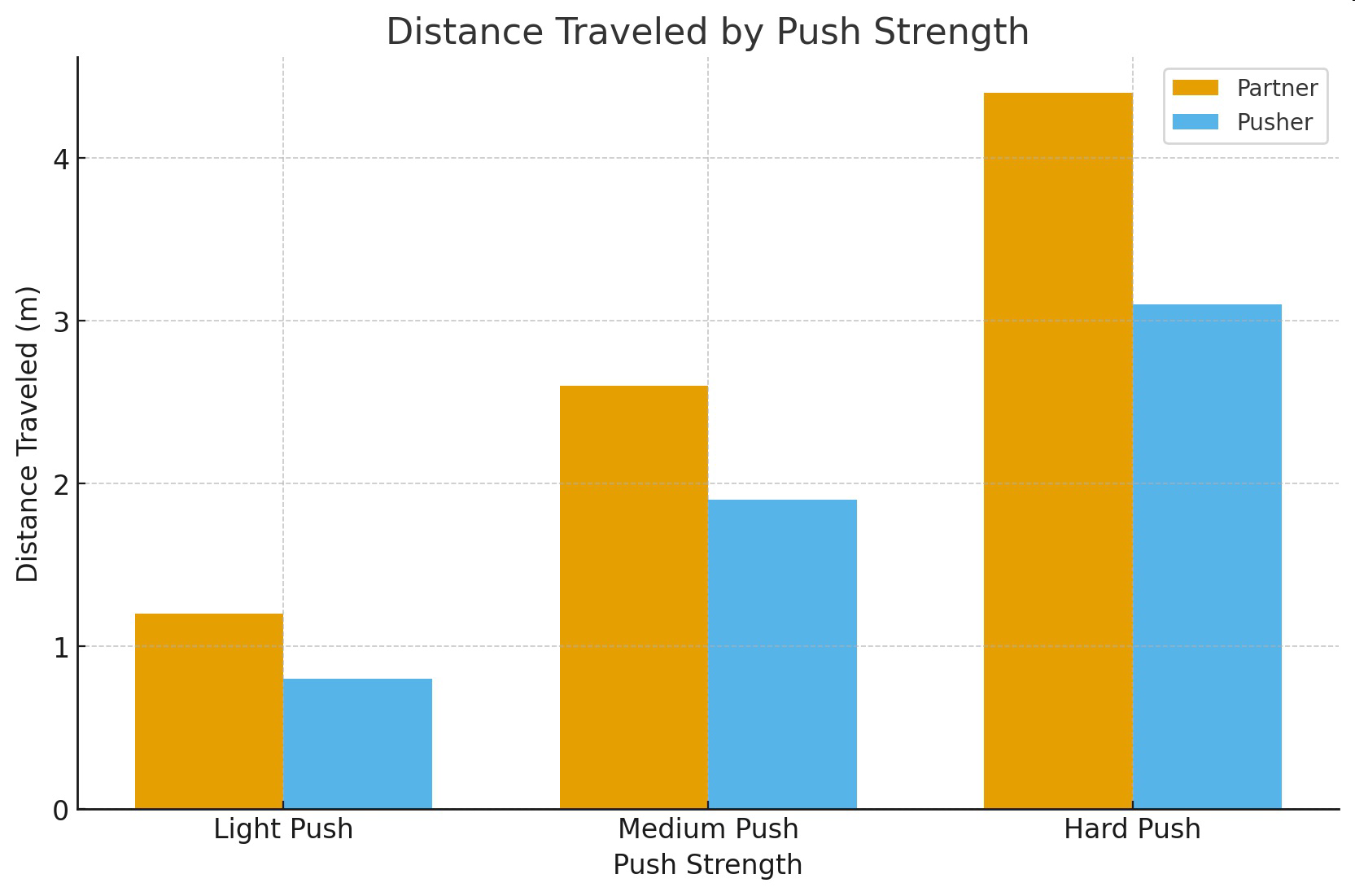
Light Push | 0.5 | 1.2 | 0.8 |
Medium Push | 1.1 | 2.6 | 1.9 |
Hard Push | 1.8 | 4.4 | 3.1 |
Graph of Information - Figure 1.
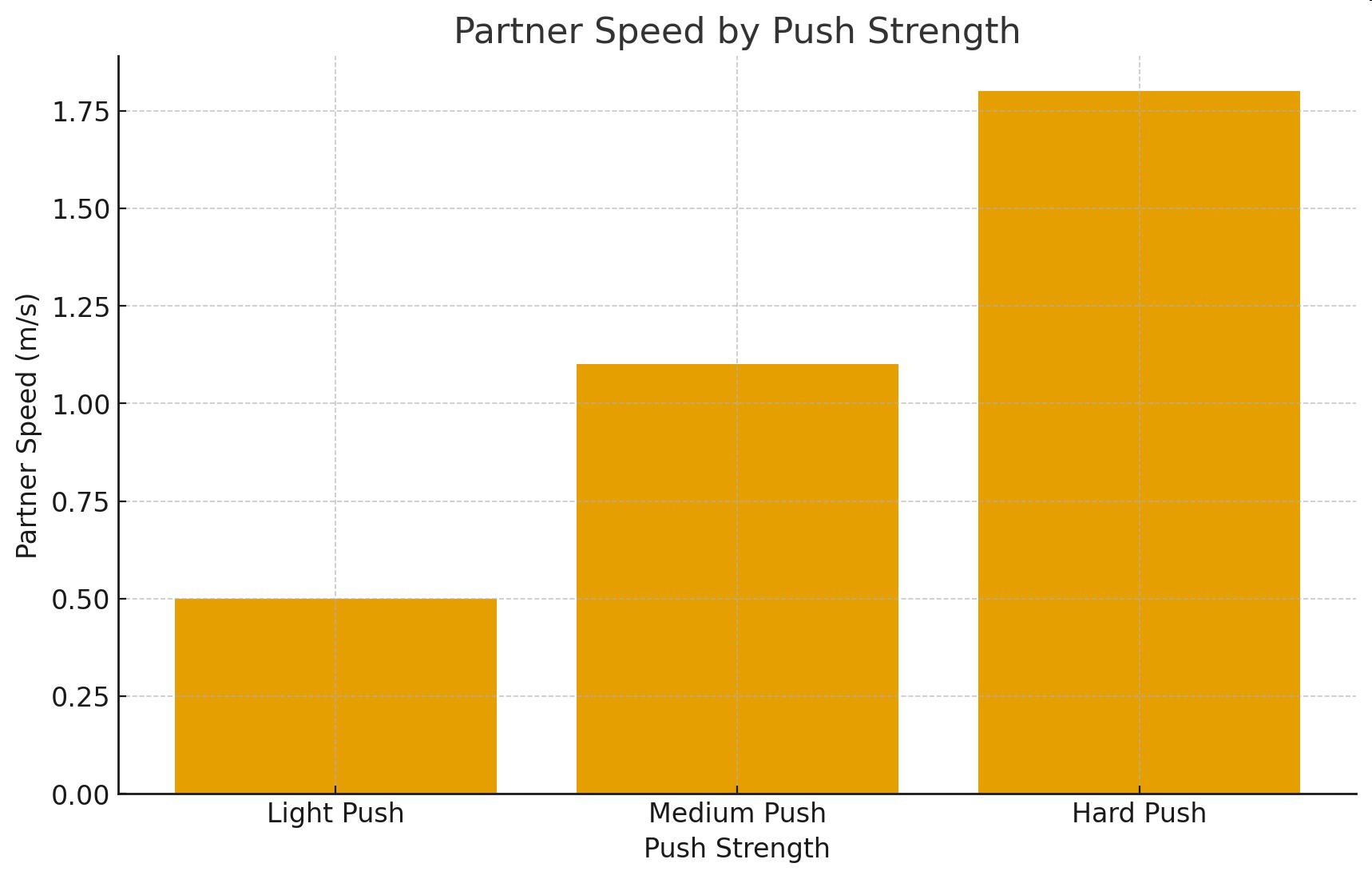
Graph of Information - Figure 2.