Kicking a Soccer Ball at Different Speeds
Phenomenon
When students kick a soccer ball lightly, it rolls only a short distance and barely bumps into anything. But when they kick the ball harder and it moves faster, it rolls much farther. A fast-moving ball can even knock over cones or push a small object out of the way. The class wants to know: Does a faster-moving soccer ball have more energy than a slower one?
When we watch a soccer game, it’s easy to see that balls move at different speeds. Sometimes the ball gently rolls across the field, and other times it shoots forward quickly. These differences in speed also tell us something about the ball’s energy. Energy is the ability to make things happen or cause change. An object that is moving has motion energy, and the amount of energy depends on its speed.
A slow-moving ball has some energy, but not very much. It can roll across the grass, but it might stop quickly, and it usually cannot knock over cones or move other objects. A faster-moving ball has more motion energy. Because of this extra energy, it can travel a longer distance before stopping. It can also cause a bigger change when it hits something – like knocking down a cone or pushing a block.
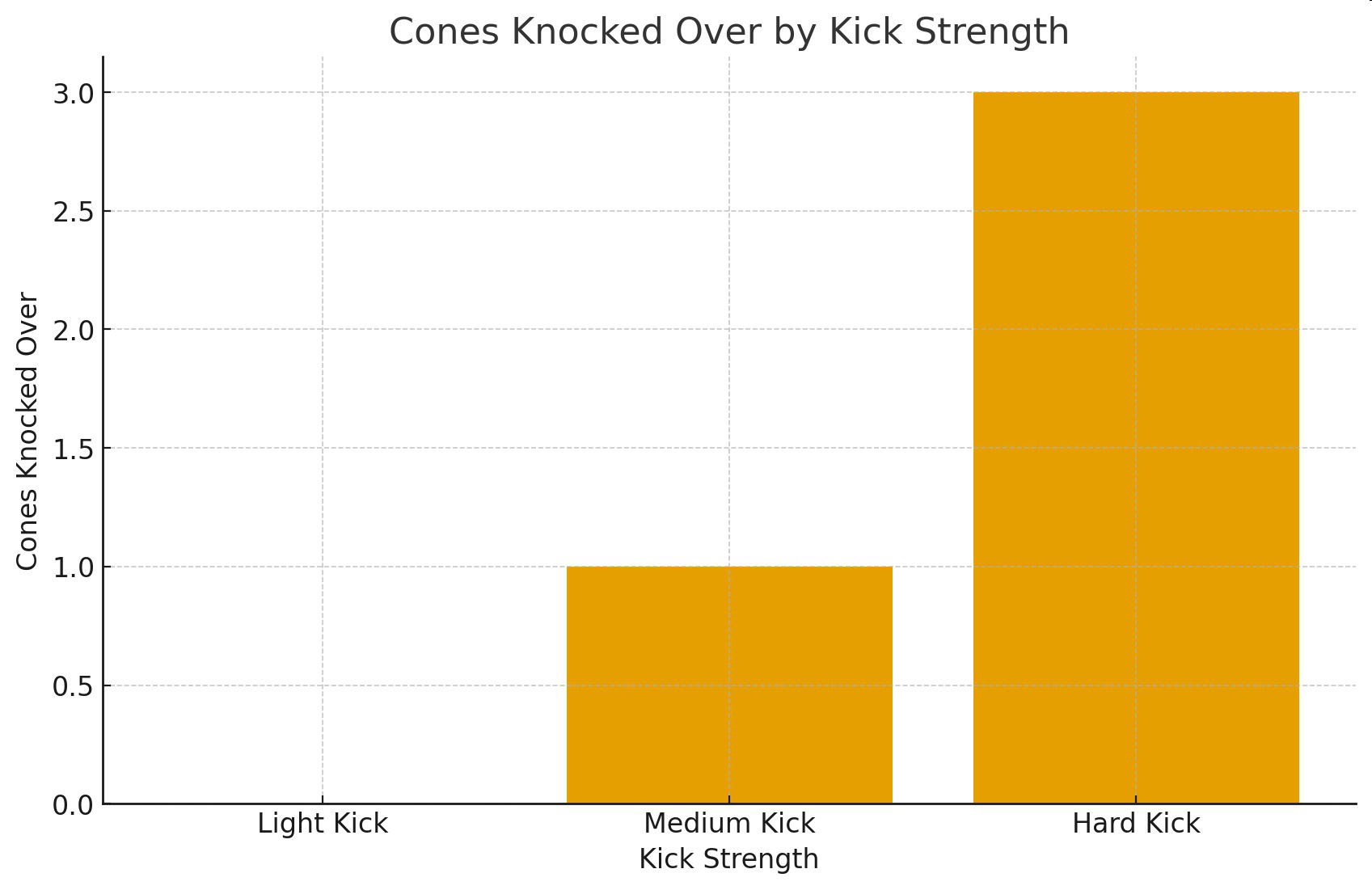
Scientists use measurements to understand how speed and energy are related. By kicking a ball with different strengths and recording how far it travels and how many cones it can knock over, we can find patterns. When the ball goes faster, it usually has enough energy to do more.
Diagram 1.
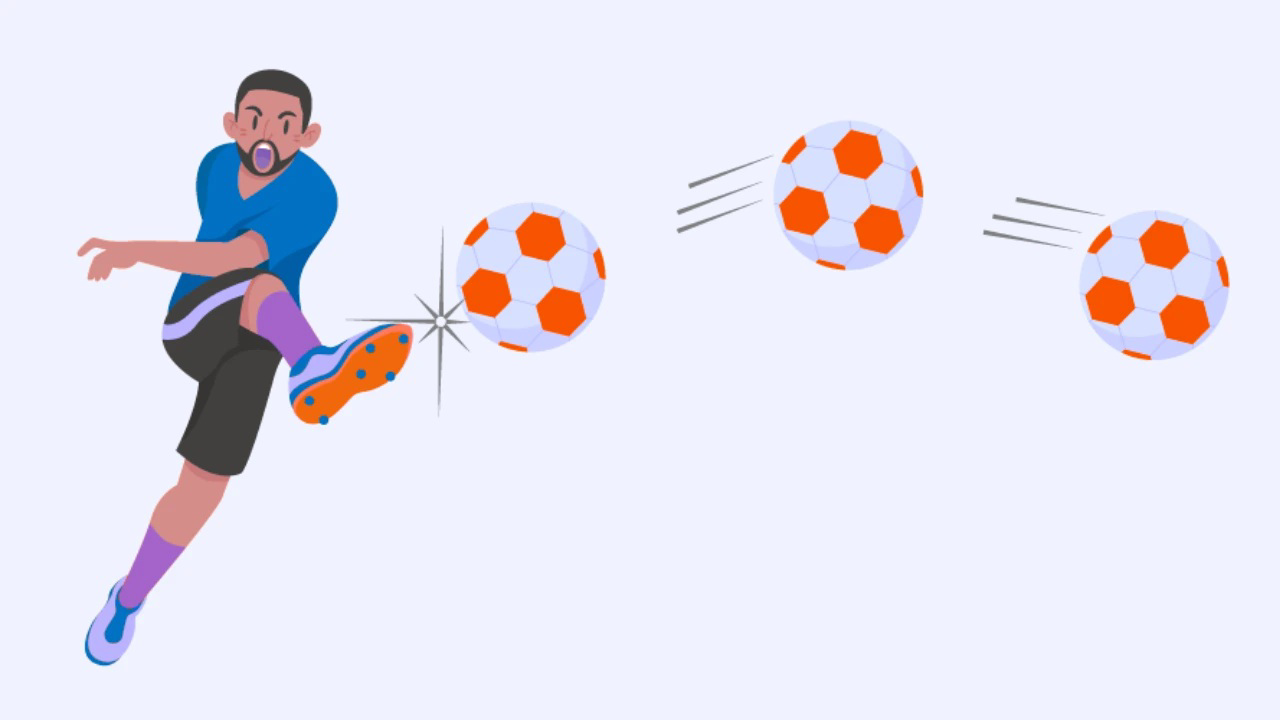
Table 1.
Kick Strength | Speed (m/s) | Distance Traveled (m) | Cones Knocked Over |
|---|---|---|---|
Light Kick | 2 | 6 | 0 |
Medium Kick | 4 | 14 | 1 |
Hard Kick | 6 | 25 | 3 |
Graph of Information - Figure 1.
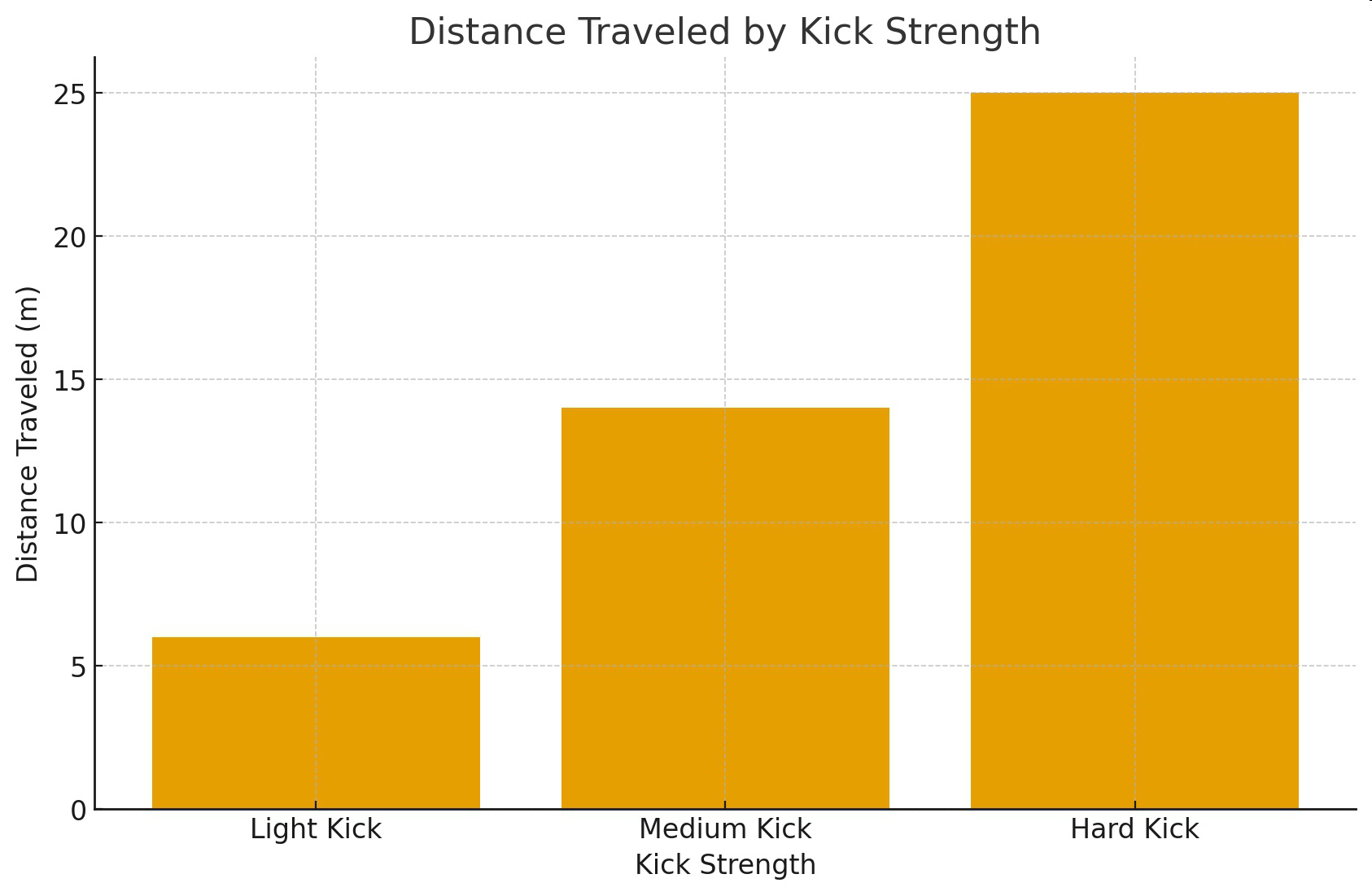
Graph of Information - Figure 2.