Marble Collisions at Different Speeds
Diagram 1.
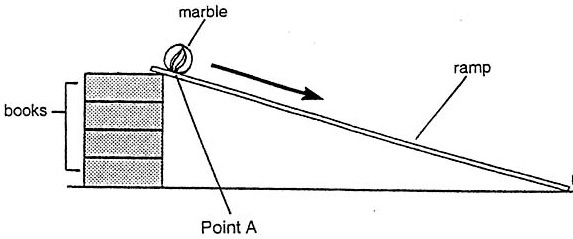
Source: https://physicsteachinglab.weebly.com/momentum-lab.html
Phenomenon
Students roll marbles toward a line of stationary marbles. A slow-moving marble barely changes the row. A medium-speed marble moves several marbles out of line. A fast-moving marble causes the biggest change, knocking marbles far from their starting spots. Students want to understand: Does a faster marble have more energy?
When a rolling object hits something, the amount of change it causes depends on how much energy it has. One way to observe this is with marbles. When a marble is rolled slowly, it has only a little motion energy. It may tap the row of marbles but won’t move many of them. A medium-speed marble has more motion energy, so it can move more marbles during the collision. A fast-moving marble has even more energy and causes the biggest changes.
This happens because motion energy increases when speed increases. A slow-moving marble doesn’t have enough energy to push many marbles aside. But as speed increases, the marble gains more energy, allowing it to move objects farther or in greater numbers. Scientists study collisions by measuring how many objects move and how far they travel.
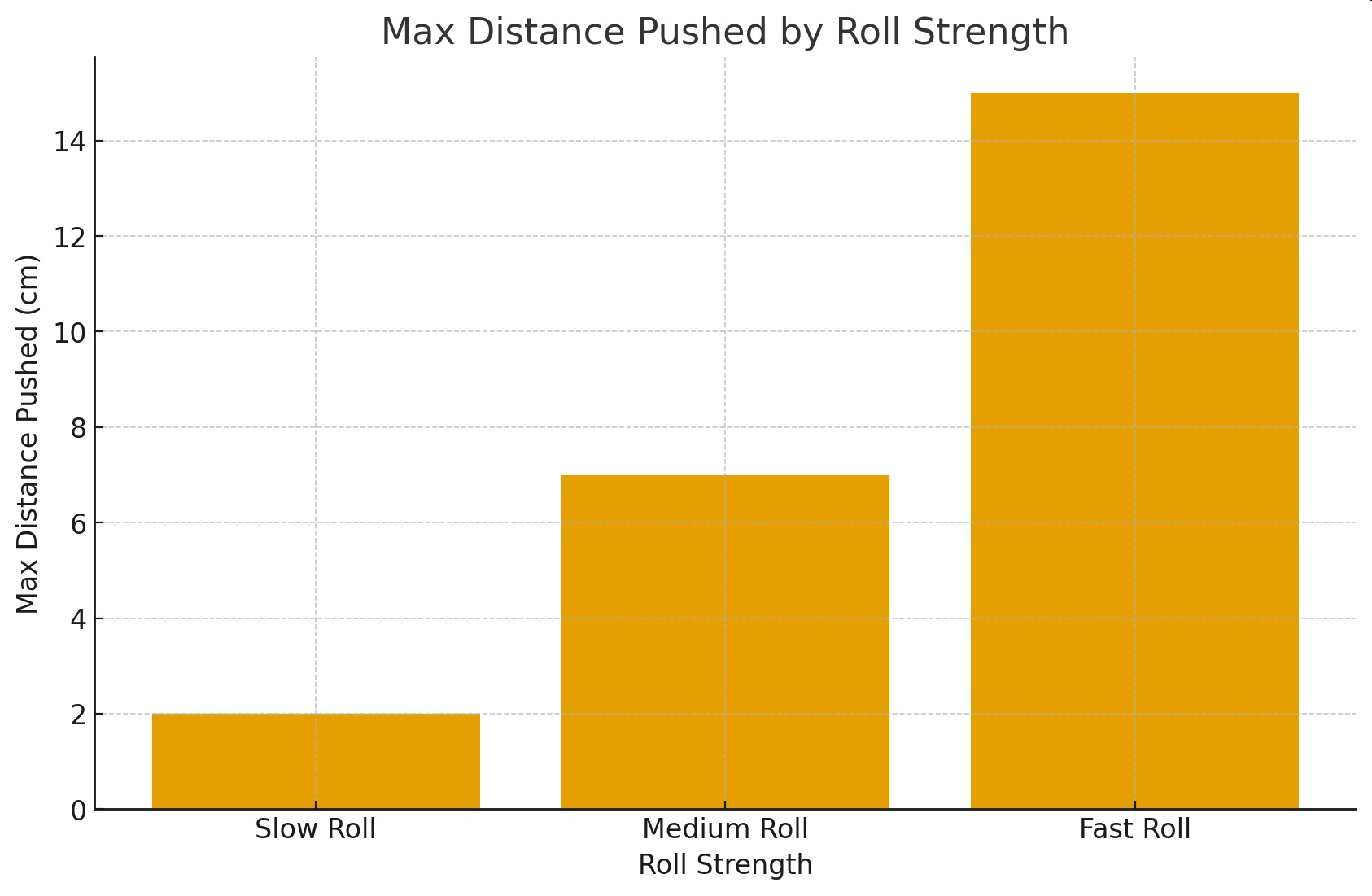
Students can observe a pattern: when the speed of the rolling marble goes up, the effects of the collision become greater. The fast marble moves the most marbles and pushes them the farthest. These patterns help explain that speed and energy are connected - the faster something moves, the more energy it carries, and the more it can change other objects.
Table 1.
Roll Strength | Speed (m/s) | Marbles Moved | Max Distance Pushed (cm) |
|---|---|---|---|
Slow Roll | 1 | 1 | 2 |
Medium Roll | 3 | 4 | 7 |
Fast Roll | 5 | 7 | 15 |
Graph of Information - Figure 1.
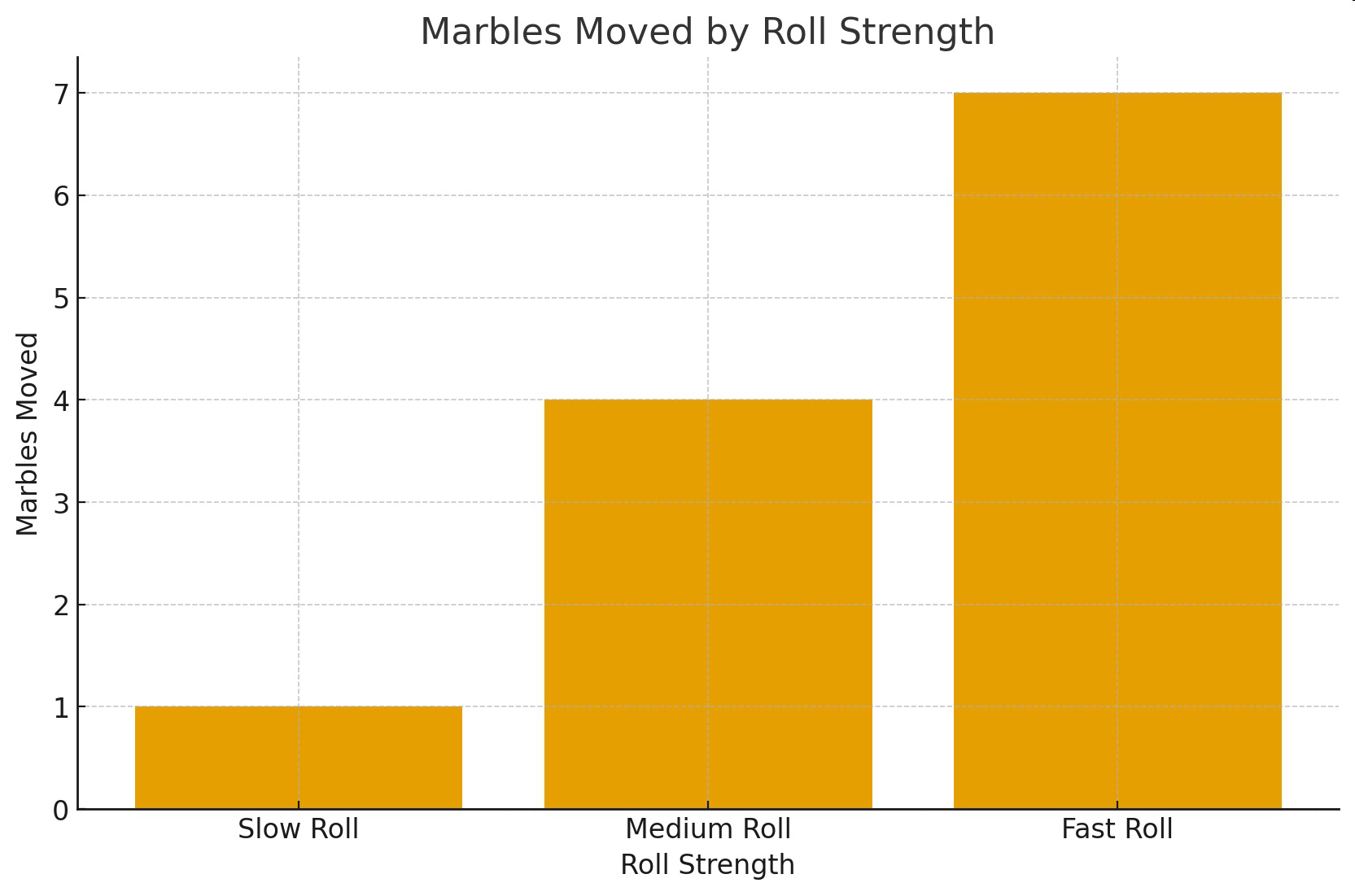
Graph of Information - Figure 2.