Marble vs. Marble Collisions on a Track
Diagram 1.
Phenomenon:
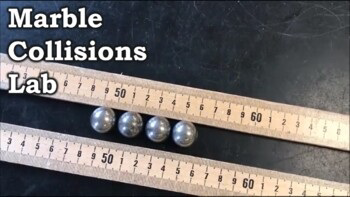
Students roll a moving marble into a line of one, two, or three marbles.
They observe:
Hitting one marble sends it rolling far.
Hitting two marbles moves both, but each moves less.
Hitting three marbles moves all three a little.
Students ask:
How does changing the number of marbles in the collision help us ask questions and predict what will happen afterward?
When a moving marble rolls toward a row of marbles, it carries motion energy. During the collision, the moving marble’s energy is transferred into the marbles it hits. The amount of energy each marble receives depends on how many marbles share that energy. Energy is conserved, but it can be divided among several objects.
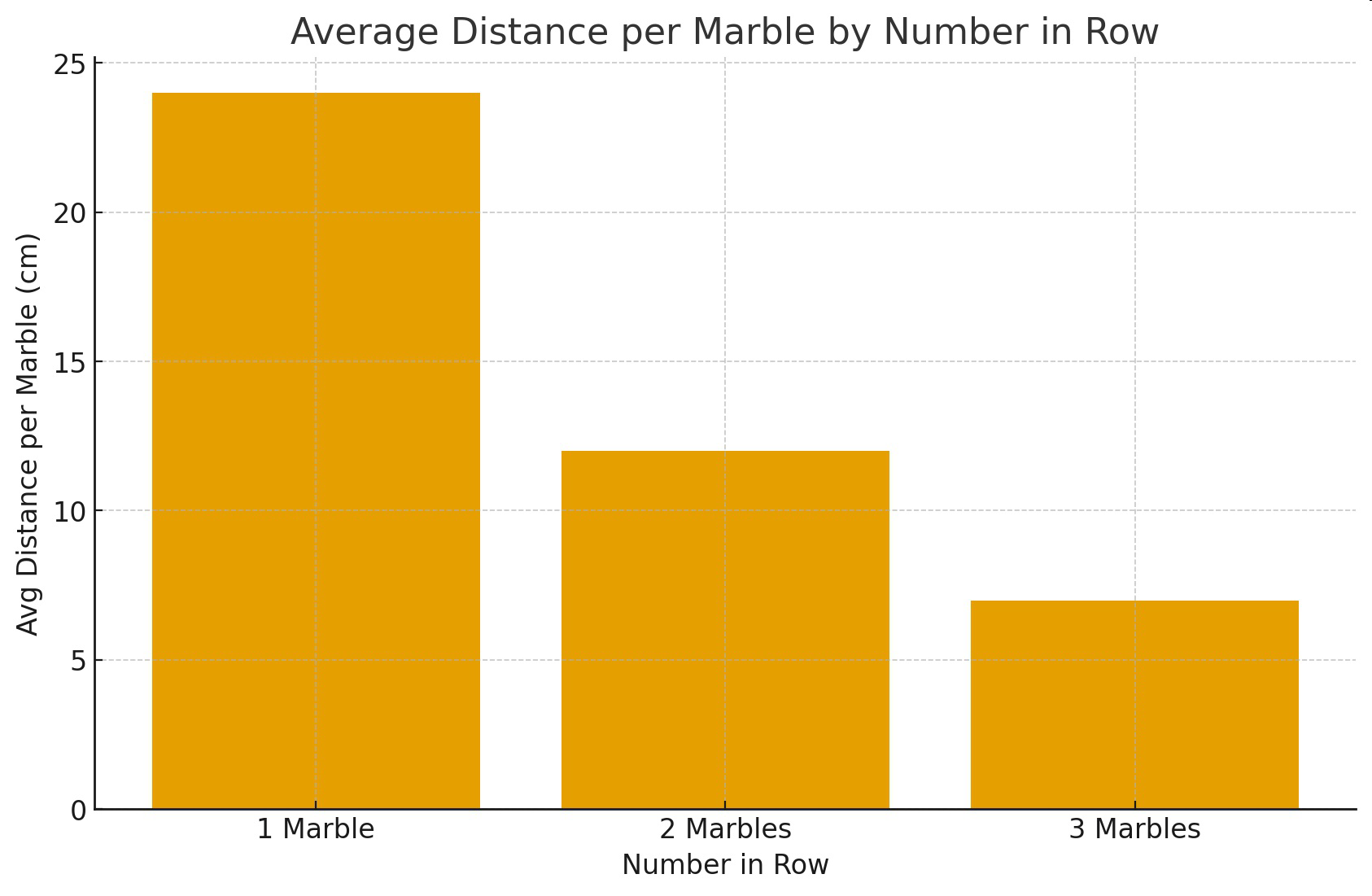
If the moving marble hits one marble, nearly all the energy transfers to that single marble, so it rolls away quickly and travels far. If it hits two, the same total energy is shared, so both marbles move but travel shorter distances. When it hits three marbles, the energy is shared even more, causing each marble to move only a small amount.
Students can explore this by observing both the number of marbles that move and how far they travel after being hit.
These observations help them ask predictive questions such as:
What will happen if more marbles are added?
Will each marble move more or less
How does dividing energy among objects change the collision results?
Table 1.
Number in Row | Marbles That Move | Avg Distance per Marble (cm) |
|---|---|---|
1 Marble | 1 | 24 |
2 Marbles | 2 | 12 |
3 Marbles | 3 | 7 |
Graph of Information - Figure 1.
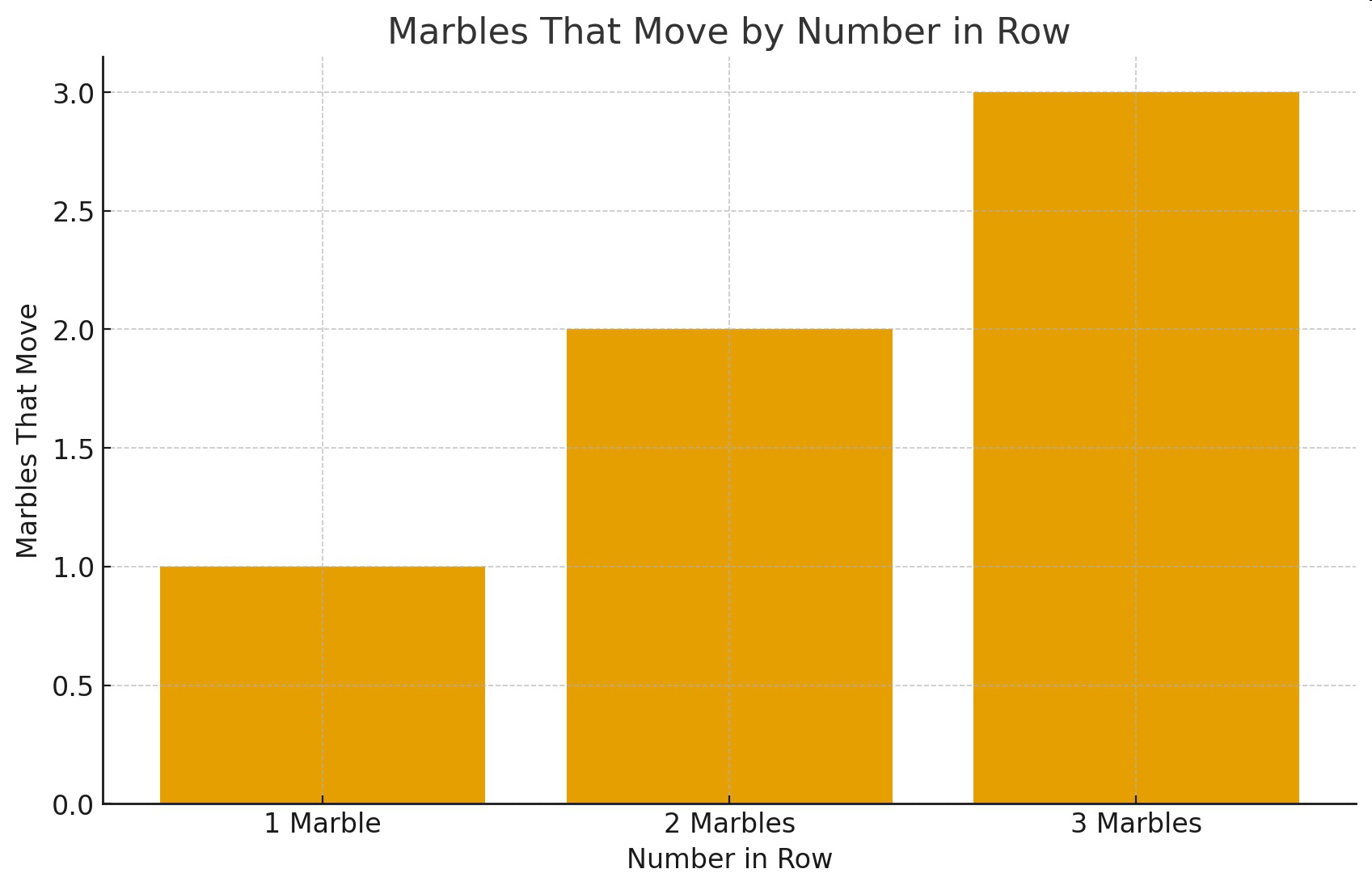
Graph of Information - Figure 2.