Rubber Band - Powered Car
Phenomenon
Students design a rubber band–powered car that must roll as far as possible down a smooth hallway. They wrap a rubber band around the rear axle, wind it up, and release. The stretched rubber band unwinds and makes the axle spin, turning the wheels.
They try different designs by changing:
how many winds of the rubber band they use,
the wheel size,
and how well the car rolls (axle friction, alignment).
The class challenge:
A rubber band–powered car is an example of how stored energy can be converted into motion. When you stretch and wind the rubber band, you give it elastic potential energy. The more you wind it, the more energy is stored. When the car is released, the rubber band unwinds and pulls on the axle. This converts the stored energy into motion energy that makes the wheels spin and the car roll forward.
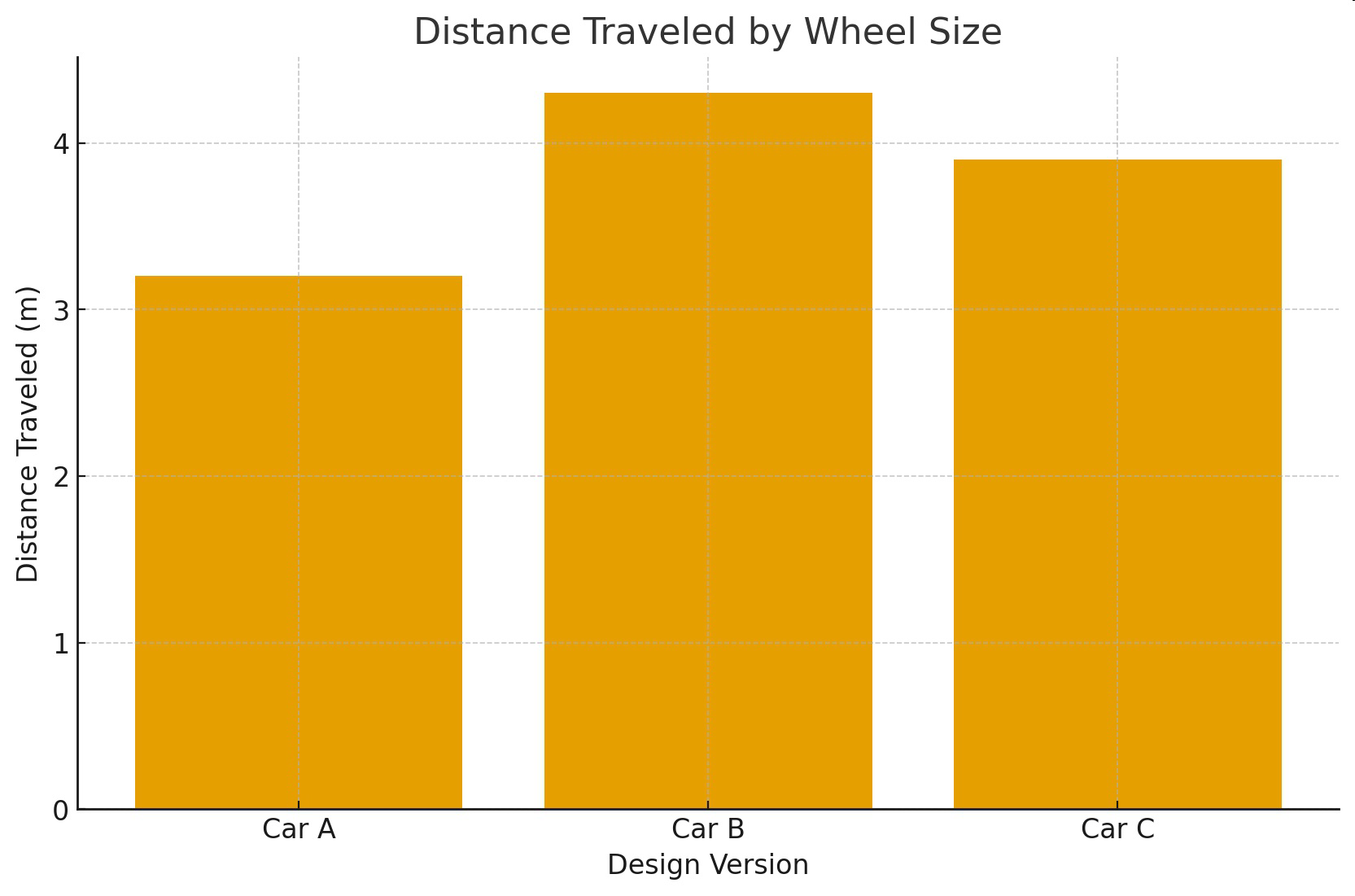
Scientific ideas can help students improve their designs. If the wheels are too wobbly or the axles rub too much, some of the motion energy is wasted as heat energy due to friction. That means the car will not travel as far. Larger wheels may help the car cover more distance with each turn, but they may also be heavier. The number of winds also matters: too few winds and the car doesn’t go far; too many and the rubber band might jam or twist poorly.
By testing different numbers of winds and wheel sizes, students can measure how far the car travels. They then refine their designs using data, making choices that help the car convert more of the stored elastic energy into useful motion energy.
Table 1.
Trial | Number of Winds | Distance Traveled (m) |
|---|
1 | 5 | 2.1 |
2 | 10 | 4.3 |
3 | 15 | 5 |
Graph of Information - Figure 1.
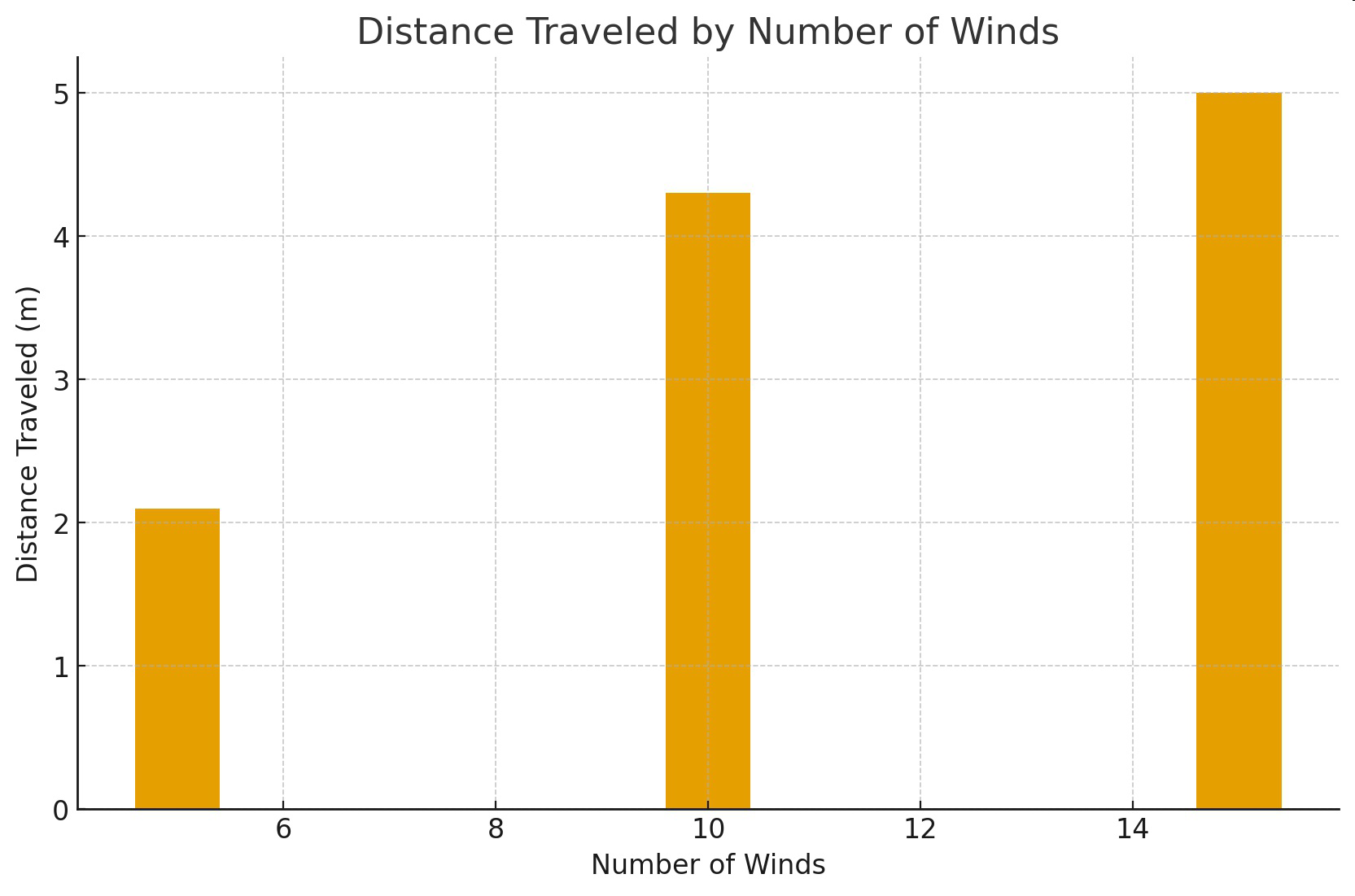
Table 2.
Design Version | Wheel Size Description | Distance Traveled (m) |
|---|
Car A | Small bottle-cap wheels | 3.2 |
Car B | Medium CD wheels | 4.3 |
Car C | Large foam wheels | 3.9 |
Graph of Information - Figure 2.