Rubbing Hands Together to Feel Warmth
Diagram 1.
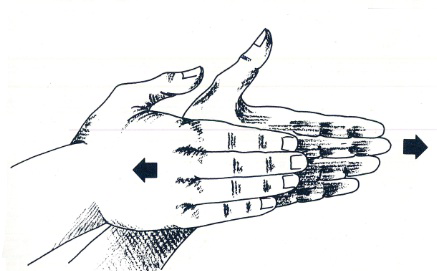
Source: https://esciencenews.blogspot.com/2016/03/musular-force.html
Phenomenon
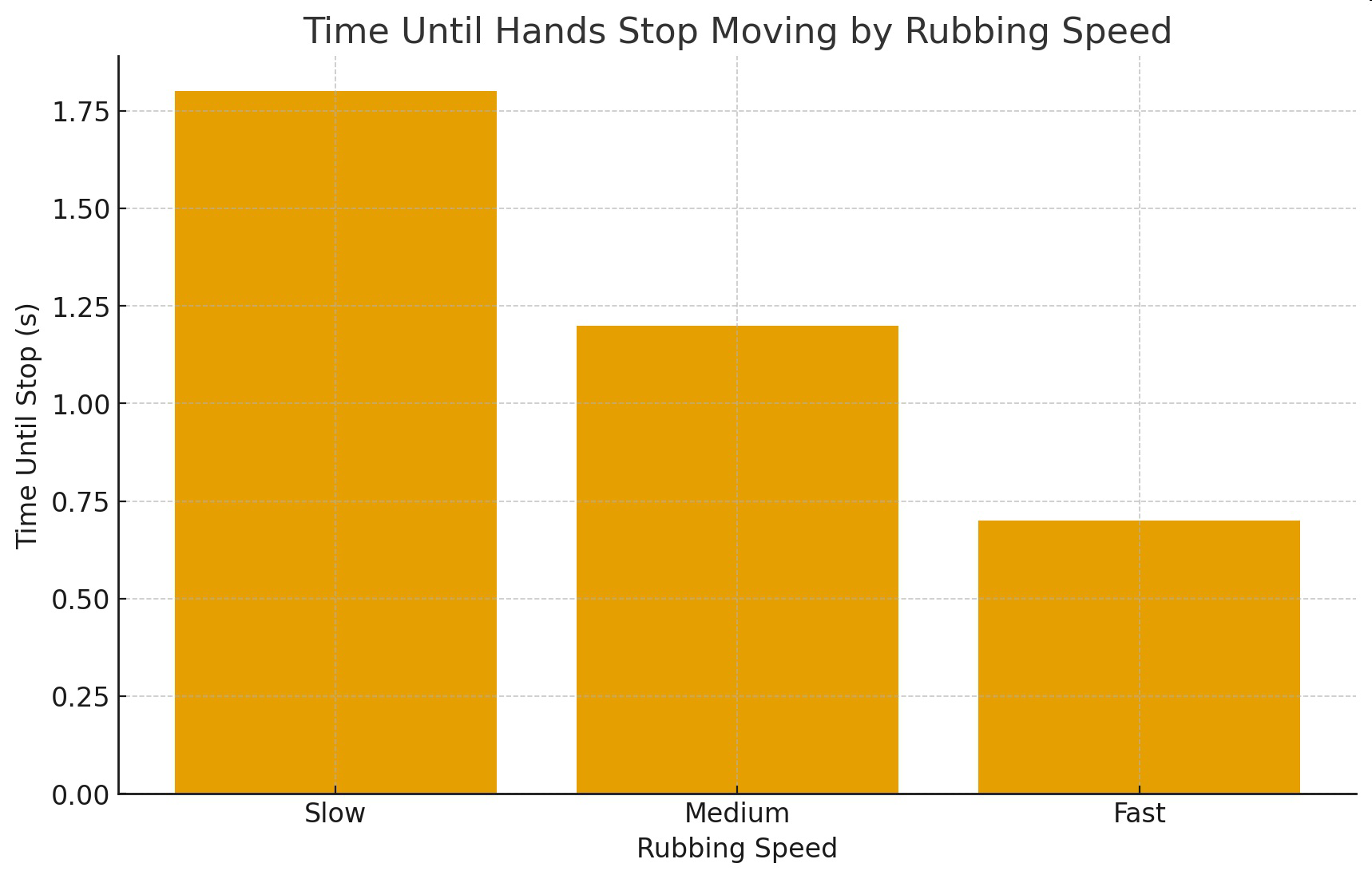
Students rub their hands together slowly and feel a little warmth. When they rub their hands faster, they feel much more warmth. The class wonders: If energy cannot be created or destroyed, where does the extra heat come from when we rub our hands faster?
When you rub your hands together, your muscles use energy to move your hands. This gives your hands motion energy. As your hands slide against each other, the rough surfaces create friction. Friction is a force that slows down motion. When friction acts, it does not destroy energy—instead, it transfers the motion energy into heat energy, also called thermal energy.
That heat spreads through your skin, making your hands feel warm. The faster you rub your hands, the more motion energy you give them. This means more energy is available to be converted into heat. This is why rubbing your hands quickly makes them feel much warmer than rubbing slowly.
Energy conservation means that energy cannot disappear. It only changes form or moves from place to place. In this case, the energy from your muscles becomes motion energy, and the motion energy becomes heat. The total energy is still there; it has only changed forms.
Students can observe this by measuring how hand temperature changes when hands are rubbed slowly, medium speed, or quickly. These measurements provide evidence that energy is conserved as it is transferred and converted.
Table 1.
Rubbing Speed | Time Rubbing (s) | Temperature Increase (oC) | Time Until Stop (s) |
|---|
Slow | 10 | 0.4 | 1.8 |
Medium | 10 | 1 | 1.2 |
Fast | 10 | 1.8 | 0.7 |
Graph of Information - Figure 1.
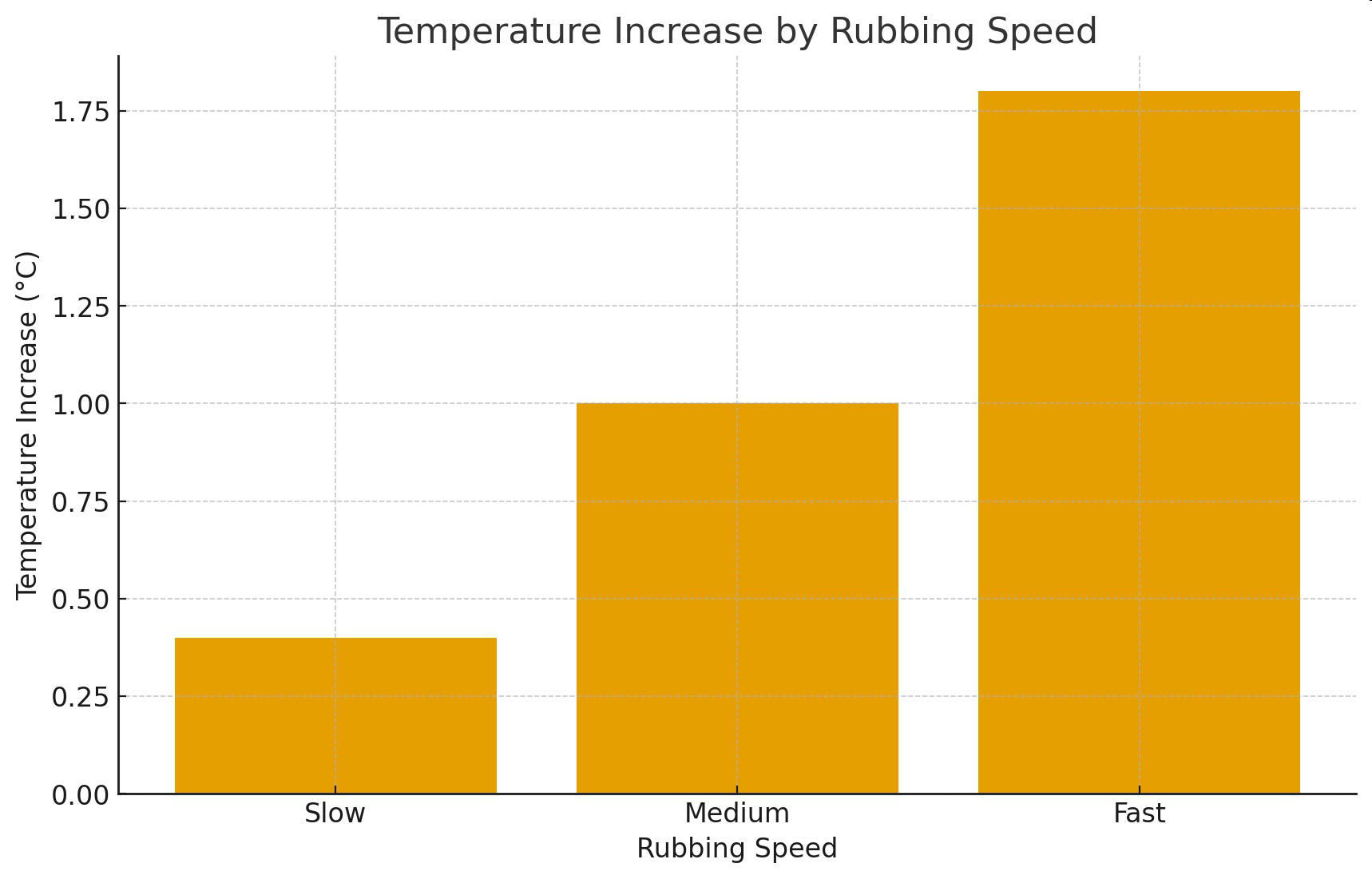
Graph of Information - Figure 2.