Solar-Powered Classroom Fan
Phenomenon
On sunny days, the science corner in the classroom feels hot and stuffy. Students decide to design a small fan powered only by a solar panel to move air across the table. The fan must work using light from the sun (or a bright lamp for testing), with no batteries.
They build and test different designs:
changing the angle of the solar panel,
changing the size and shape of the fan blades,
and checking how strongly the fan blows.
Students want to know:
How can scientific ideas about energy conversion help them design, test, and improve a fan that turns light energy into motion energy?
A solar-powered fan is a great example of how energy can be converted from one form to another. The solar panel collects light energy from the sun (or a lamp). Inside the panel, this light energy is converted into electrical energy. Wires carry the electrical energy to a small motor. The motor converts the electrical energy into motion energy, which makes the fan blades spin and push air.
Scientific ideas can help students design a better fan. If the solar panel faces the light directly, it usually collects more light, so it can make more electrical energy. This can make the motor spin faster. The size and shape of the fan blades also matter. Wider or better-shaped blades can push more air, even if the motor spins at the same speed.
When students test their designs, they measure how fast the fan spins and how far away they can still feel the breeze. Then they refine their designs by changing one variable at a time, like panel angle or blade size. By using data from their tests, students apply scientific ideas to improve how the device converts light energy into the motion of moving air.
Table 1.
Trial | Panel Angle to Light (o) | Fan Speed (RPM) |
|---|---|---|
1 | 30 | 90 |
2 | 60 | 140 |
3 | 90 | 180 |
Graph of Information - Figure 1.
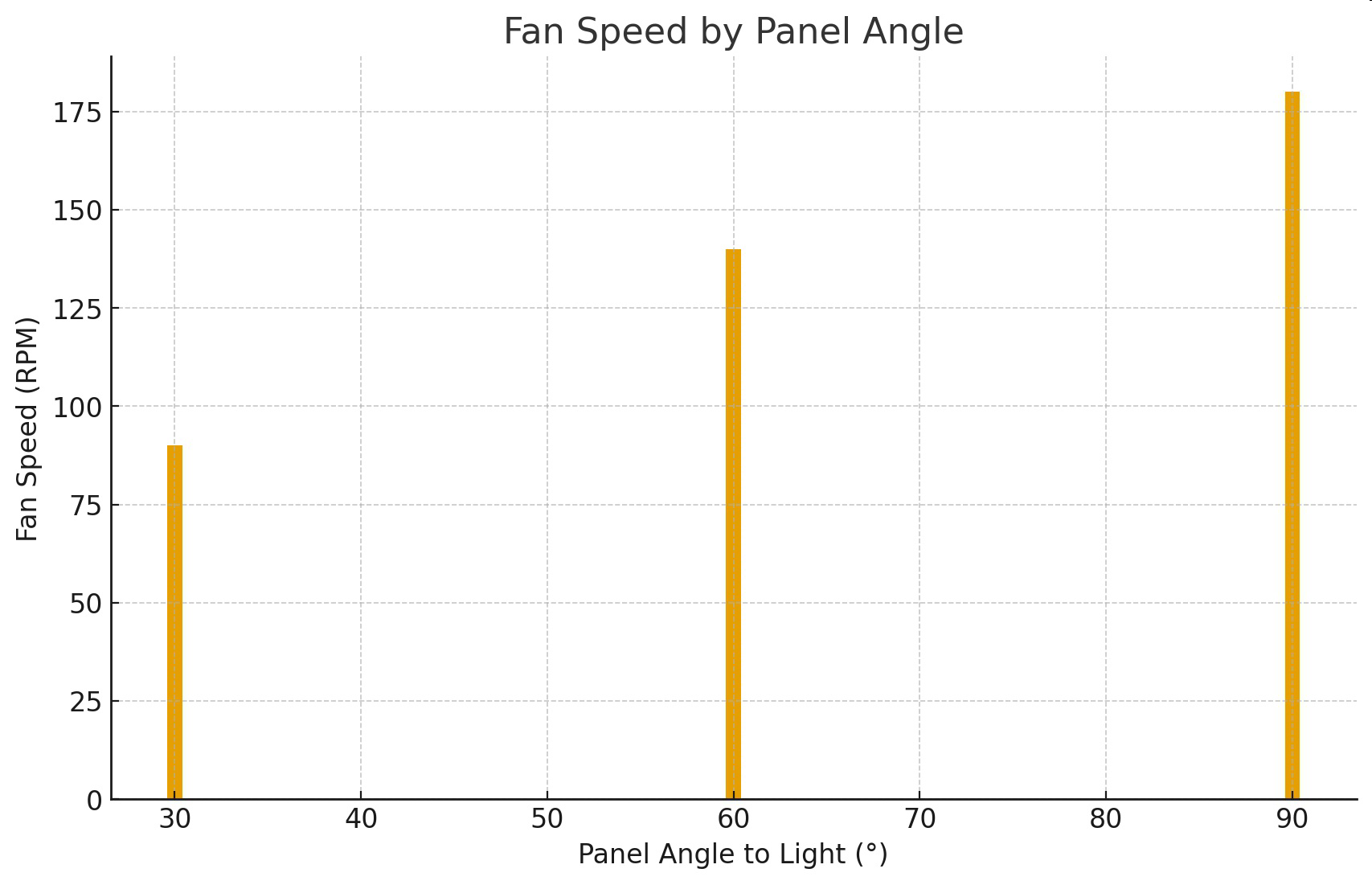
Table 2.
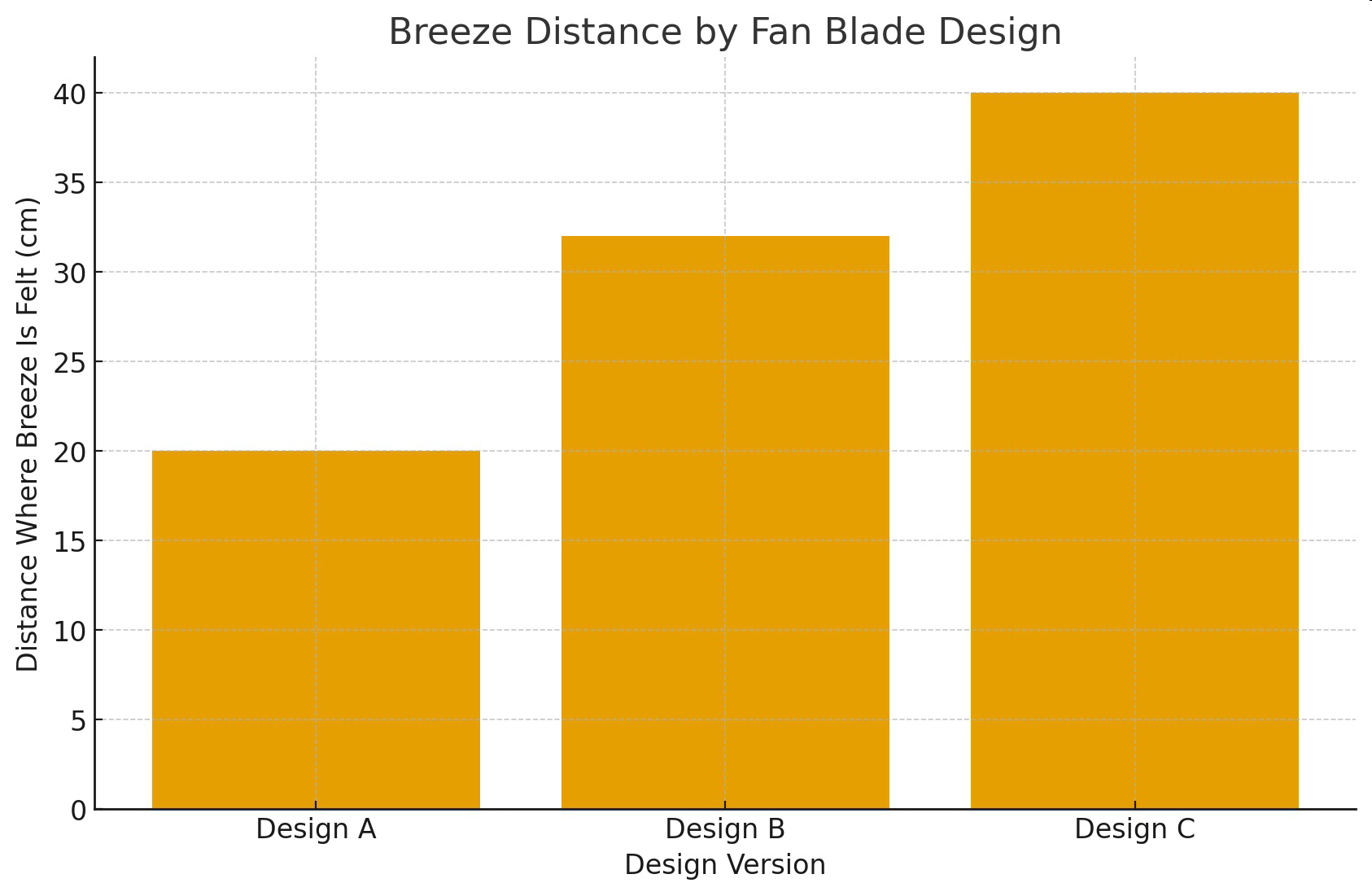
Design Version | Blade Description | Fan Speed (RPM) | Distance Where Breeze Is Felt (cm) |
|---|---|---|---|
Design A | Narrow, straight blades | 170 | 20 |
Design B | Medium, slightly curved | 175 | 32 |
Design C | Wide, curved blades | 180 | 40 |
Graph of Information - Figure 2.