Toy Car on a Ramp - Height to Motion Energy
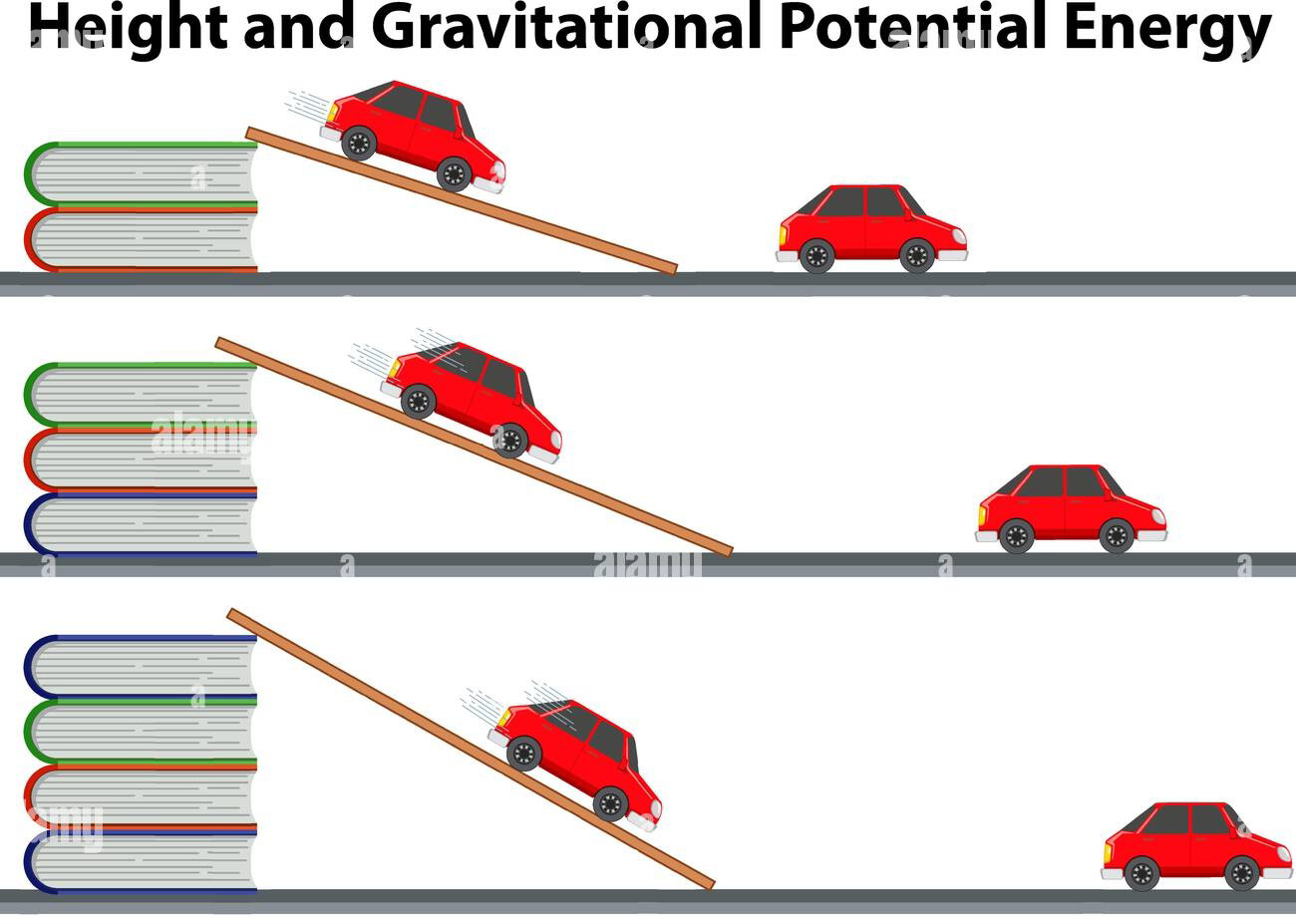
Diagram 1.
Source: https://www.alamy.com/illustration-of-an-educational-infographic-element-depicting-a-physics-experiment-on-height-and-gra
vitational-potential-energy-image572637738.html
Phenomenon:
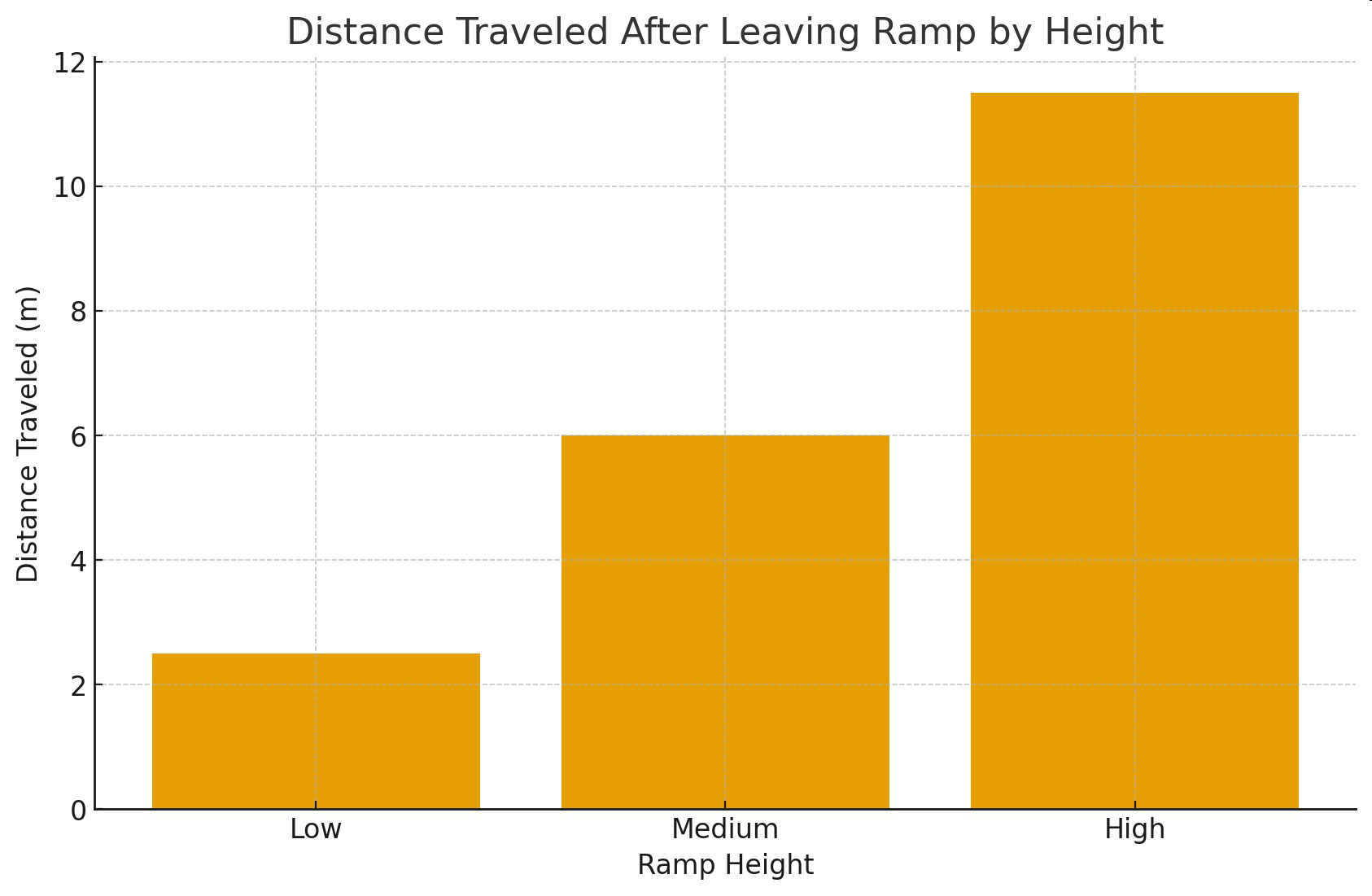
Students release a toy car from different ramp heights. From a low ramp, the car moves slowly and travels a short distance. From a high ramp, the car moves much faster and travels farther. Students want to know: How does the energy change as the car moves from the top of the ramp to the bottom, and how does this show energy is conserved?
A toy car on a ramp helps us see how energy is transferred and converted while still being conserved. At the top of the ramp, the car has stored energy because of its height. This type of stored energy is sometimes called gravitational potential energy. When the car is released, the stored energy begins to change into motion energy as the car speeds up.
The higher the starting point, the more stored energy the car has. As the car moves down the ramp, that energy is not lost - it is converted into motion energy. At the bottom, the car moves the fastest because more stored energy has been transformed. When the car eventually slows down and stops, some of its motion energy becomes heat energy due to friction with the floor and the wheels. The total energy is conserved because it is simply transferred or changed into new forms.
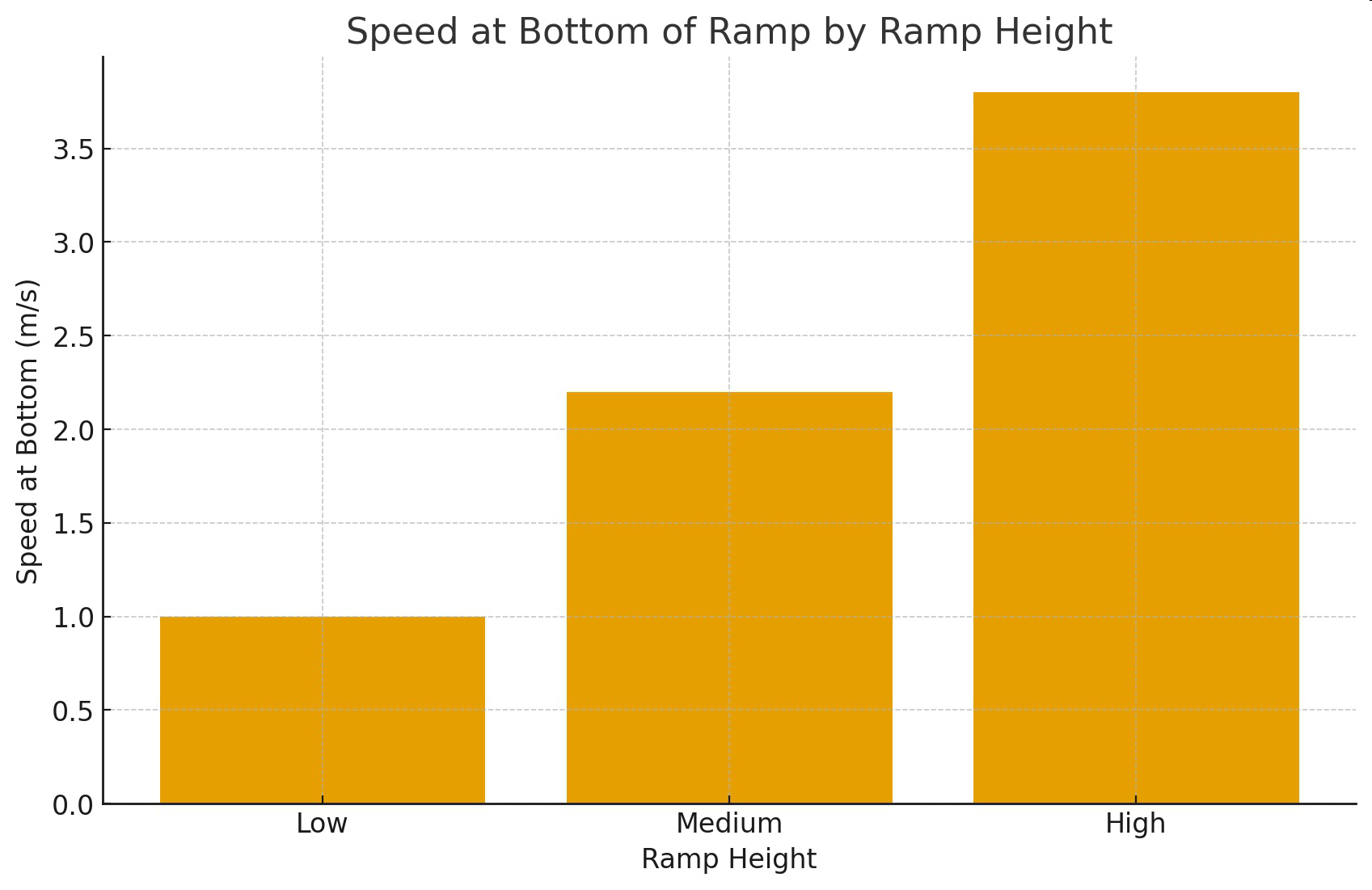
Students can observe energy conservation by measuring the car’s speed at the bottom and the distance it travels after leaving the ramp. These measurements show how stored energy becomes motion energy and then heat, but never disappears.
Table 1.
Ramp Height | Speed at Bottom (m/s) | Distance Traveled (m) |
|---|
Low | 1 | 2.5 |
Medium | 2.2 | 6 |
High | 3.8 | 11.5 |
Graph of Information - Figure 1.
Graph of Information - Figure 2.