Warming Different Surfaces in Sunlight
Diagram 1.
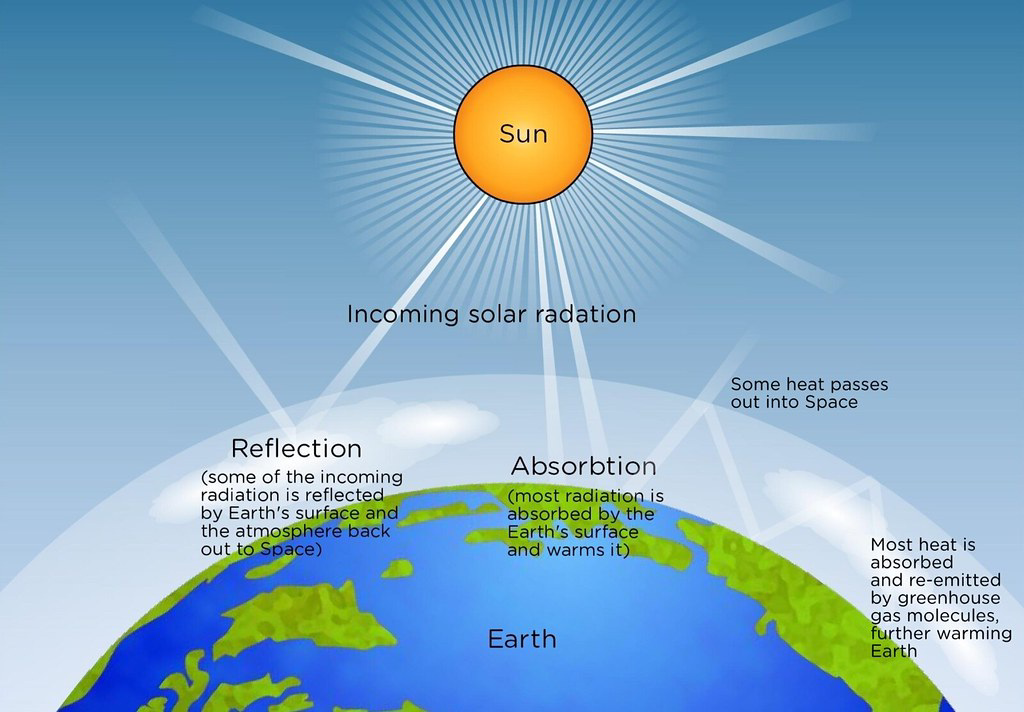
Source: https://earthscience.xyz/content/heat-transfer
Students place three materials - dark fabric, a metal plate, and white paper - in direct sunlight. After a few minutes, they observe that some surfaces warm up more than others. They wonder: How does sunlight’s energy transfer to these materials, and how does this show that energy is conserved when converted to heat?
Sunlight carries light energy. When sunlight reaches an object, some of that light is absorbed. When materials absorb light, they convert the light energy into heat energy. This heat causes the temperature of the material to rise. The energy does not disappear - it simply changes form from light to heat.
Different materials absorb different amounts of light. Dark colors absorb most of the sunlight that hits them, so they warm up quickly. Light colors reflect more light, absorbing less, and warm more slowly. Metal also absorbs light energy but may warm differently depending on how much of the light it reflects or conducts.
Students can observe energy conservation by measuring how much each material warms up after being in the sun for the same amount of time. Even though the sunlight is no longer visible after it hits the surface, the energy is still present - it has just been converted into heat. This temperature increase is evidence of the energy transfer and conversion.
These patterns help show that energy is conserved: the light energy from the sun becomes heat energy in the materials, but the total amount of energy remains.
Table 1.
Material | Starting Temp ($^\circ \text{C}$) | Final Temp ($^\circ \text{C}$) | Temp Increase ($^\circ \text{C}$) |
|---|
White Paper | 22 | 25 | 3 |
Metal Plate | 22 | 29 | 7 |
Dark Fabric | 22 | 35 | 13 |
Graph of Information - Figure 1.
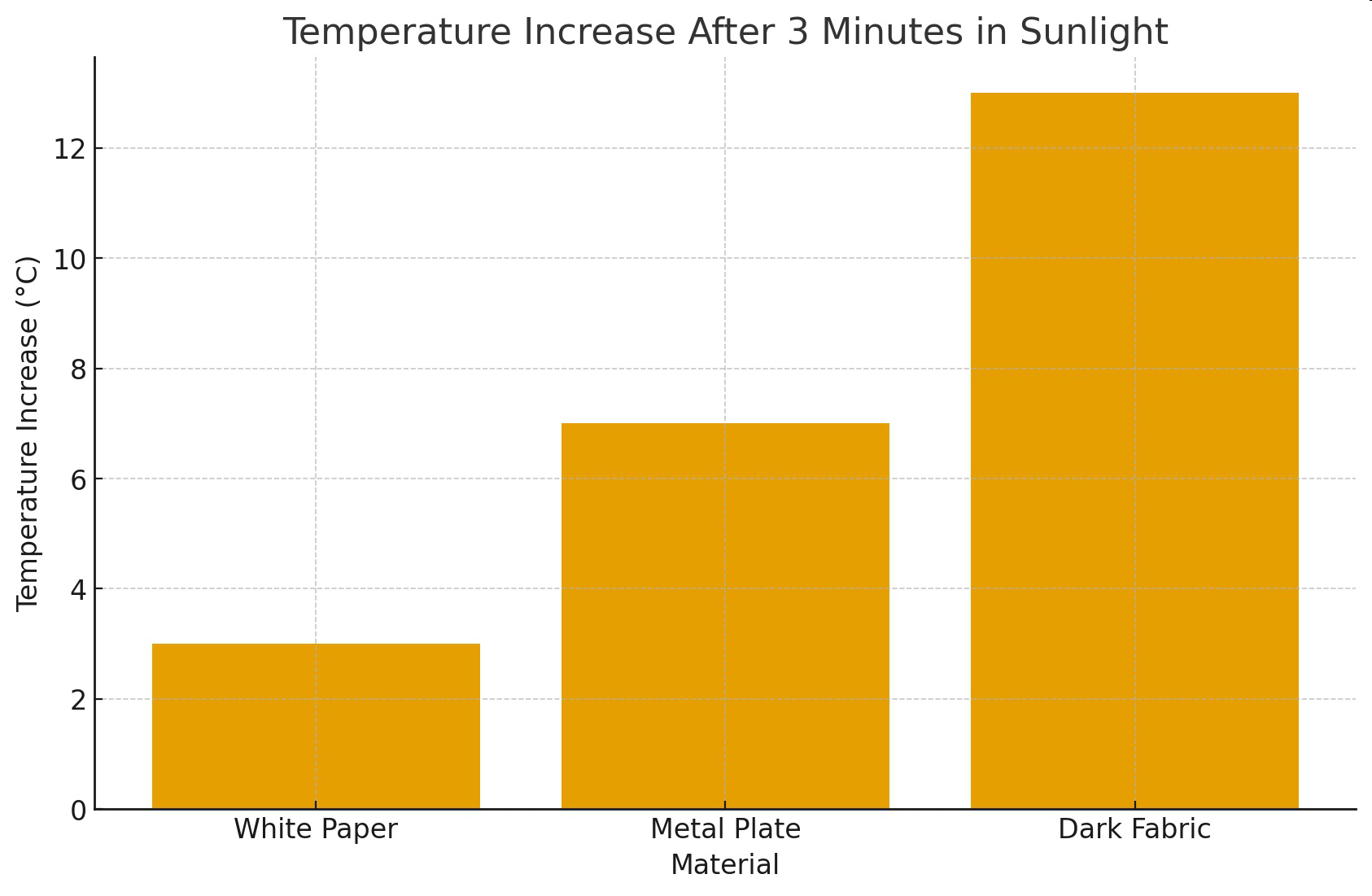
Table 2.
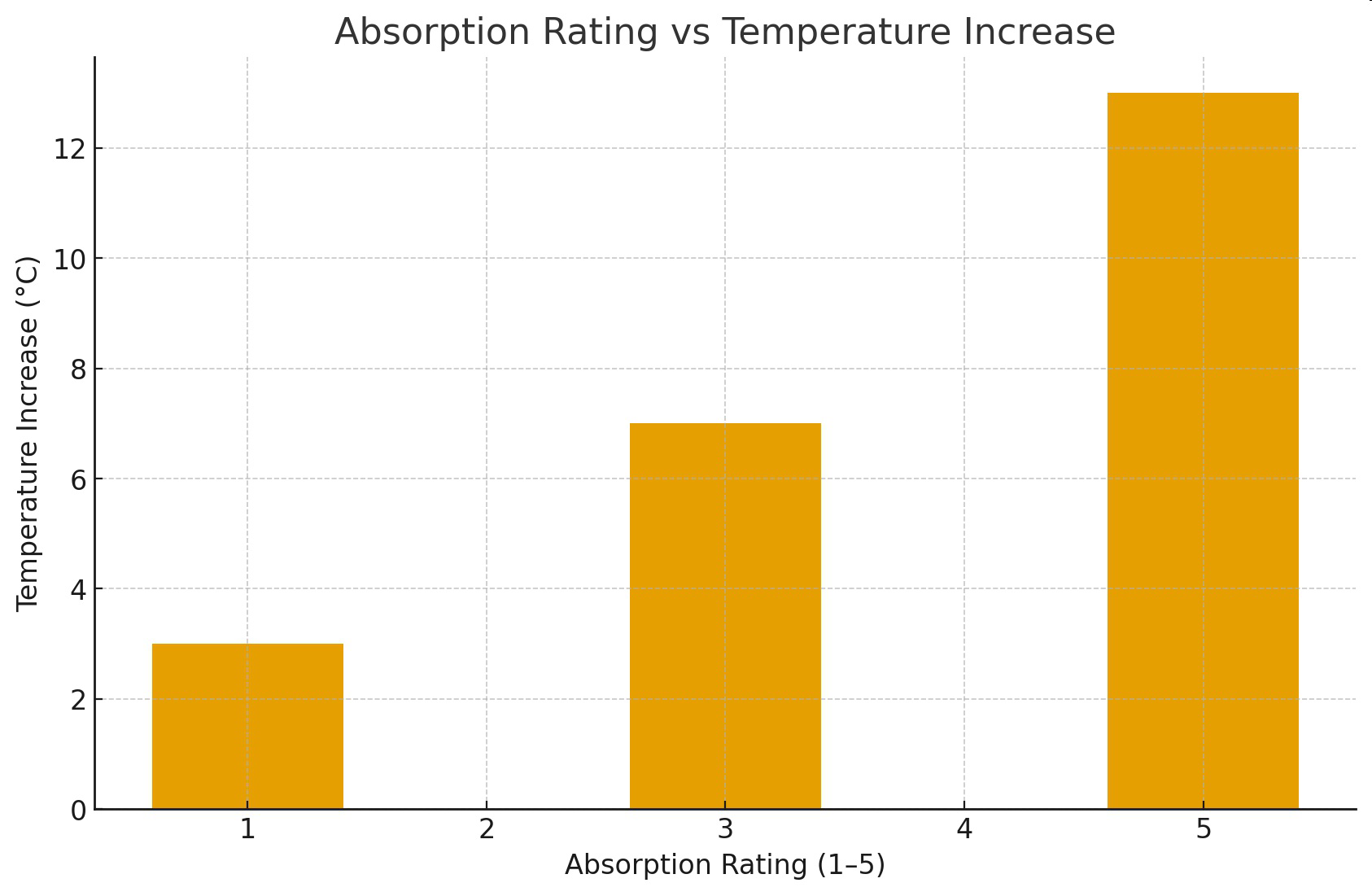
Material | Absorption Rating (1 to 5) | Temp Increase (°C) |
|---|
White Paper | 1 | 3 |
Metal Plate | 3 | 7 |
Dark Fabric | 5 | 13 |
Graph of Information - Figure 2.