Wind-Powered Lifter
Phenomenon
Students design a small windmill that can lift a paper cup holding metal washers or pennies when a classroom fan blows on it. The windmill’s blades catch the moving air and spin a spool that winds a string to lift the cup.
They try different blade designs and fan distances to see which design works best.
Design goal:
Apply scientific ideas to design, test, and refine a device that converts motion energy of air into motion energy of a lifting system.
A windmill is a device that converts energy from moving air into useful motion. When air from the wind (or a fan) hits the blades, it gives them motion energy. The blades are connected to a rod or axle. As the blades spin, they turn the axle. If a string is wrapped around the axle, the spinning motion can pull on the string and lift a load, such as a cup of pennies.
This shows an energy conversion: the motion energy of the air becomes the motion energy of the blades and axle, which is then used to do work by lifting something. Scientific ideas can help students design better windmills. For example, blades that are angled just right can catch more air. Longer or wider blades may catch more wind but might be heavier. The distance from the fan also matters: closer to the fan usually means faster-moving air and more energy.
Students test their designs by measuring how much mass (number of pennies) the windmill can lift and how high it lifts the cup. Then they refine their design by changing one variable at a time, such as blade shape or size, to make the windmill convert more of the air’s motion energy into lifting motion.
Table 1.
Design Version | Blade Description | Maximum Pennies Lifted |
|---|
Design A | 2 short, straight blades | 6 |
Design B | 4 medium, straight blades | 12 |
Design C | 4 medium, curved blades | 18 |
Graph of Information - Figure 1.
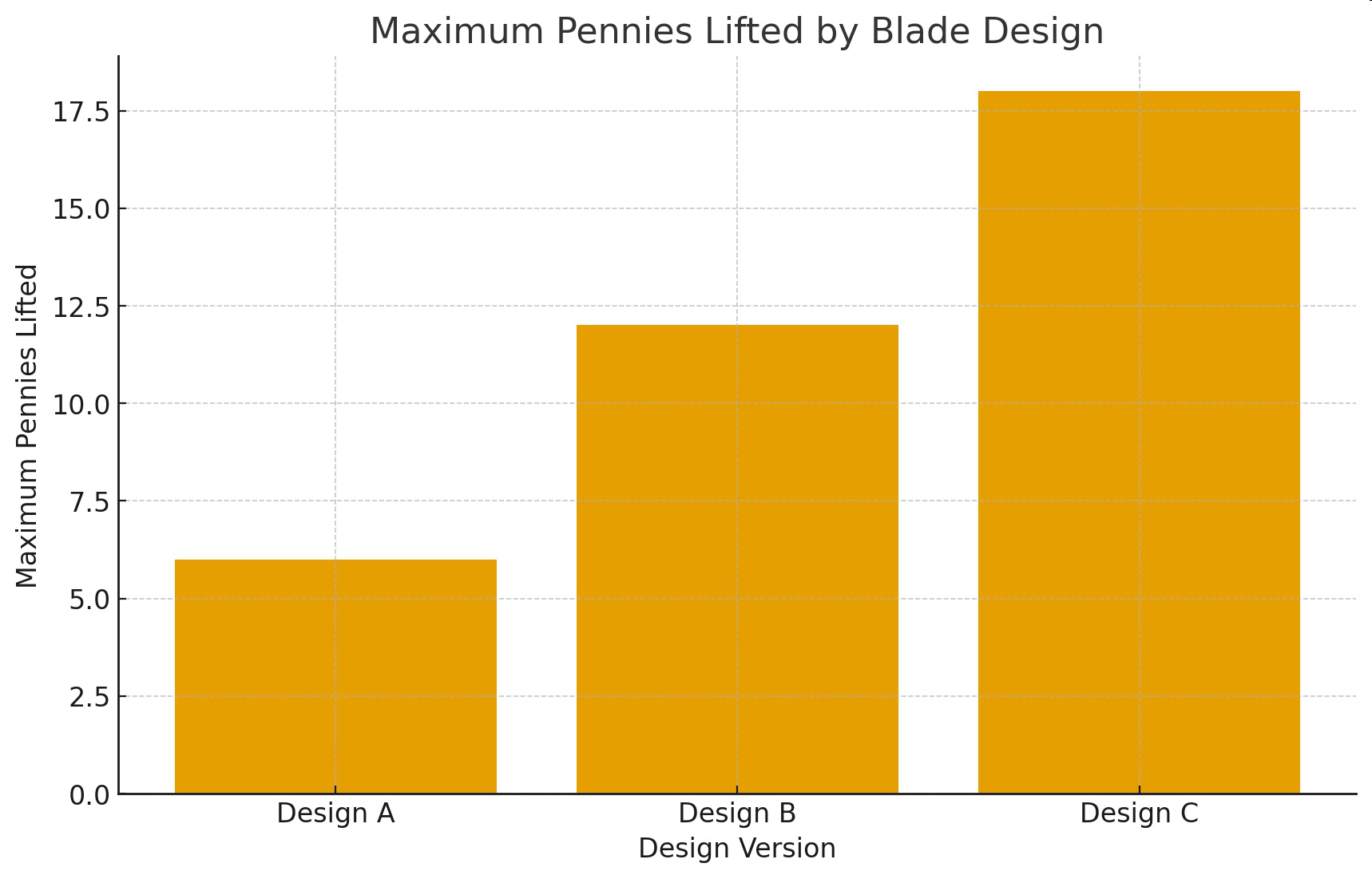
Table 2.
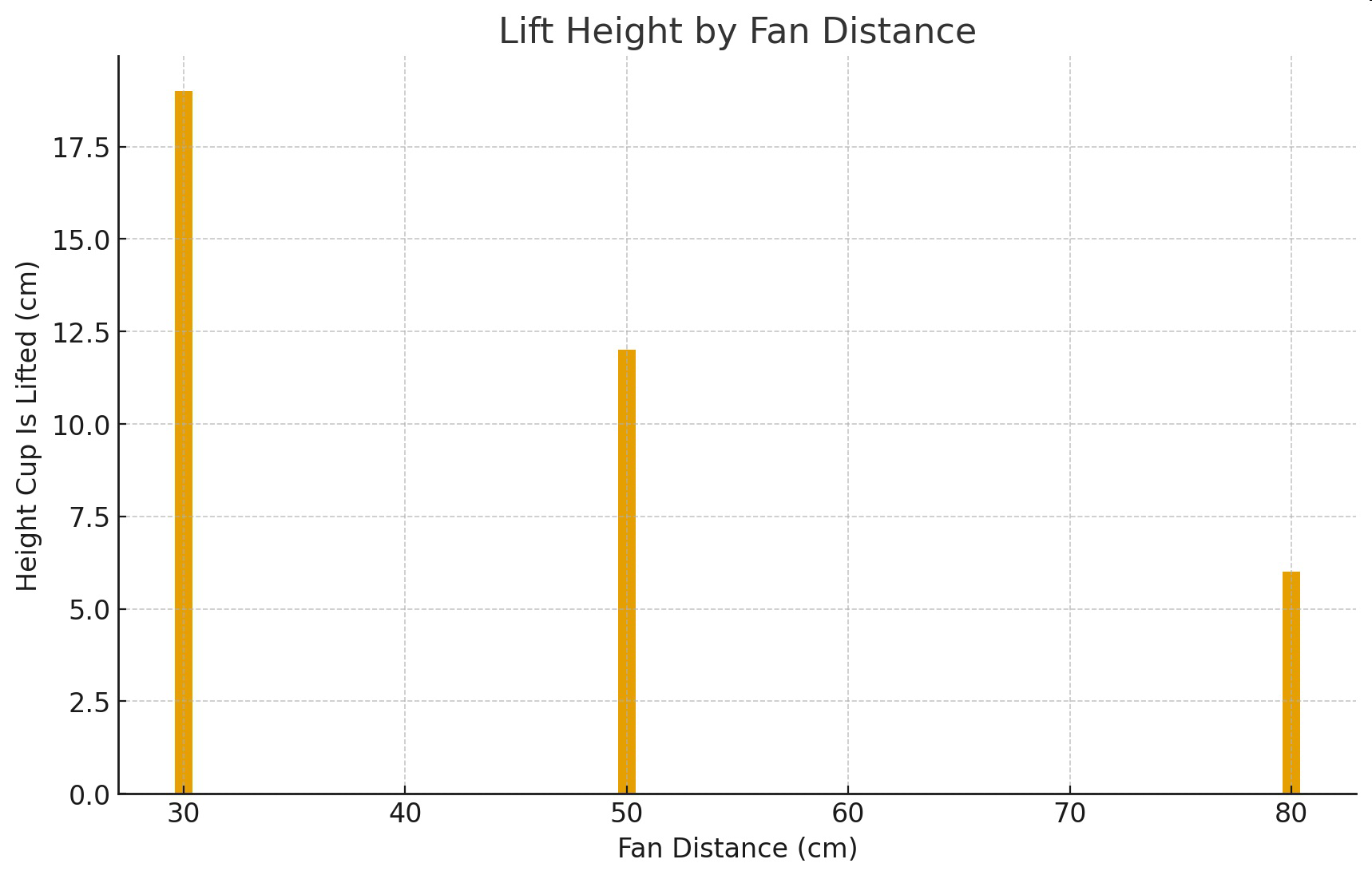
Fan Distance (cm) | Height Cup Is Lifted (cm) |
|---|
80 | 6 |
50 | 12 |
30 | 19 |
Graph of Information - Figure 2.